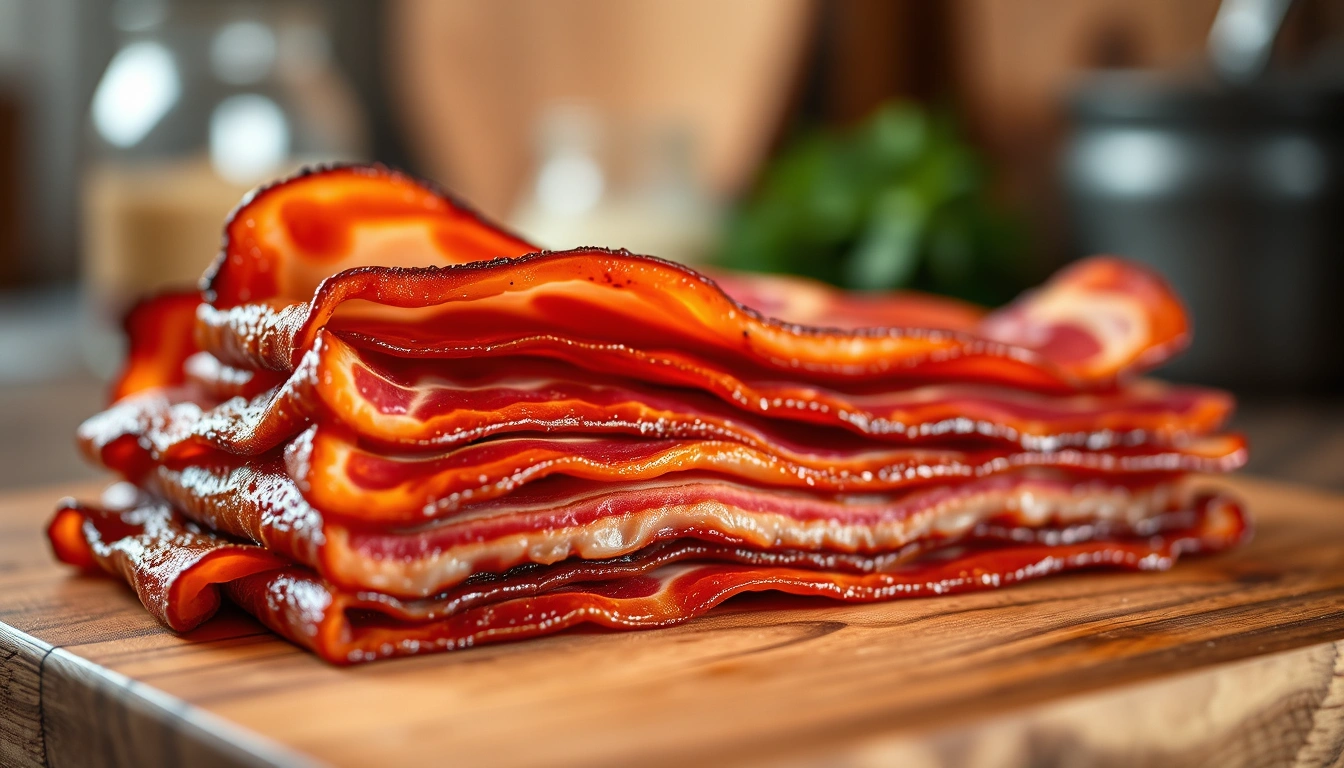
Bacon without rind
541 kcal per 100 g
Category: Meat
Nutritional information (per 100 g)
| Calories | 541 kcal |
| Protein | 37g |
| Carbohydrates | 1.4g |
| Total fats | 42g |
| Saturated fats | 14g |
| Fiber | 0g |
| Sodium | 1800mg |
| Cholesterol | 110mg |
Vitamins and minerals
Description
Boneless bacon is a very popular cooking ingredient consisting of cured and smoked pork belly, but without the outer layer of rind or skin. It is widely used to add flavor, texture, and juiciness to a great variety of dishes, from stews and soups to breakfasts and main courses. Boneless bacon has an intense, slightly salty and smoky flavor, and can be cooked until crispy or kept softer depending on the recipe.
This ingredient originates from the tradition of curing and smoking pork belly to preserve it and enhance its flavor. It is common in many cuisines around the world, especially in European and Latin American cooking. In Hispanic America, **boneless bacon** can vary by region, but it remains an essential source of fat and flavor in the preparation of home-cooked dishes.
From a nutritional point of view, boneless bacon provides proteins and fats, mainly saturated, so it is recommended to consume it in moderation. It also contains sodium due to the curing process, which is important to consider for those who control their salt intake.
In terms of synonyms, in different Hispanic American countries it may be known as:
- Bacon (general name)
- Cured pork belly
- Smoked bacon (when referring to the process)
- Sealed bacon (in some regions when it has no skin)
It is important to differentiate it from bacon with rind or bacon crust, which includes the pig's skin, which provides a different texture and flavor.