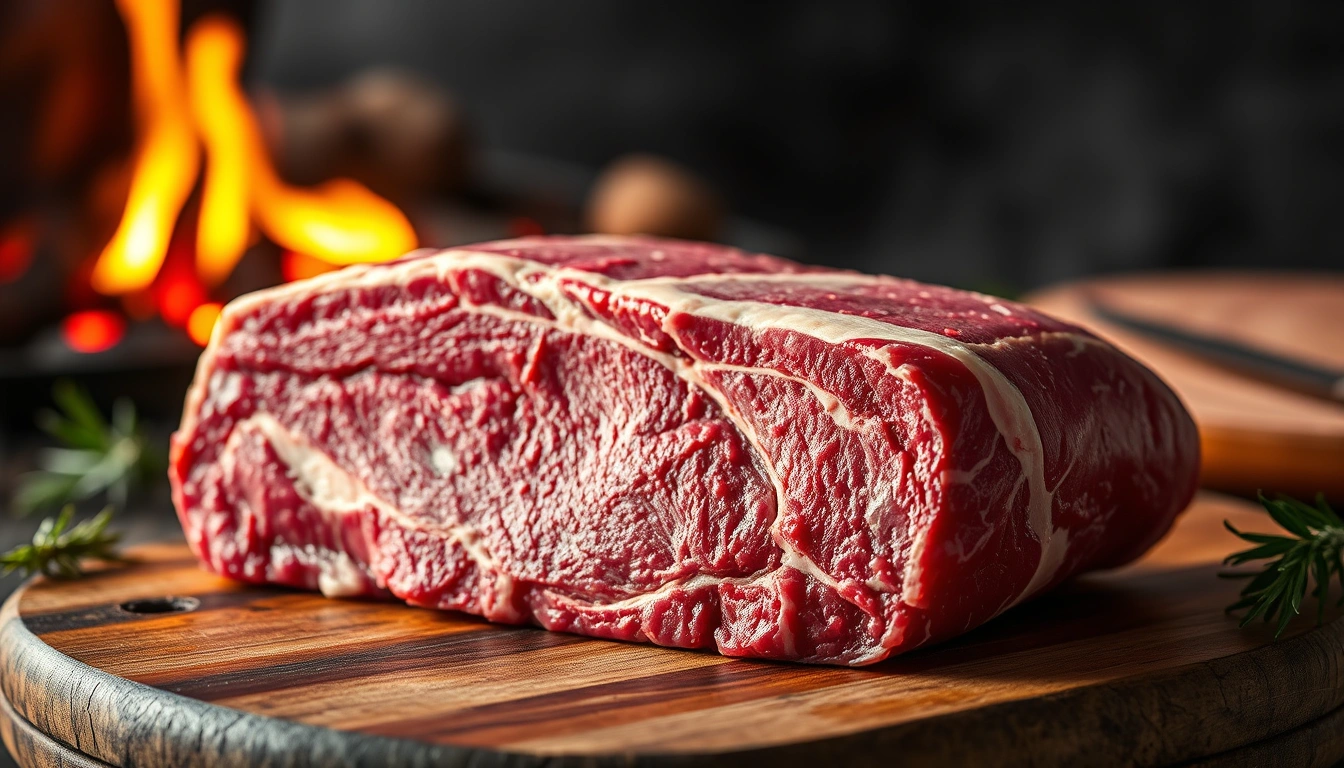
Beef flank steak
250 kcal per 100 g
Category: Meat
Nutritional information (per 100 g)
| Calories | 250 kcal |
| Protein | 21g |
| Carbohydrates | 0g |
| Total fats | 20g |
| Saturated fats | 8g |
| Fiber | 0g |
| Sodium | 60mg |
| Cholesterol | 70mg |
Vitamins and minerals
Description
Flank steak is a very popular cut of beef in Argentine cuisine and in other Latin American countries. It is obtained from the lateral part of the cow, specifically from the section known as the "flank," located near the rib section but more towards the lower part of the animal, right in the flank. This cut is characterized by having an outer layer of fat that provides flavor and juiciness during cooking, while its meat is lean and tender when cooked correctly.
The origin of the name "vacío" (flank) comes from the anatomical area where this cut is found, and in Argentina, it is one of the preferred cuts for grilling, given its texture and intense flavor. In both home and professional cooking, it is used for preparations on the grill, griddle, or in the oven, and it is fundamental in the traditional Argentine asado.
Flank steak is rich in high-quality proteins and contains fats that provide energy. Its iron content is significant, contributing to the prevention of anemia, and it provides B vitamins that are essential for metabolism and energy production.
Regarding synonyms in Spanish used in different regions of Latin America, flank steak can also be called:
- Vacío (common usage in Argentina and Uruguay)
- Flanco (in certain countries like Mexico and Central America)
- Falda (in some South American countries, although it can sometimes refer to similar but not identical cuts)
It is important to note that, although these terms may vary, in recipes oriented towards the Argentine or Rio de la Plata style, "flank steak" is recognized for its unique flavor and texture and is one of the essential cuts for achieving a traditional asado.