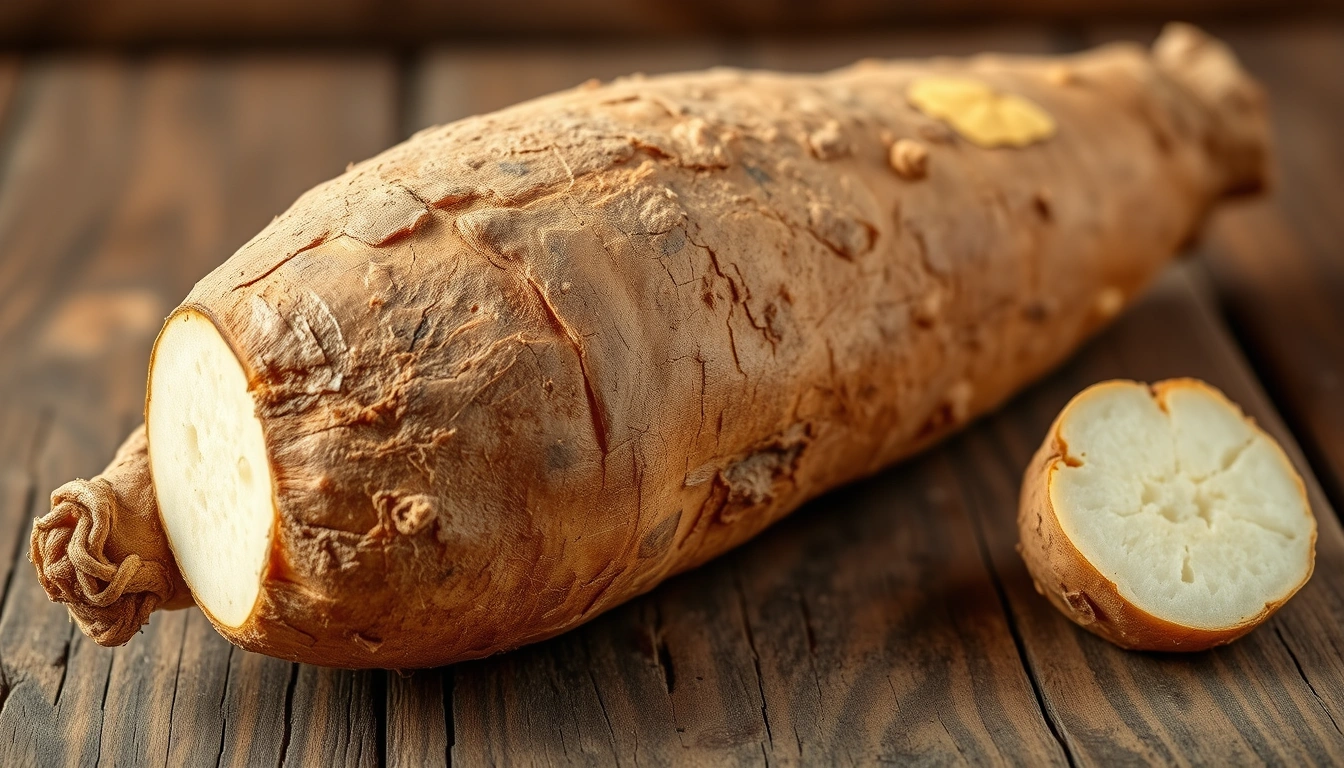
Cassava root
160 kcal per 100 g
Category: Vegetables
Nutritional information (per 100 g)
| Calories | 160 kcal |
| Protein | 1.4g |
| Carbohydrates | 38g |
| Total fats | 0.3g |
| Fiber | 1.8g |
Vitamins and minerals
Description
Cassava root, also known as manioc or casabe in various regions of Latin America, is a long and robust tuber widely used in the traditional cuisines of Latin America, Africa, and Asia. Its exterior has a rough texture and brown color, while its interior is white and starchy, with a mild and slightly sweet flavor once cooked.
The origin of cassava dates back to the tropical regions of South America, where it has been cultivated by indigenous communities for thousands of years. Today, it is a staple ingredient in many culinary cultures due to its versatility and nutritional value.
In cooking, cassava root can be prepared in various ways: boiled, fried, baked, or ground into flour to make breads, cakes, and other products. It is especially valued for its ability to absorb flavors and its firm texture, which lends itself to multiple culinary techniques.
Regarding its properties, cassava is an excellent source of complex carbohydrates, which provide sustained energy. It also contains dietary fiber that aids digestion, although it must be cooked thoroughly to eliminate natural toxic compounds present in its raw state.
Synonyms in Latin America: manioc (Argentina, Uruguay, Paraguay), casabe (Caribbean), yuca (Mexico, Central America), guacamota (Costa Rica), among others.