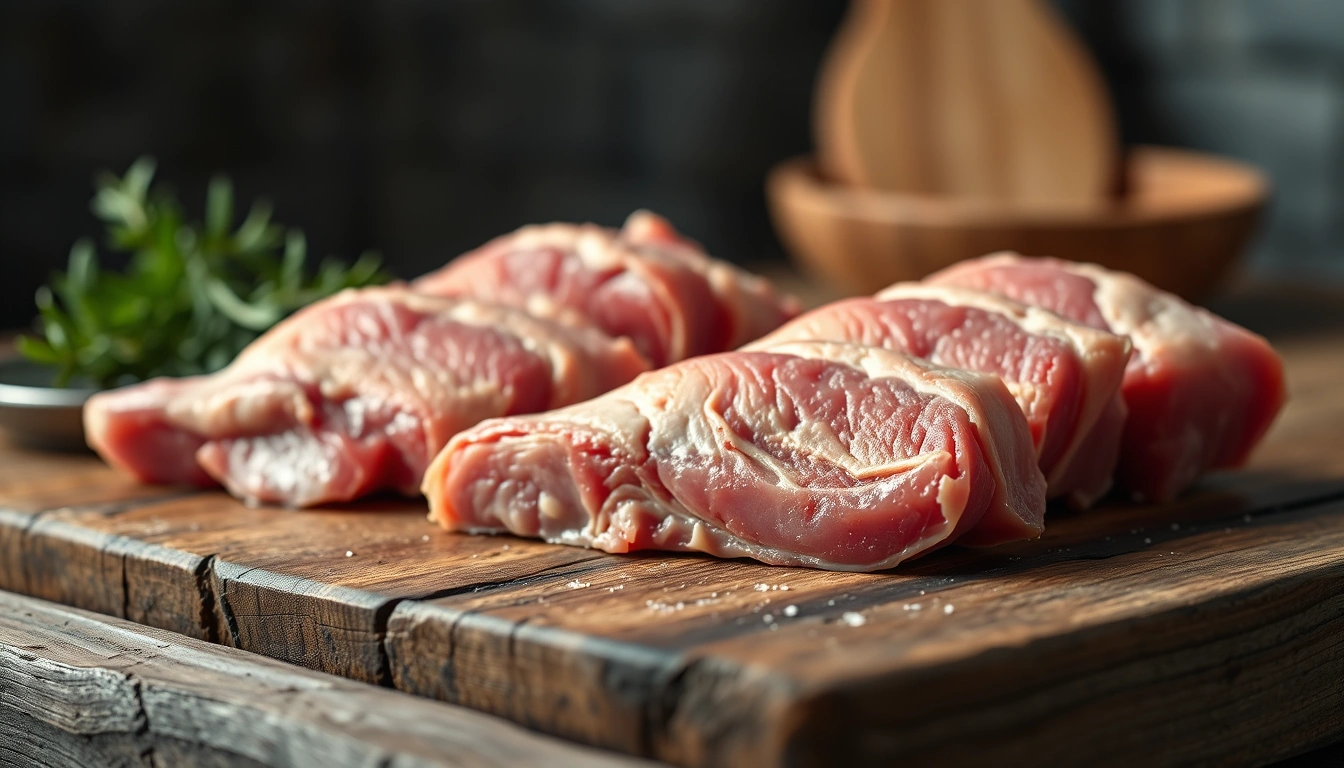
Deboned pork
242 kcal per 100 g
Category: Meat
Nutritional information (per 100 g)
| Calories | 242 kcal |
| Protein | 27.3g |
| Carbohydrates | 0g |
| Total fats | 14g |
| Fiber | 0g |
| Sodium | 60mg |
| Cholesterol | 70mg |
Vitamins and minerals
Description
Boneless pork is a versatile ingredient consisting of pork meat from which the bone has been completely removed. This makes it easier to handle in the kitchen, allowing for quicker and more uniform preparation in various dishes, from stews and braises to roasts and stuffings.
Pork is a meat from the domestic pig (Sus scrofa domesticus), an animal that originated in regions of Southeast Asia and has spread globally, becoming a staple food in many culinary cultures around the world, especially in Mediterranean, Asian, and Latin American cuisines.
Regarding its properties, boneless pork is an important source of high-quality protein, B-complex vitamins (such as B1, B3, and B6), iron, zinc, and fats, which depending on the cut can vary in caloric and lipid content. It is an ingredient that adds flavor and texture to various dishes and adapts well to multiple cooking techniques.
In Hispanic America, boneless pork has various synonyms or related names depending on the region and specific cut, although the term "boneless pork" is widely understood. Some common synonyms may be:
- Bone-in pork meat
- Boneless pork ham (when it comes from the leg)
- Boneless pork loin (when referring to the loin)
- Boneless pork shoulder (when it is from the shoulder)
This ingredient is ideal for those looking for a practical preparation, as being boneless allows for easier cutting, better marination, and more even cooking, making it perfect for recipes that require juicy, hassle-free pork meat.