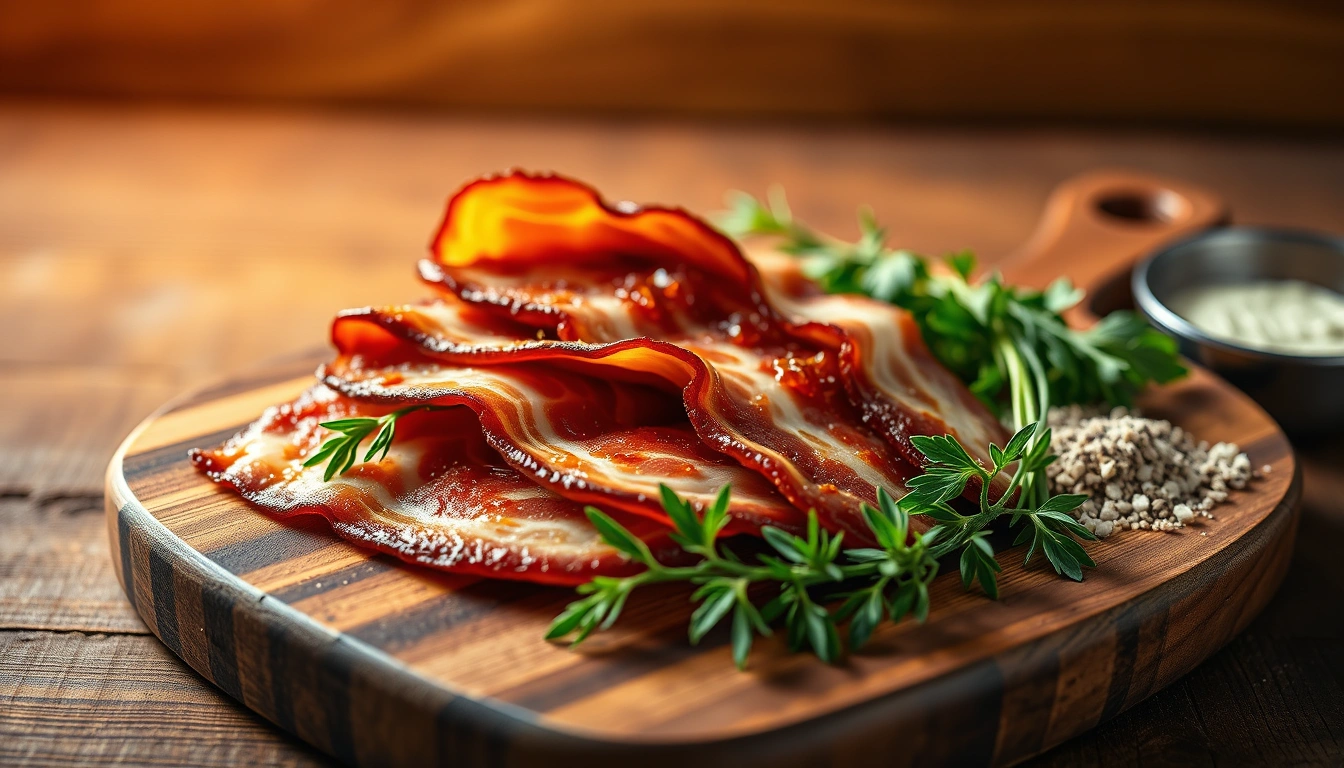
Fake bacon
150 kcal per 100 g
Category: Meat
Nutritional information (per 100 g)
| Calories | 150 kcal |
| Protein | 4g |
| Carbohydrates | 2g |
| Sugars | 1g |
| Total fats | 15g |
| Saturated fats | 5g |
| Trans Fat | 0g |
| Fiber | 0g |
| Sodium | 600mg |
| Cholesterol | 40mg |
Vitamins and minerals
Description
Fake bacon is an ingredient used in cooking as an alternative to traditional bacon, especially in recipes that seek a smoky flavor and a similar texture, but with a different nutritional profile or one adapted to certain diets. Generally, fake bacon is made from vegetable ingredients, such as tofu, tempeh, or even certain varieties of mushrooms, which are seasoned and smoked to recreate the characteristic flavor of bacon.
Regarding its origin, fake bacon emerged as a response in vegetarian and vegan cooking to offer tasty options without the use of meat. Its popularity has grown in different regions of Latin America and Spain due to the demand for healthier or processed meat-free products.
Among its properties, fake bacon is usually low in saturated fats and cholesterol, and in many cases provides vegetable proteins and fiber, depending on its base. Furthermore, as it is not meat, it is a more sustainable option suitable for people with specific diets, such as vegetarians, vegans, or those who avoid excessive consumption of processed foods.
In the Hispanic-American culinary sphere, fake bacon may also be known as vegan bacon, vegetable bacon, or tofu bacon, depending on the area and the base ingredient used for its preparation.