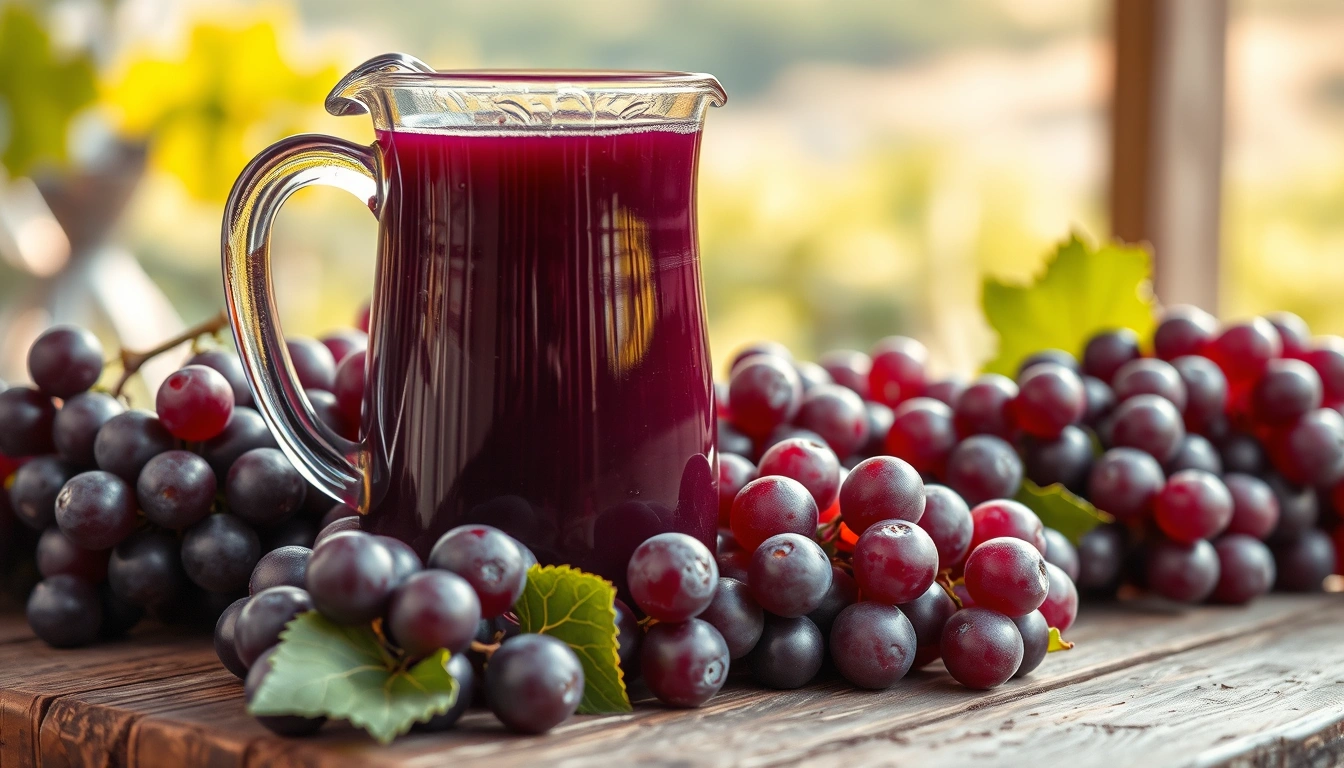
Grape juice
60 kcal per 100 g
Category: Beverages
Nutritional information (per 100 g)
| Calories | 60 kcal |
| Protein | 0.1g |
| Carbohydrates | 15.5g |
| Sugars | 15g |
| Total fats | 0.2g |
| Fiber | 0g |
Vitamins and minerals
Description
Grape juice is a sweet and refreshing liquid extracted from pressing grapes, a fruit primarily cultivated in temperate climate regions. This ingredient is widely used in cooking for its natural flavor, versatility, and for adding a sweet and fruity touch to various recipes, from desserts to marinades and beverages.
Grape juice originates from the winemaking traditions of regions such as the Mediterranean, California, and South America, especially in countries like Argentina and Chile, where grapes are a very important crop. It is mainly obtained from fresh grapes, although it can also be found in concentrated or pasteurized versions.
Properties: Grape juice is rich in antioxidants, especially polyphenols, which contribute to cardiovascular health. It also contains B vitamins and vitamin C, as well as minerals like potassium and iron. In cooking, it provides moisture and natural sweetness, making it ideal for both sweet and savory preparations.
Synonyms in Spanish from Latin America: Grape juice is also known as zumo de uva (more common in Spain and some regions), jugo de uvas (plural in some countries), and in some places the term mosto de uva may be used when referring to the juice before fermentation for winemaking.