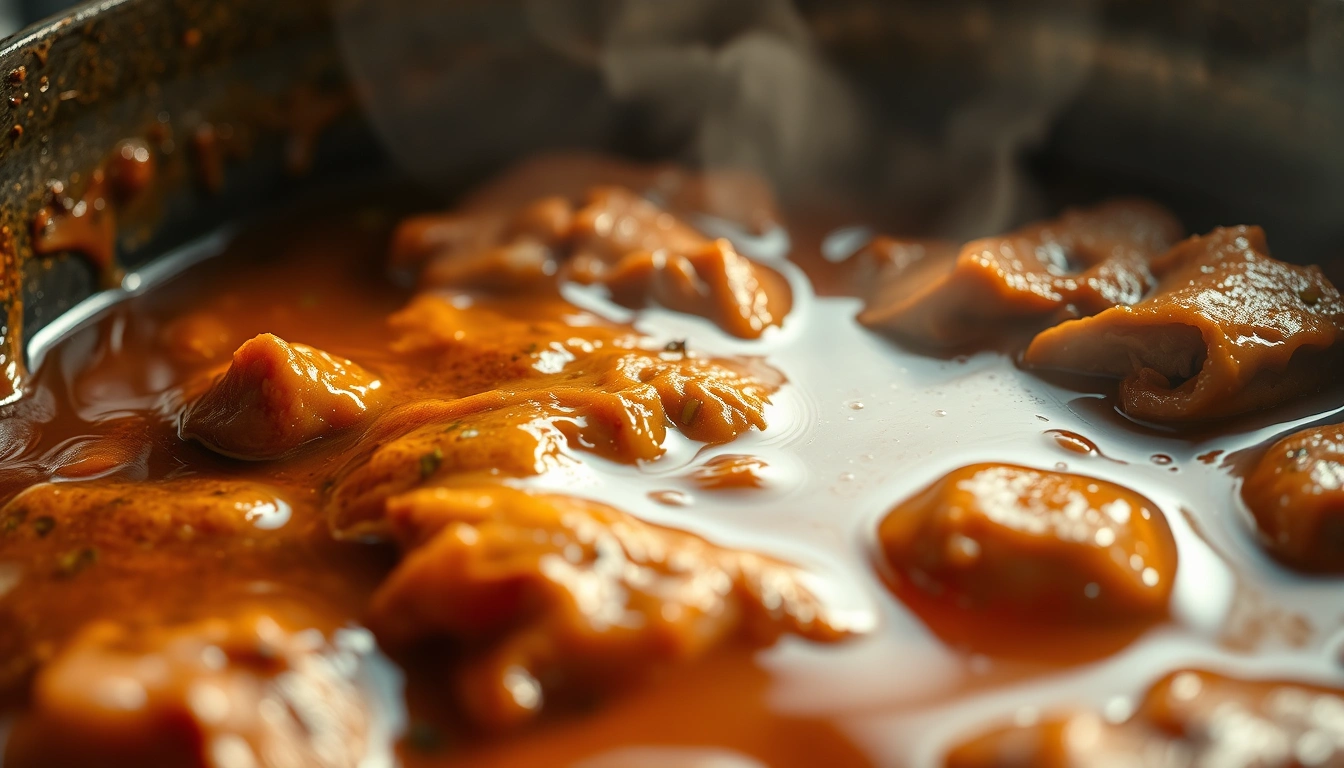
Juices from the cooked meat
250 kcal per 100 g
Category: Meat
Nutritional information (per 100 g)
| Calories | 250 kcal |
| Protein | 26g |
| Total fats | 15g |
| Saturated fats | 6g |
| Sodium | 60mg |
| Cholesterol | 70mg |
Vitamins and minerals
Description
Cooked meat juices refer to the flavorful liquid released during the cooking process of meat. This juice is primarily composed of water, dissolved proteins, and soluble compounds that provide an intense umami flavor, making it a fundamental element for enhancing the taste of various culinary preparations.
Origin: This ingredient arises naturally from the cooking of any type of meat (beef, pork, chicken, lamb, among others) when the muscle fibers are heated and release their contents. In both traditional and modern gastronomy, meat juices are utilized to prepare sauces, broths, and reductions that perfectly complement main dishes.
Properties: Cooked meat juices provide a high concentration of flavor, in addition to containing soluble nutrients like minerals and essential amino acids. By utilizing them in cooking, one can enhance the aroma and texture of meals, avoiding waste and heightening the gustatory experience.
Synonyms in Latin American Spanish: Depending on the region, these juices may be called by different names such as caldo de la carne (meat broth), jugos naturales (natural juices), fondos (fond), or simply caldo de cocción (cooking broth). In some countries, it is also popularly known as jugo natural (natural juice) or caldo concentrado (concentrated broth).