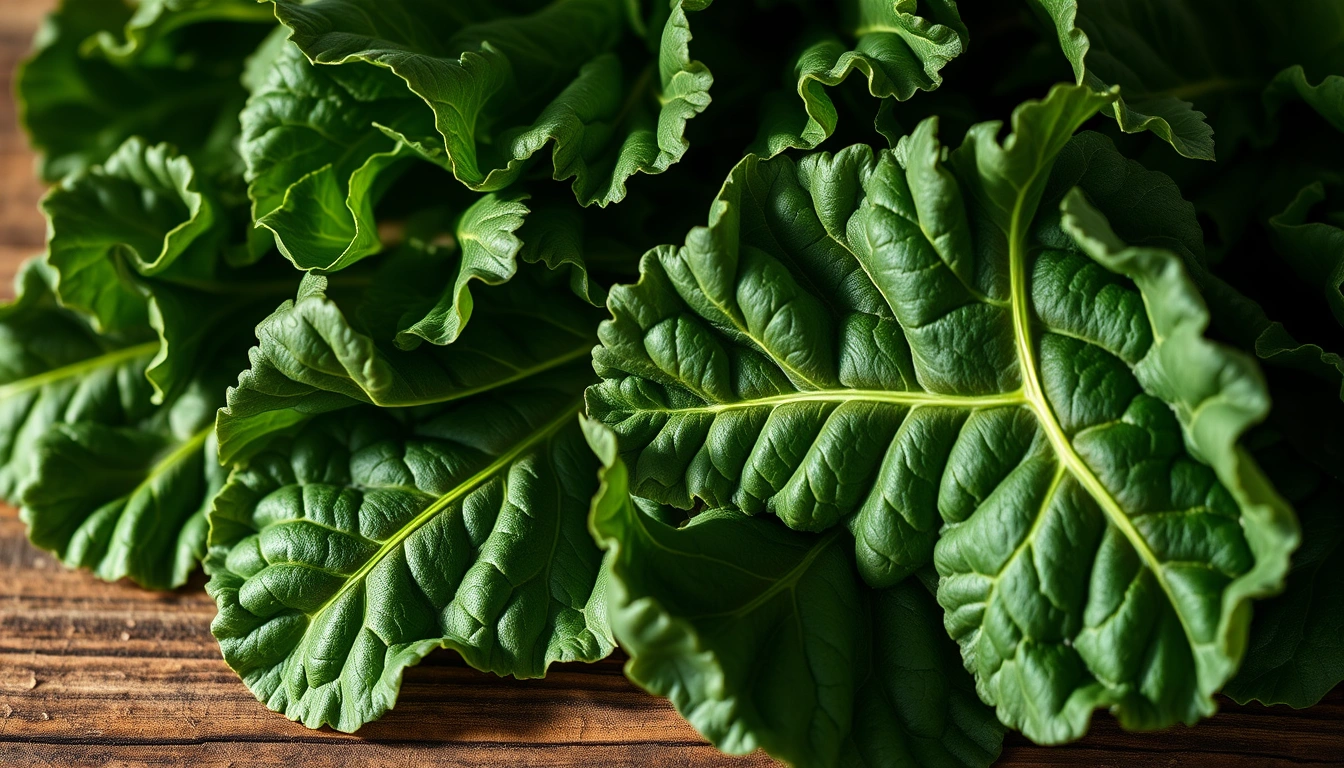
Kale
35 kcal per 100 g
Category: Vegetables
Nutritional information (per 100 g)
| Calories | 35 kcal |
| Protein | 2.9g |
| Carbohydrates | 4.4g |
| Total fats | 0.6g |
| Fiber | 3.6g |
Vitamins and minerals
Description
Kale, also simply known as kale, is a dark green leafy vegetable belonging to the brassica family, the same as cabbages, broccoli, and cauliflower. Its flavor is slightly bitter and earthy, and its texture can be either tender or a bit fibrous, depending on the variety and method of preparation.
The origin of kale dates back to the Eastern Mediterranean region, and it has been cultivated since antiquity for its high nutritional value and resilience in cold climates. Today, it is very popular in healthy cooking and in recipes that seek nutrient-rich ingredients.
Regarding its properties, kale is an excellent source of vitamins A, C, and K, in addition to containing significant amounts of minerals such as calcium, potassium, and iron. It is also rich in antioxidants and dietary fiber, making it an ideal food for improving digestion, strengthening the immune system, and promoting cardiovascular health.
In the context of Latin American cuisine, kale may be known by different names depending on the region, including: kale, berza (in some areas of Spain and Mexico), col crespa, or simply col rizada. This ingredient is very versatile and can be used in salads, soups, stews, or as a complement in sautéed dishes.