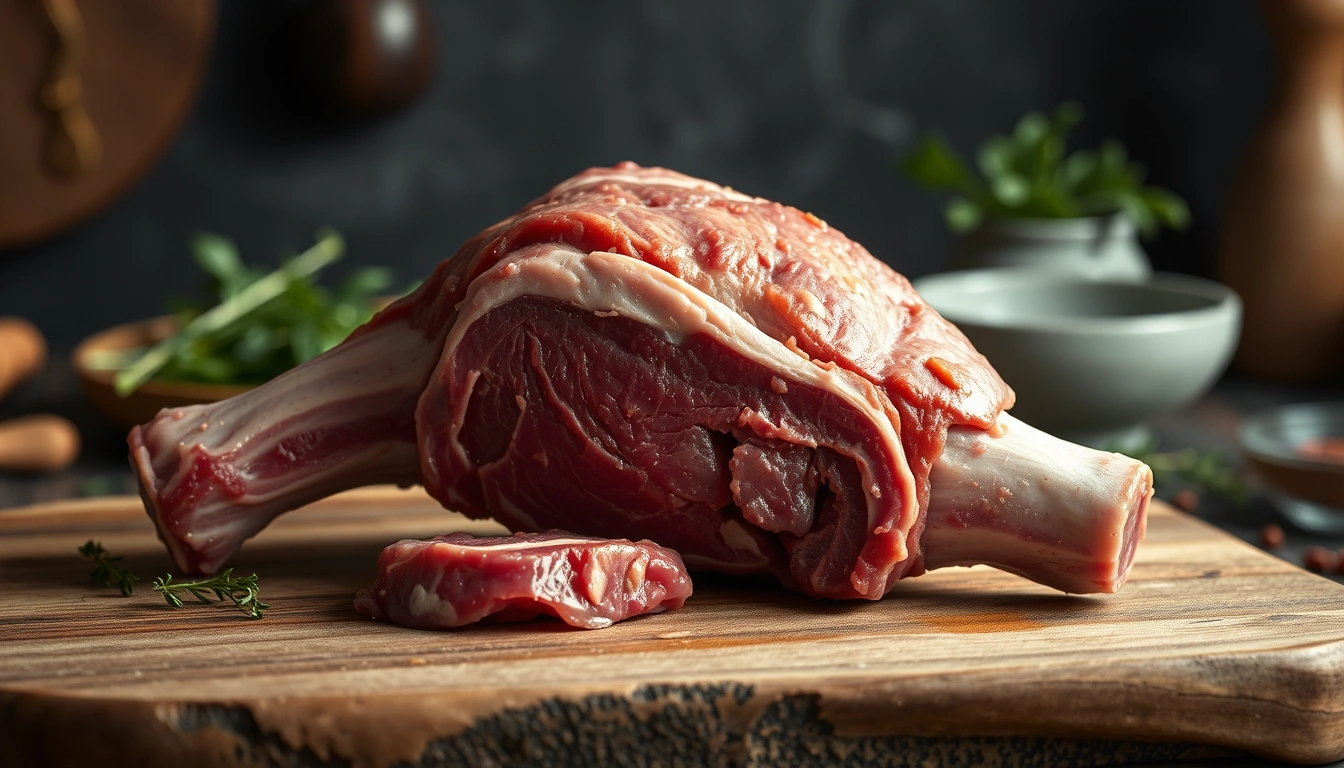
Lamb shank
250 kcal per 100 g
Category: Meat
Nutritional information (per 100 g)
| Calories | 250 kcal |
| Protein | 26g |
| Carbohydrates | 0g |
| Total fats | 17g |
| Saturated fats | 7g |
| Fiber | 0g |
| Sodium | 72mg |
| Cholesterol | 90mg |
Vitamins and minerals
Description
Lamb shank is a cut of meat that corresponds to the lower part of the lamb's leg, just above the hoof. It is a highly valued ingredient in cooking for its gelatinous texture and the intense flavor it adds to stews and braises. Due to the presence of connective tissue and bone, the shank requires slow, prolonged cooking for the meat to become tender and juicy, releasing collagen that enriches preparations with a unctuous consistency.
This cut is common in many culinary traditions, especially in Mediterranean and European cuisines, although it is also used in Latin American countries. Its origin is linked to the integral use of the lamb, which is considered a white meat, soft and with a delicate flavor, but with a significant contribution of flavor in its more gelatinous cuts.
From a nutritional point of view, lamb shank is a good source of high-quality protein, iron, zinc, and B vitamins, especially B12. It also contains collagen, ideal for those seeking foods that promote joint and skin health. However, due to its fat content, its consumption should be moderated within a balanced diet.
Regarding synonyms in Spanish used in different regions of Latin America, lamb shank can be found as:
- Garrón de cordero (very common in Argentina, Chile, and Uruguay)
- Canilla (used in some areas of Mexico and Central America)
- Espinazo (occasionally, although this term can also refer to the spine)
When searching for recipes that use lamb shank, it is ideal to select preparations that involve long cooking times, such as stews, broths, wrapped roasts, or slow-cooked dishes, to make the most of its flavor and texture.