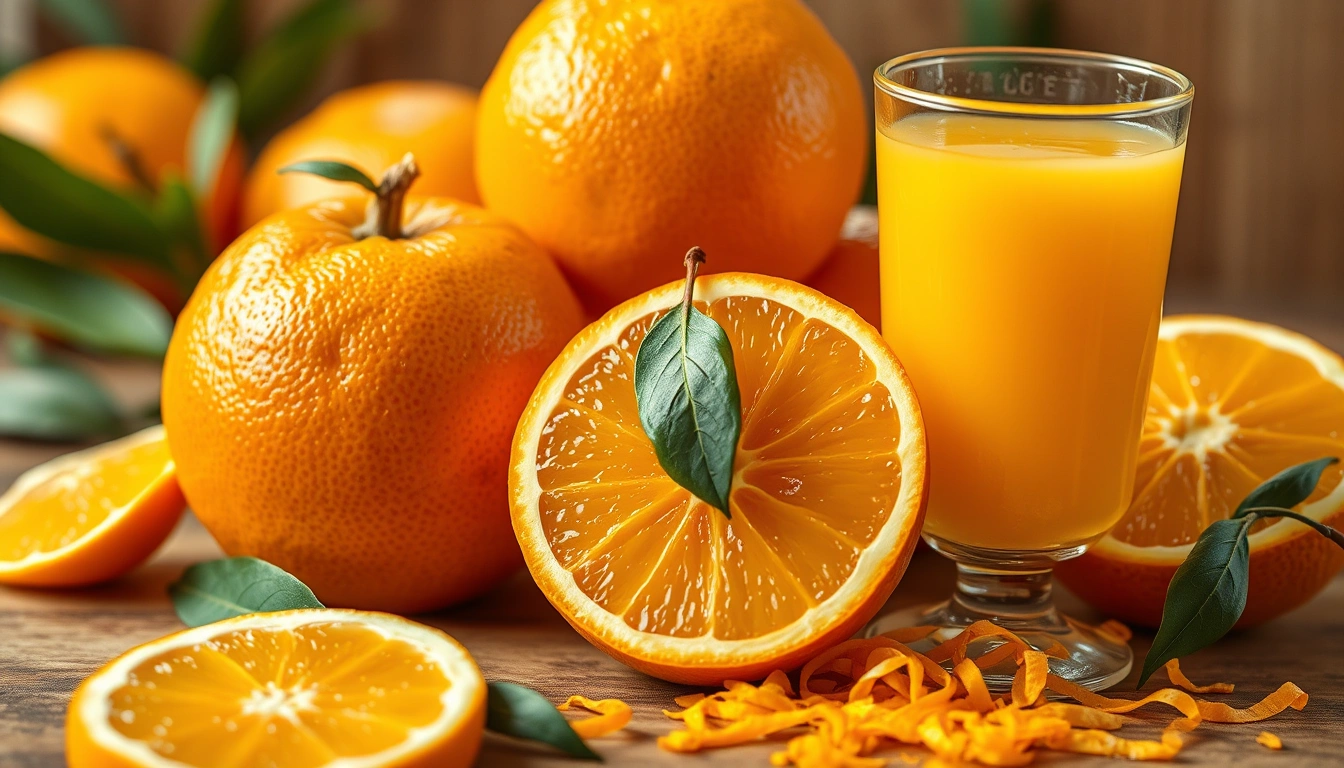
Oranges, juice and zest of
45 kcal per 100 g
Category: Fruits
Nutritional information (per 100 g)
| Calories | 45 kcal |
| Protein | 0.7g |
| Carbohydrates | 10.5g |
| Sugars | 8.4g |
| Total fats | 0.2g |
| Fiber | 0.2g |
Vitamins and minerals
Description
Oranges, juice and zest of
The orange is a very versatile citrus fruit in the kitchen, known for its sweet and slightly acidic flavor. Both its juice and its zest are used to add freshness and aroma to a wide variety of recipes, from desserts and beverages to savory dishes and dressings.
Originating from Southeast Asia, the orange has been cultivated for centuries and has spread throughout the world, becoming an essential ingredient in many cuisines. Its juice is refreshing and rich in vitamin C, while the zest, especially the outer part, contains essential oils that provide an intense aroma and citrus notes that enhance flavors.
Regarding its properties, orange juice is an excellent source of antioxidants, vitamin C, and minerals, promoting immune health and digestion. The zest, on the other hand, contains compounds that can aid in detoxification and improve flavor without adding calories.
In different Spanish-speaking countries in Latin America, the orange may have synonyms or local names, although it is usually known simply as orange. However, to refer to the juice, it is commonly called orange juice, and the zest can be called zest or orange peel. In some places, the term sweet orange is also used to differentiate it from other types of citrus.
In cooking, using both the juice and the zest allows for the creation of more complete preparations with balanced textures and aromas, making them indispensable in recipes for pastries, marinades, sauces, and cocktails.