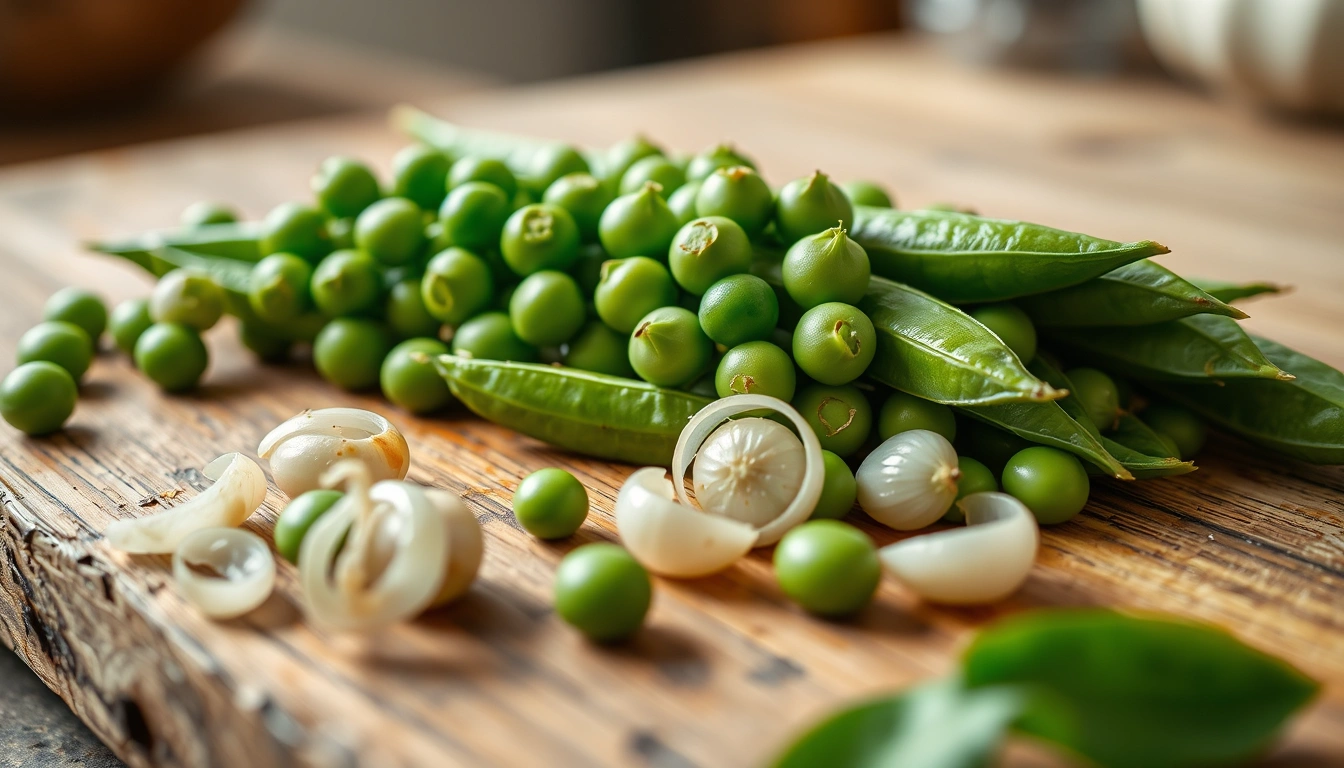
Peas and pearl onions
81 kcal per 100 g
Category: Vegetables
Nutritional information (per 100 g)
| Calories | 81 kcal |
| Protein | 5.4g |
| Carbohydrates | 14g |
| Sugars | 5.7g |
| Total fats | 0.4g |
| Fiber | 5.7g |
Vitamins and minerals
Description
Peas are the round, green edible seeds obtained from the pod of the Pisum sativum plant. They are a very popular ingredient in cooking due to their mild and sweet flavor, as well as their tender texture when cooked. Originating from the Mediterranean region and Western Asia, peas have been cultivated for thousands of years and are an essential part of many traditional and modern recipes, from soups and salads to stews and side dishes.
Regarding their properties, peas are an excellent source of plant-based protein, dietary fiber, vitamins (especially vitamin C and B-complex vitamins), and minerals such as iron and phosphorus. Additionally, they are low in fat and calories, making them a healthy choice for all types of diets.
In the Hispanic American context, peas may also be known as arvejas (a common term in countries such as Argentina, Chile, and Uruguay) or chícharos (frequently used in Mexico, Central America, and some regions of Colombia).
Pearl onions, also called cebollitas cambray or French onions, are small, reduced-size onions, usually peeled, which are characterized by their mild and slightly sweet flavor. These onions are commonly used in stews, braises, sauces, and as an accompaniment for meats and vegetables, providing a delicate texture and a subtle touch of flavor.
Pearl onions are typically obtained by peeling and preserving whole young onions, ideal for preparing recipes that require an ingredient with visual presence and a mild flavor.
In various Hispanic American countries, pearl onions are also known as small scallions or simply onion pearls, although the specific term may vary.