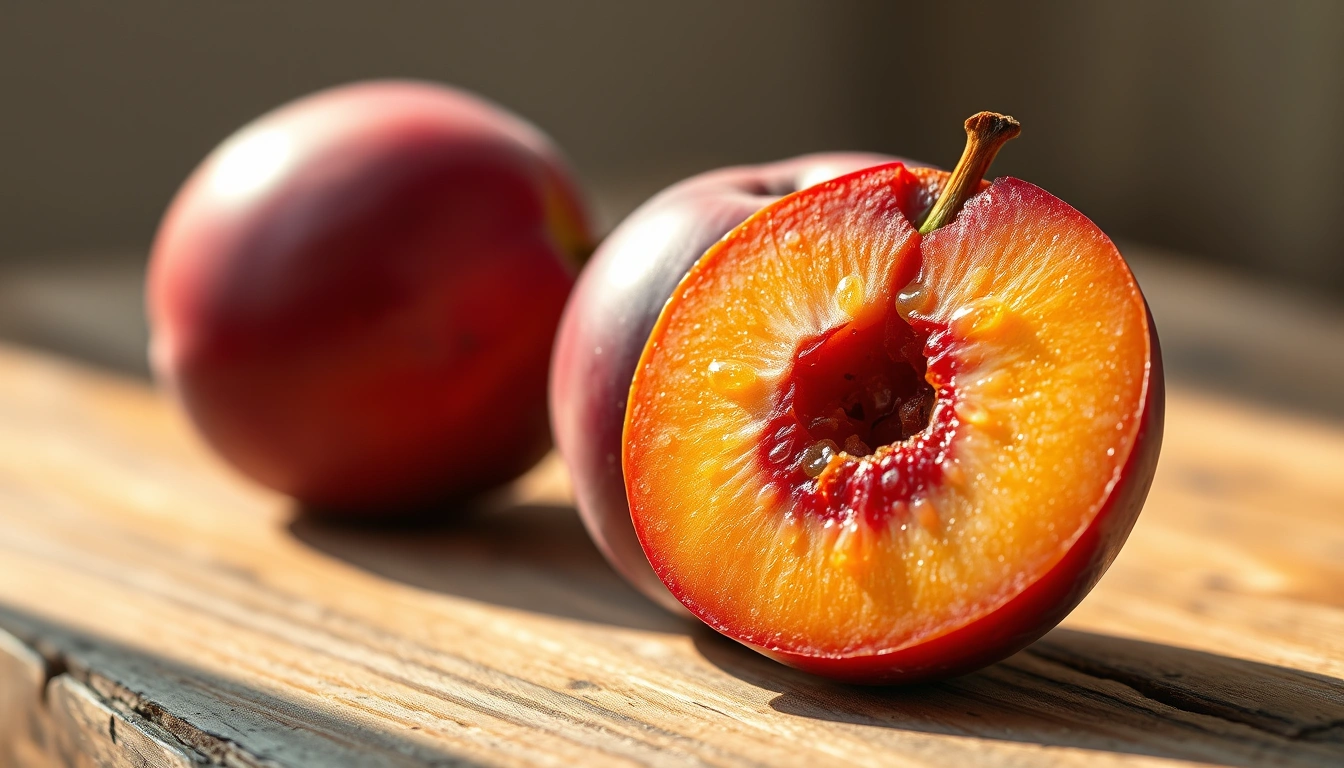
Plumcot
46 kcal per 100 g
Category: Fruits
Nutritional information (per 100 g)
| Calories | 46 kcal |
| Protein | 0.7g |
| Carbohydrates | 11g |
| Sugars | 9g |
| Total fats | 0.3g |
| Fiber | 1.4g |
Vitamins and minerals
Description
Pluot is a hybrid fruit resulting from the cross between a plum (Prunus domestica) and an apricot (Prunus armeniaca). Its name comes from the combination of the English words plum and apricot. This ingredient stands out for its sweet and juicy flavor, which combines the characteristics of both fruits, offering firm yet soft flesh with an ideal balance between acidity and sweetness that makes it perfect for both fresh and cooked recipes.
Originating in the United States, the pluot was developed in the 1980s by horticulturist Floyd Zaiger, who spent years perfecting the hybrid to optimize its flavor and texture. Currently, it is primarily cultivated in regions with temperate and warm climates, where the harvest season is usually in late summer.
From a nutritional point of view, the pluot is rich in fiber, vitamin C, and antioxidants, making it a healthy option to include in various preparations. Furthermore, its low calorie content and high water level make it ideal for balanced diets.
In the culinary field, the pluot is very versatile and can be used in salads, desserts, jams, sauces, and baked preparations, adding a sweet and delicate touch. Its thin, edible skin varies in color from reddish to purple and green tones.
Regarding terminology in Spanish and different regions of Latin America, the pluot does not have a widely recognized exact synonym due to its relatively recent appearance in the market. However, in some places it might simply be called ciruela-albaricoque (plum-apricot) or ciruela híbrida (hybrid plum), although it is most common to refer to it by its original name, pluot.