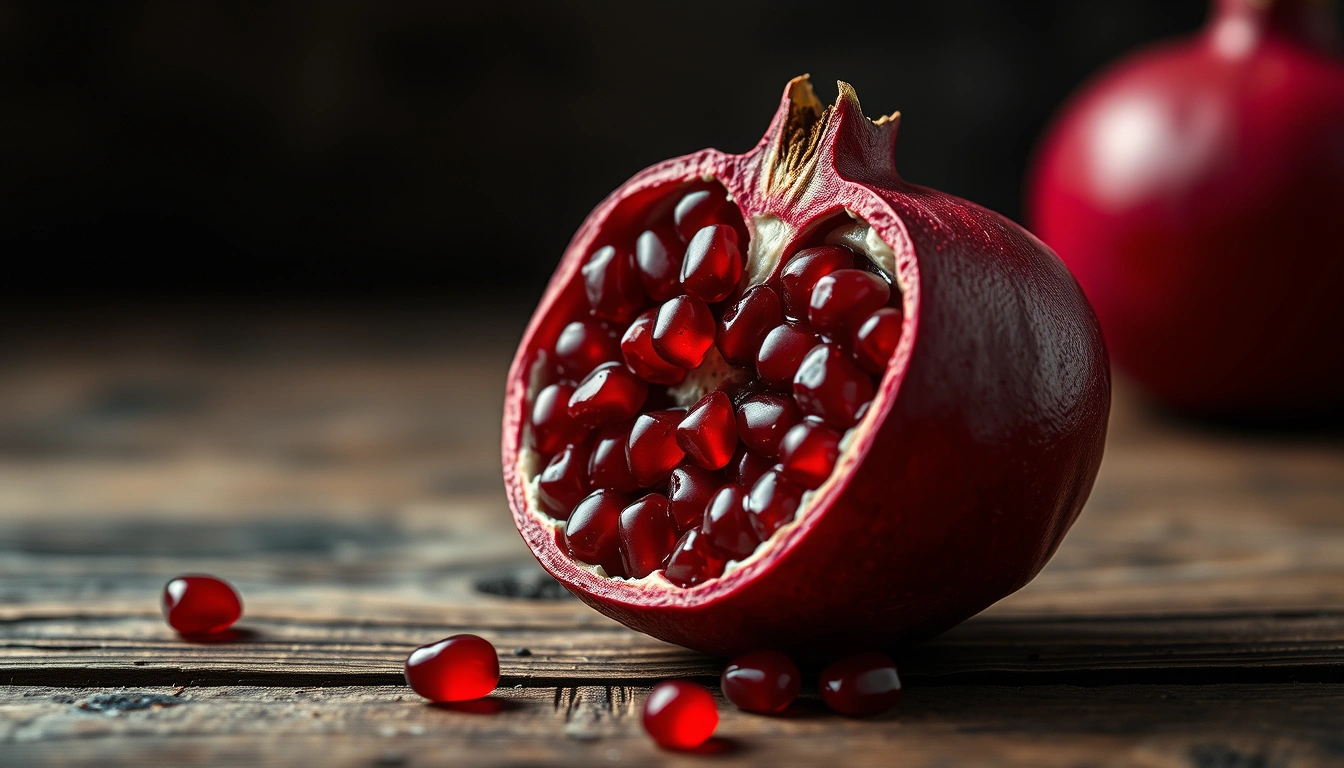
Pomegranate
83 kcal per 100 g
Category: Fruits
Nutritional information (per 100 g)
| Calories | 83 kcal |
| Protein | 1.7g |
| Carbohydrates | 19g |
| Sugars | 13.7g |
| Total fats | 1.2g |
| Fiber | 4g |
Vitamins and minerals
Description
Pomegranate is a medium-sized tropical fruit, recognized for its thick red rind that encloses numerous juicy and shiny seeds called arils. These seeds are the edible part and provide a very characteristic sweet and sour flavor, ideal for use in both sweet and savory recipes.
Native to the region between Iran and northern India, the pomegranate has been cultivated since ancient times and has spread throughout the Mediterranean, Latin America, and other temperate zones. In gastronomy, the pomegranate is valued for its versatility: it can be consumed fresh, in juices, salads, sauces, desserts, and even in cooked dishes such as stews or marinades.
Regarding its properties, the pomegranate is rich in antioxidants, especially polyphenols, which help combat cellular aging. It also provides vitamins C and K, dietary fiber, and minerals such as potassium. Due to its benefits for cardiovascular health and its anti-inflammatory properties, it has gained popularity in healthy eating.
In different Spanish-speaking countries, the pomegranate has various names. Some synonyms used in Hispanic America include "granada" (the most common term), "pomegranate" in bilingual contexts, and it can sometimes be referred to as "michita" or "rompe corazones", although the latter two are less frequent and more regional.