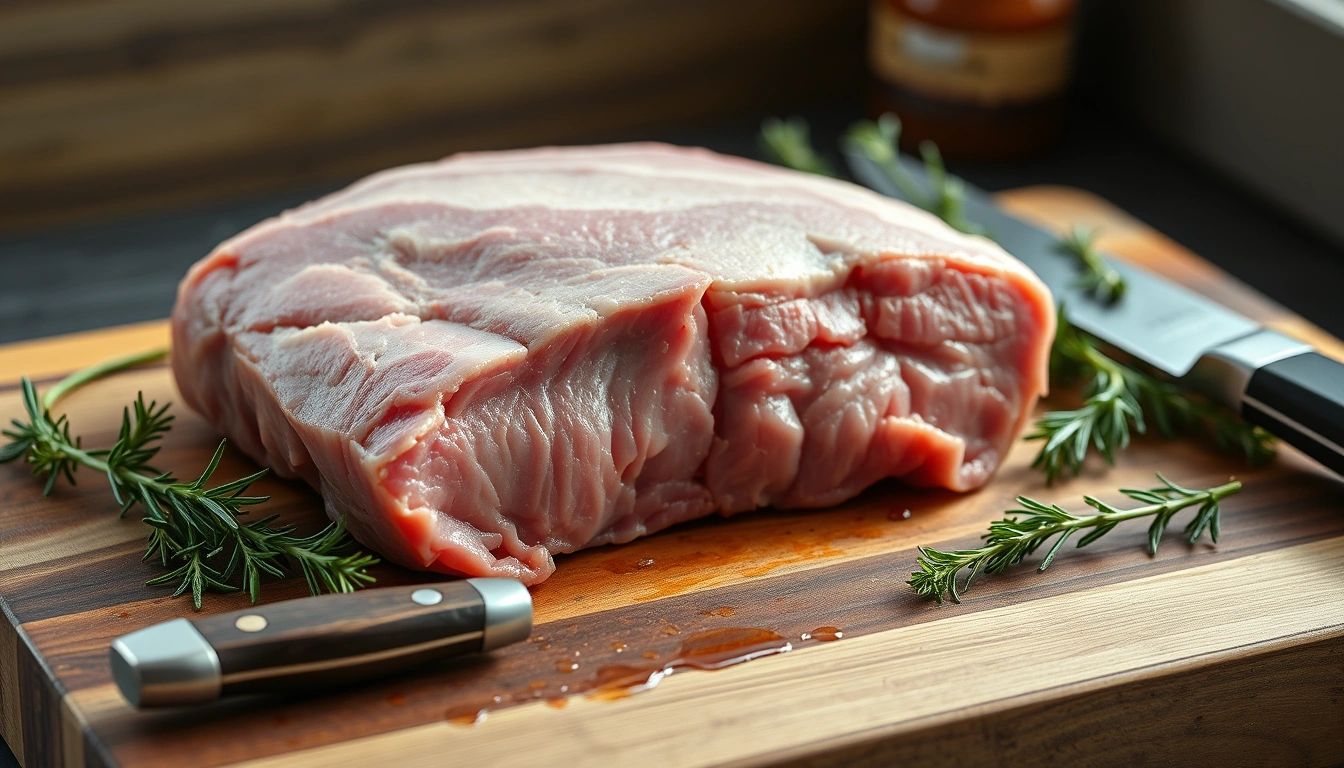
Pork boneless meat
242 kcal per 100 g
Category: Meat
Nutritional information (per 100 g)
| Calories | 242 kcal |
| Protein | 27g |
| Carbohydrates | 0g |
| Sugars | 0g |
| Total fats | 14g |
| Saturated fats | 5g |
| Fiber | 0g |
| Sodium | 62mg |
| Cholesterol | 77mg |
Vitamins and minerals
Description
Boneless pork leg is a lean and versatile cut of pork that comes mainly from the rear part of the animal, near the thigh. This cut is free of bones, which makes it easy to use in a wide variety of recipes, from stews and braises to roasts and grilled preparations.
The origin of boneless pork leg is primarily from the ham or thigh region of the pig, where the meat is tender with an ideal balance of lean and fat, providing flavor and juiciness to dishes.
Regarding its properties, it is an excellent source of high-quality protein, with a moderate fat content that provides energy and aids in the absorption of fat-soluble vitamins. Furthermore, it contains B-complex vitamins, especially B1 (thiamine), essential for energy metabolism, and minerals such as iron and zinc.
In different Latin American countries, boneless pork leg may go by various names that make it easier to identify in the market or in local recipes. Some common synonyms include boneless pork leg meat, boneless pork thigh, leg pulp, and in some places simply boneless leg.
This ingredient is ideal for those looking for a pork meat that cooks quickly and adapts to multiple cooking techniques, adding flavor and texture to their preparations.