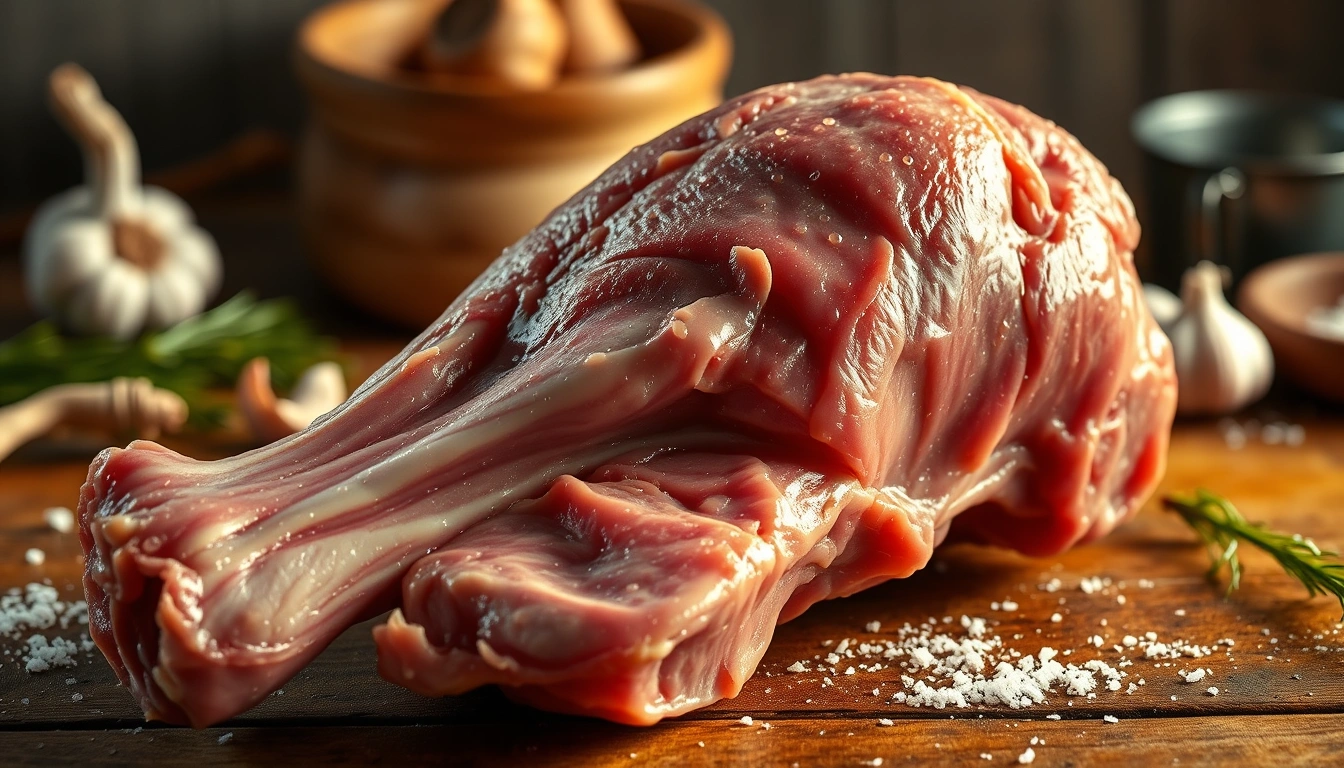
Pork knuckle
215 kcal per 100 g
Category: Meat
Nutritional information (per 100 g)
| Calories | 215 kcal |
| Protein | 27.7g |
| Carbohydrates | 0g |
| Total fats | 12.4g |
| Fiber | 0g |
| Sodium | 70mg |
| Cholesterol | 85mg |
Vitamins and minerals
Description
Pork knuckle is a cut of meat that corresponds to the front or rear part of the pig's leg, located between the knee and the ham. It is a bone-in cut, highly valued in cooking for its intense flavor and gelatinous texture thanks to the collagen present in the skin and connective tissue. When cooked slowly, the knuckle becomes very tender and can be used in stews, roasts, or boiled dishes.
The origin of pork knuckle is typical of Central European cuisine, especially popular in countries like Germany, where it is known as Schweinshaxe, but it is also widely used in Spanish and Latin American gastronomy.
Among its properties, the knuckle provides a good amount of proteins and fats, as well as minerals such as iron and zinc. Due to its collagen content, it is ideal for long cooking preparations that enhance its flavor and texture.
In the context of Hispanic American cuisine, the knuckle may also be known as jarrete de cerdo, carpa de cerdo, or garrón de cerdo, terms that vary depending on the country and region. These synonyms usually refer to the same part of the pig and are used in traditional recipes that include stews, broths, and casseroles.