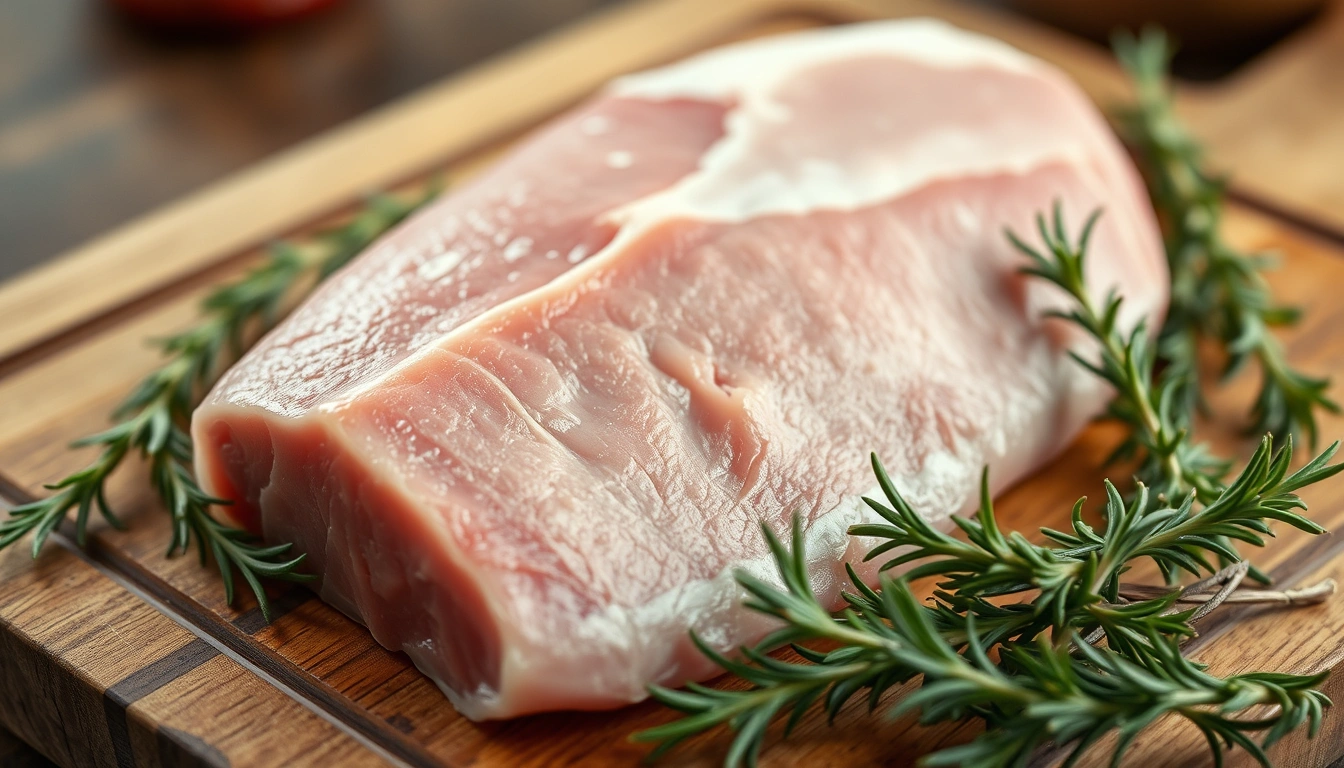
Pork loin without bone
143 kcal per 100 g
Category: Meat
Nutritional information (per 100 g)
| Calories | 143 kcal |
| Protein | 21.7g |
| Carbohydrates | 0g |
| Total fats | 3.6g |
| Fiber | 0g |
| Sodium | 59mg |
| Cholesterol | 62mg |
Vitamins and minerals
Description
Boneless lean pork loin is a cut of meat obtained from the upper part of the pig, characterized as a long, thin, and very lean piece, meaning it has a low fat content. This cut is especially valued in cooking for its tenderness and versatility, allowing its use in a wide variety of recipes, from roasts to stews and stir-fries.
Pork loin commonly comes from pigs raised in different regions of Latin America, Europe, and Asia, where it is one of the most popular cuts due to its mild flavor and juicy texture when cooked properly.
Among its nutritional properties, it stands out for its high content of good-quality protein, low fat level, and moderate contribution of B-complex vitamins, especially B1 (thiamine), which contribute to the proper functioning of the nervous and muscular systems. It is also a source of essential minerals like zinc and iron, fundamental for the immune system and the formation of red blood cells.
In different Latin American countries, boneless lean pork loin may have various synonyms or alternative names, such as pork loin, center-cut loin, pork cuete (in certain regions), or simply boneless loin. It is important to note that, although there are regional variations in the terms, the product referred to is the lean and clean meat from the loin, with no presence of bone or visible fat, ideal for healthy and quick preparations.