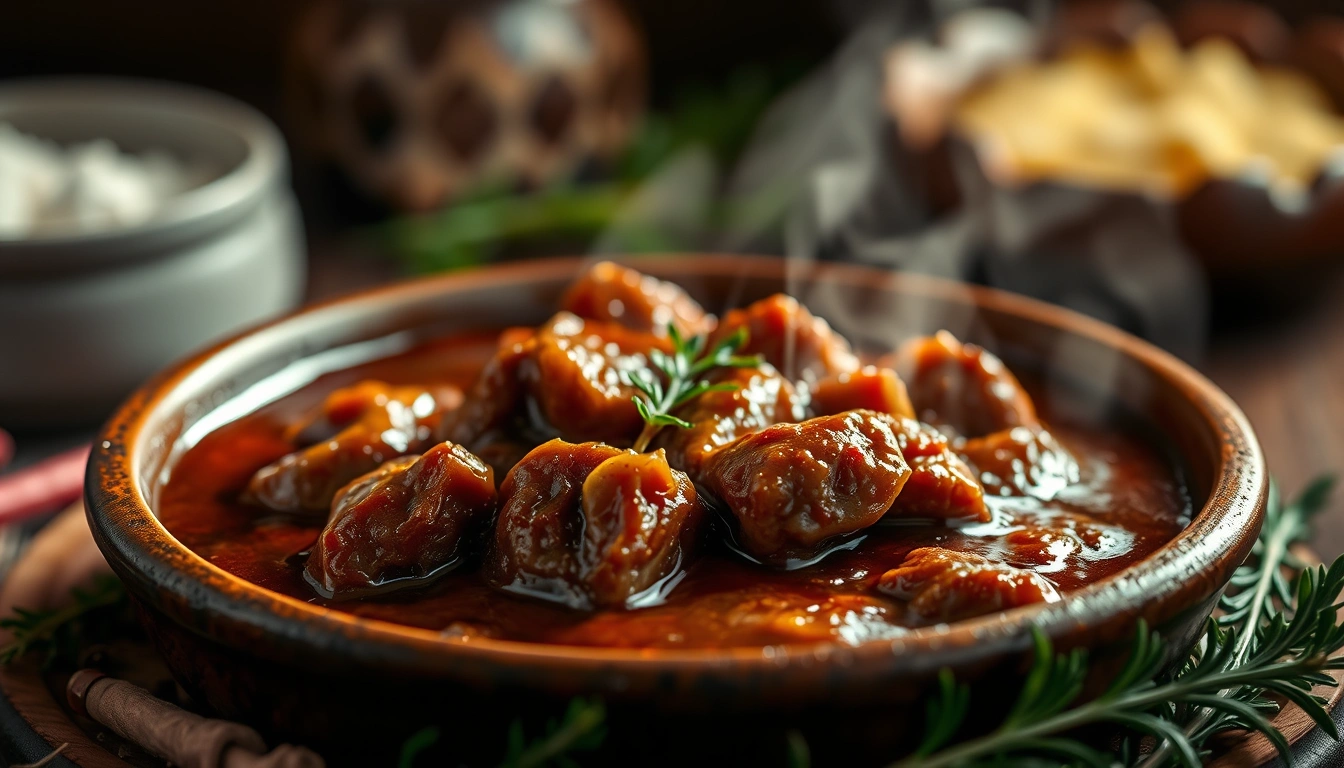
Pork meat sauce
120 kcal per 100 g
Category: Meat
Nutritional information (per 100 g)
| Calories | 120 kcal |
| Protein | 8g |
| Carbohydrates | 5g |
| Sugars | 3g |
| Total fats | 8g |
| Saturated fats | 3g |
| Fiber | 0.5g |
| Sodium | 600mg |
Vitamins and minerals
Description
Pork meat sauce is a liquid condiment or preparation obtained by cooking and breaking down pork meat with various ingredients such as spices, vegetables, and sometimes broths or base sauces. This sauce is commonly used to enhance the flavor of various dishes, from stews to rice and pasta, providing an intense, umami, and slightly sweet or spicy flavor depending on the recipe.
Its origin is linked to the culinary traditions of various regions where pork is a fundamental ingredient, such as in Spanish and Latin American cuisines. In these cultures, pork meat sauce has developed from the need to utilize the juices, fats, and remnants of pork to create tasty and nutritious accompaniments.
Properties: In addition to its delicious flavor, pork meat sauce provides proteins, fats, iron, and some B vitamins, which are inherent to the meat. However, its nutritional value may vary depending on the added ingredients and the amount of fat present. It is an excellent option for adding depth and texture to dishes, although its consumption is recommended in moderation for those seeking to control calorie or fat intake.
Synonyms in Spanish from Latin America: depending on the country, it may be found under names such as “salsa de cerdo”, “salsa de puerco” (Mexico), “salsa de chancho” (Chile, Bolivia), or simply “salsa de carne” when the type of meat used is specified. Occasionally, it is also referred to as “ragú de cerdo” for thicker preparations with pieces of meat.