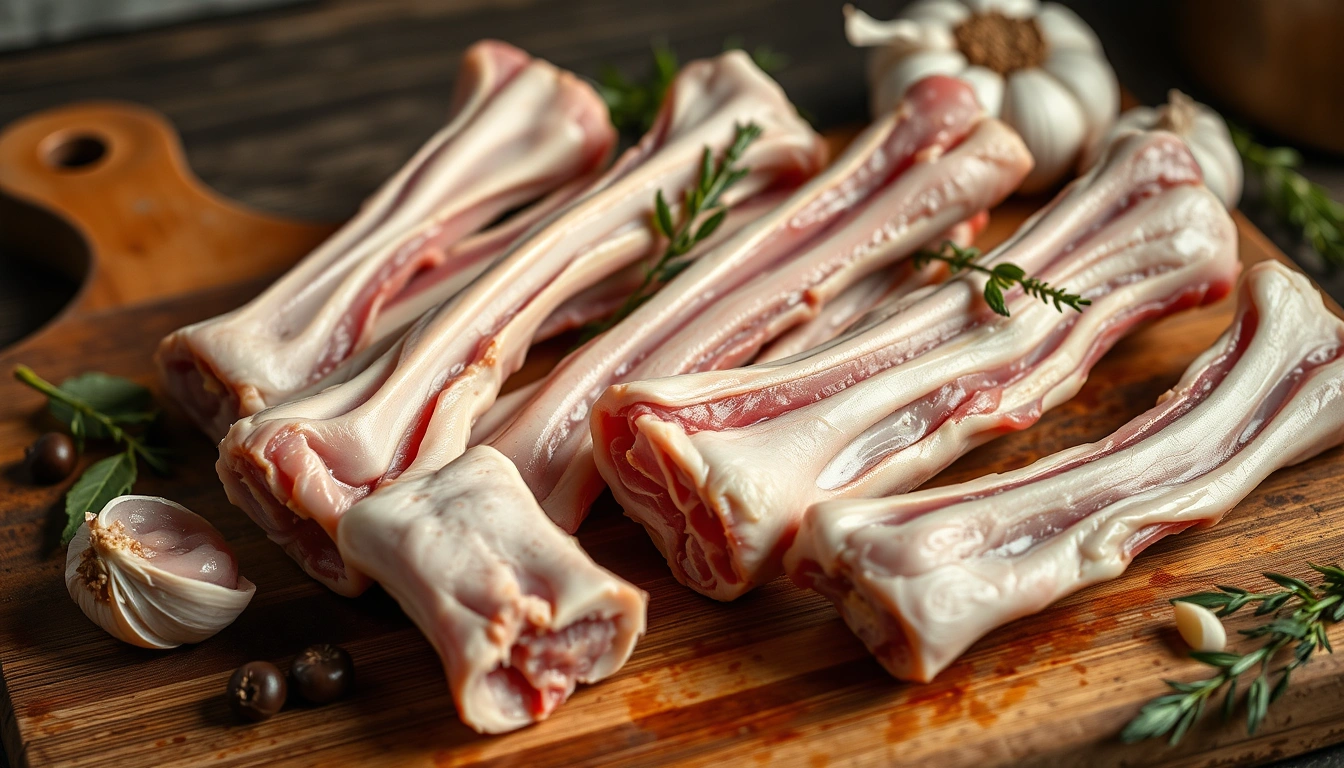
Pork neck bones
180 kcal per 100 g
Category: Meat
Nutritional information (per 100 g)
| Calories | 180 kcal |
| Protein | 18g |
| Total fats | 10g |
| Saturated fats | 3.5g |
| Sodium | 70mg |
| Cholesterol | 70mg |
Vitamins and minerals
Description
Pork neck bones are a highly valued cut in traditional cooking, especially for preparing broths, soups, and stews that require a deep and enriched flavor. These bones come from the neck area of the pig, a section with abundant connective tissue and some attached meat, which contributes gelatin and an intense flavor to the broth.
Origin: The use of pork bones for making broths dates back to various culinary cultures, particularly in Hispanic American and European cuisines, where all parts of the animal are utilized to maximize flavor and nutrients.
Properties: These bones are rich in collagen and minerals like calcium and phosphorus, essential for enriching broths and providing a velvety texture to preparations. Furthermore, the collagen helps give body and a natural gelatinous feel to dishes, making it ideal for recipes like sauces, soups, and stews.
Synonyms in Hispanic America: depending on the country, pork neck bones may be known simply as pork bones (when the cut is specified), or in some places as little pork bones or pork soup bones. In general, it is recommended to specify “neck” to get the correct cut at butcher shops.