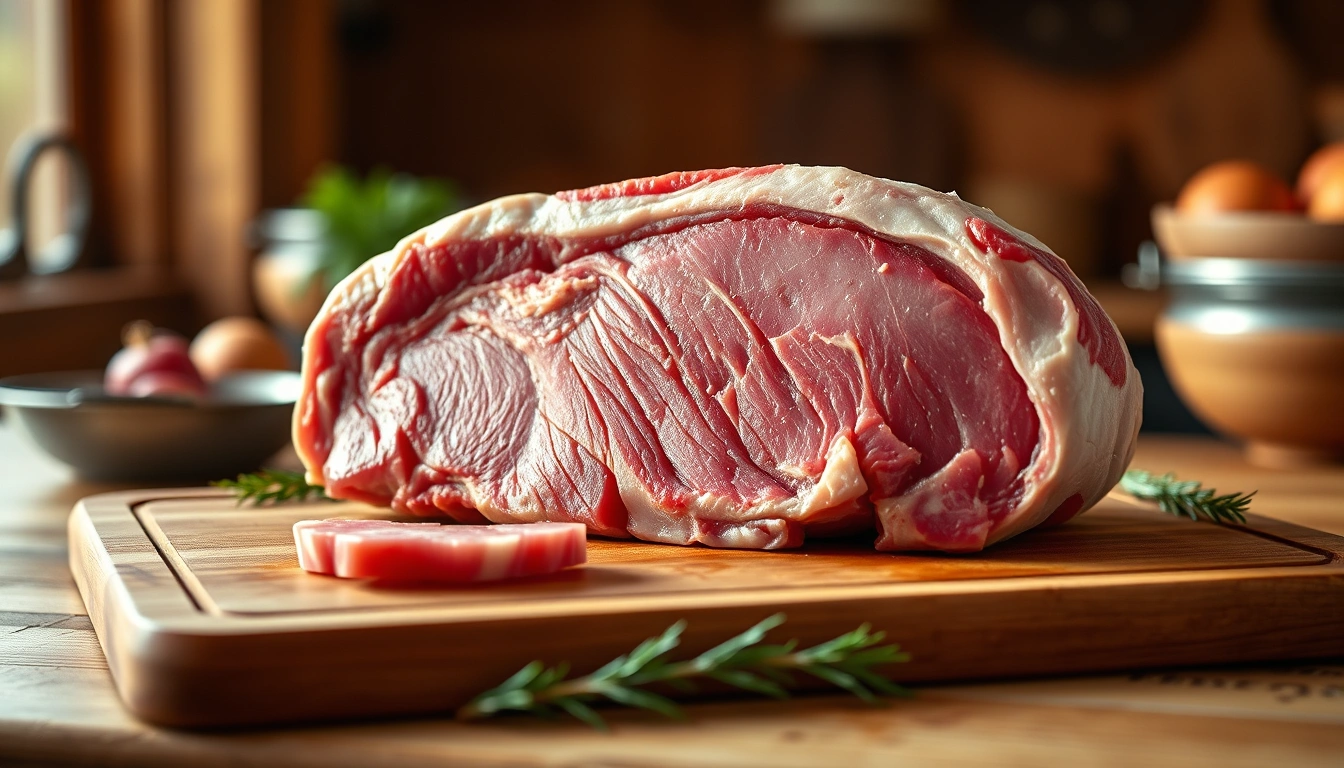
Pork shoulder blade roast boneless
174 kcal per 100 g
Category: Meat
Nutritional information (per 100 g)
| Calories | 174 kcal |
| Protein | 20.9g |
| Carbohydrates | 0g |
| Sugars | 0g |
| Total fats | 10.5g |
| Saturated fats | 3.8g |
| Fiber | 0g |
| Sodium | 58mg |
| Cholesterol | 75mg |
Vitamins and minerals
Description
Boneless pork shoulder is a cut of meat from the upper part of the pig's shoulder, specifically the area between the neck and the loin. This cut is highly valued in cooking for its intense flavor and tender texture when properly cooked. Being boneless, it is easier to handle and is ideal for preparing stews, braises, roasts, and stuffing.
Its origin lies in the traditional anatomy of the pig, where the shoulder is a fundamental cut for recipes that require juicy meat with a good fat content, which adds flavor and prevents the meat from drying out during cooking.
Regarding its properties, pork shoulder is an important source of high-quality protein, B vitamins (especially B1, B6, and B12), and minerals such as iron and zinc. Due to its moderate fat content, it offers a good nutritional balance for well-rounded preparations.
In different Latin American countries, boneless pork shoulder may have different names depending on the region. Some common synonyms include paleta de cerdo (Mexico, Argentina, Chile), aguja de cerdo (Colombia), or simply espaldilla. However, it is important to confirm that it refers to the boneless meat, as sometimes these terms are used for cuts with the bone in.
This ingredient is versatile and perfect for recipes that require meat that falls apart when slow-cooked or that can be cut into strips or cubes for stir-fries, carnitas, pulled pork, and other traditional dishes.