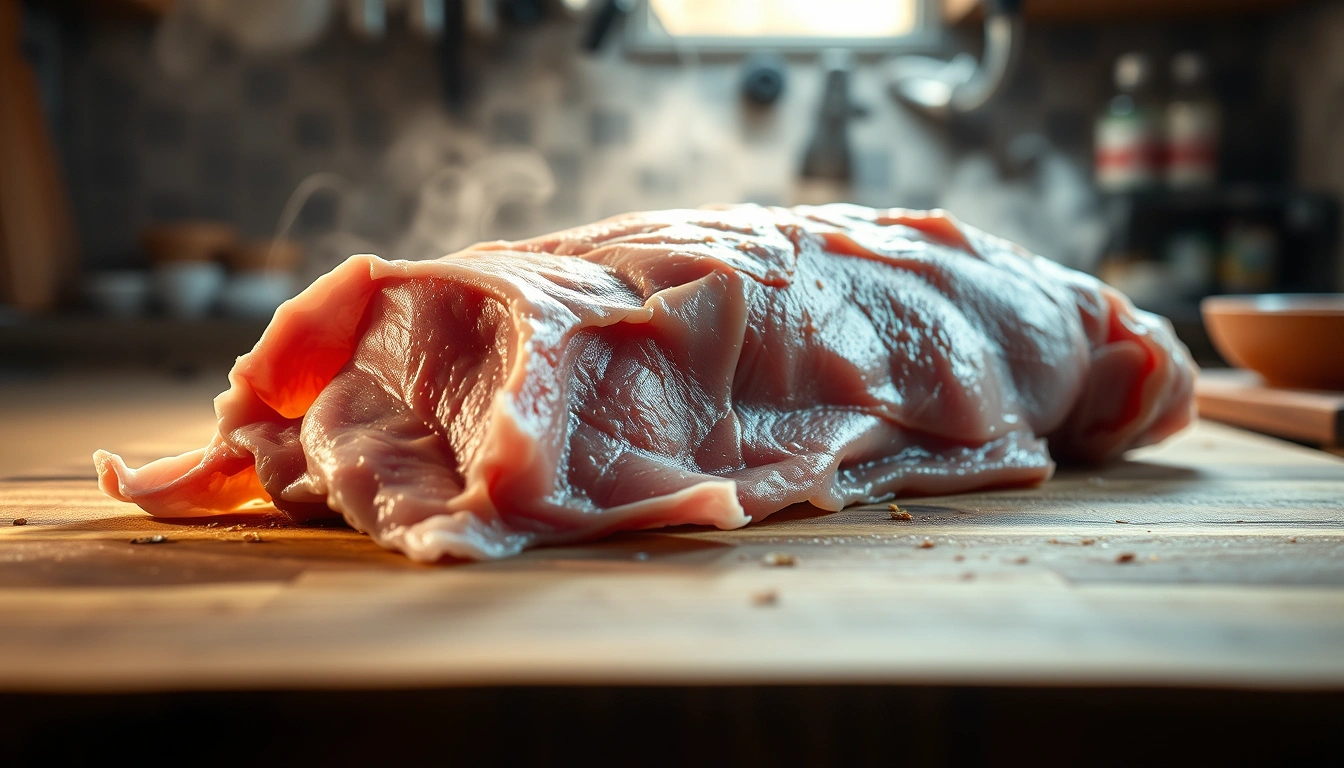
Pork skin
500 kcal per 100 g
Category: Meat
Nutritional information (per 100 g)
| Calories | 500 kcal |
| Protein | 60g |
| Carbohydrates | 0g |
| Total fats | 50g |
| Saturated fats | 18g |
| Fiber | 0g |
Vitamins and minerals
Description
Pork skin is an ingredient widely used in various traditional cuisines, especially in dishes that seek a crispy texture and intense flavor. It is the outer layer of the pig's skin, rich in collagen, which when properly cooked can become a delicious and highly valued component in stews, fried dishes, or as a base for broths.
This ingredient has its roots in the gastronomy of many cultures, from Spanish and Mexican to Caribbean and various Latin American countries, where every part of the animal is used to the fullest to avoid waste and add nutritional and sensory value to preparations.
Properties: Pork skin is an important source of protein, especially collagen, which is beneficial for the health of the skin, joints, and bones. Furthermore, it contains fats that provide energy, although its consumption should be moderate due to its caloric content.
Synonyms in Spanish from Latin America: in different countries it is also known as chicharrón (when it is fried and crispy), costra de cerdo, corteza de cerdo, or simply pella in some places. However, it is important to note that "chicharrón" usually refers to the final fried product and not just the raw skin.