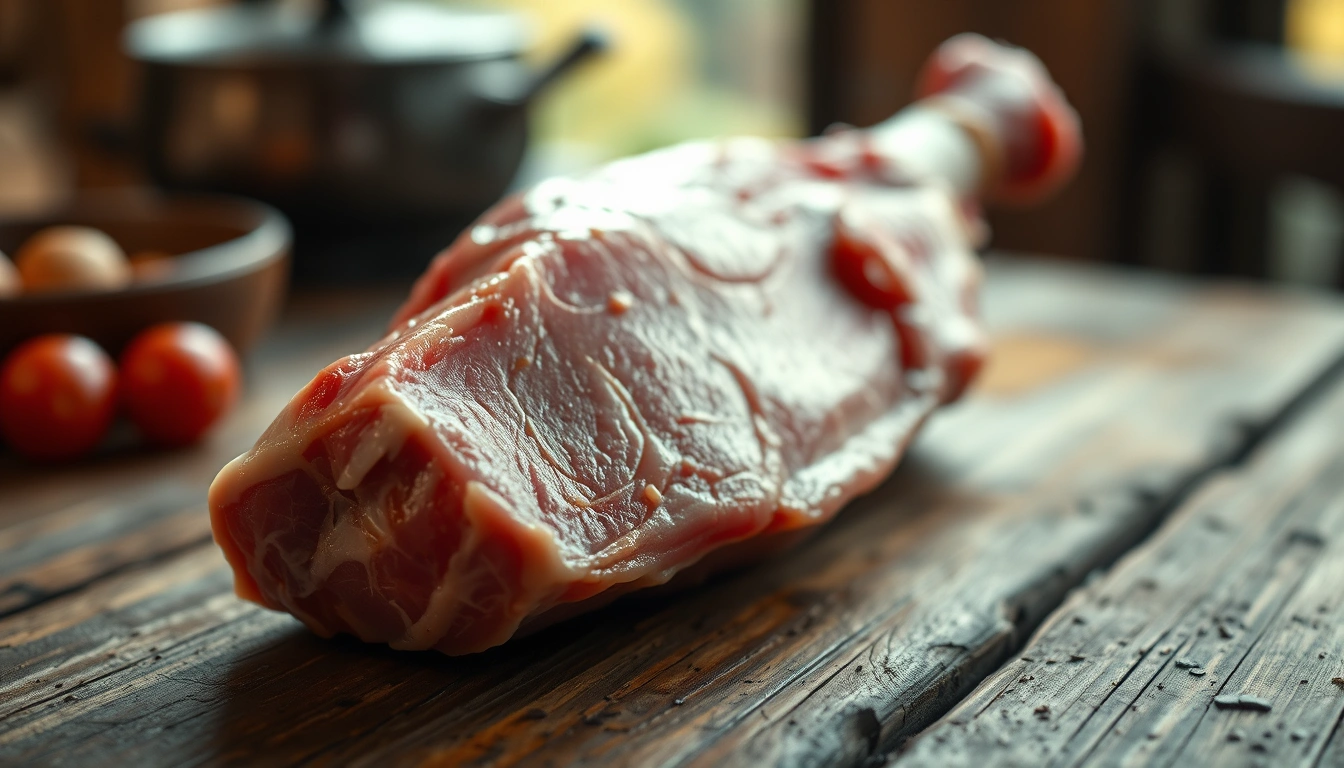
Pork tail
242 kcal per 100 g
Category: Meat
Nutritional information (per 100 g)
| Calories | 242 kcal |
| Protein | 21g |
| Carbohydrates | 0g |
| Sugars | 0g |
| Total fats | 18g |
| Saturated fats | 6.5g |
| Fiber | 0g |
| Sodium | 70mg |
| Cholesterol | 85mg |
Vitamins and minerals
Description
Pig's tail is a cut of meat that comes from the tail of a pig, traditionally used in many cuisines around the world, especially in recipes that require long cooking times to achieve a very tender texture and an intense flavor. Its gelatinous texture, due to the high amount of collagen, makes it ideal for stews, casseroles, and broths, adding a unique tenderness and flavor to dishes.
Pig's tail is very popular in Spanish, Portuguese, and Latin American cuisines. In many regions of Latin America, this part of the pig is also used in home cooking and culinary festivities. Its origin dates back to the tradition of using all parts of the animal, avoiding waste and maximizing flavor in recipes.
Among its properties, its content of collagen, proteins, and fats stands out, which contributes to the silky texture and robust body of stews made with pig's tail. Furthermore, being a meat that requires slow cooking, it is excellent for comforting and nutritious dishes, ideal for cold climates or family meals.
Regarding synonyms in Spanish from Latin America, pig's tail can also be known simply as cola de cerdo (pig's tail) or, in some countries, referred to as rabo de puerco. In Mexico and parts of Central America, the use of these terms is common in traditional recipes where the tail is boiled or stewed with vegetables and spices.