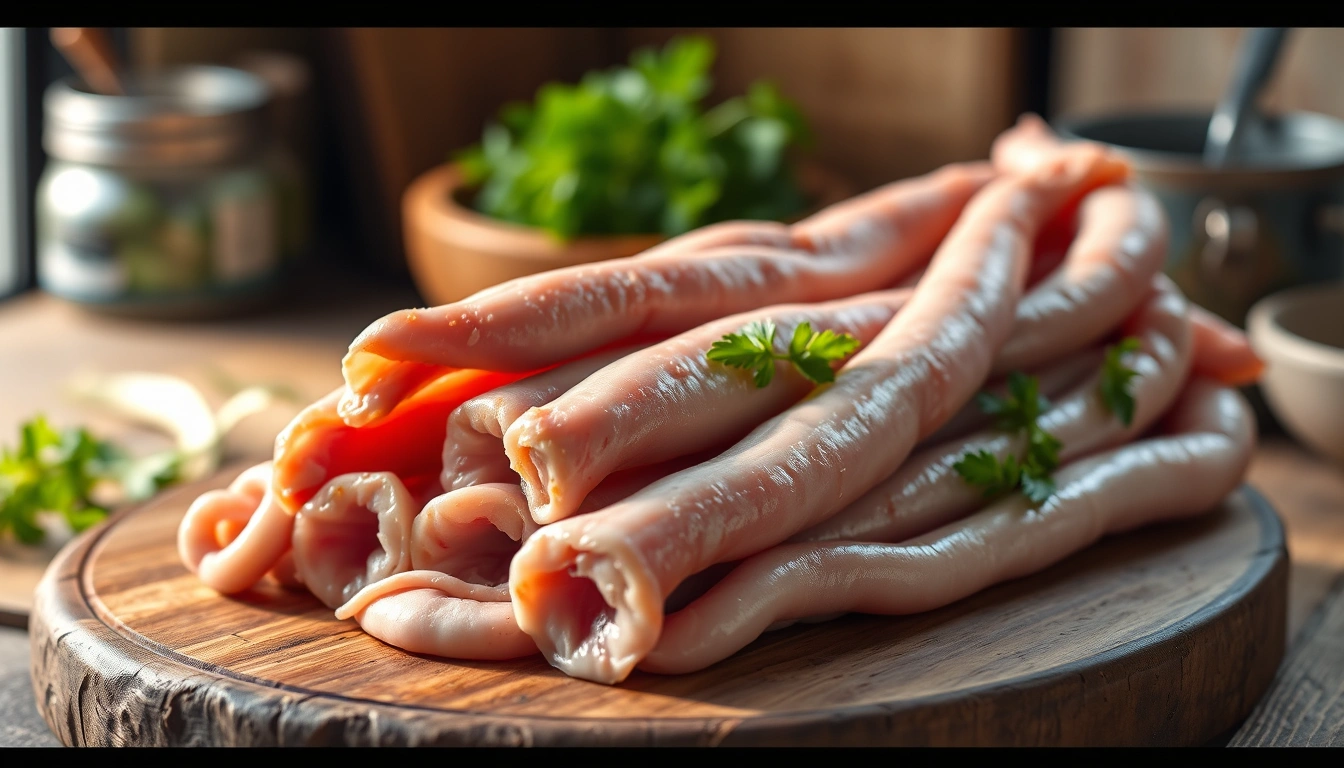
Pork tripe
154 kcal per 100 g
Category: Meat
Nutritional information (per 100 g)
| Calories | 154 kcal |
| Protein | 20.9g |
| Carbohydrates | 0g |
| Total fats | 7.5g |
| Saturated fats | 2.7g |
| Fiber | 0g |
| Sodium | 80mg |
| Cholesterol | 82mg |
Vitamins and minerals
Description
Pork intestine is a culinary ingredient consisting of the small intestine of the pig, traditionally used in various recipes to provide characteristic texture and flavor. Its use is very common in the preparation of sausages, such as chorizo, morcilla, or butifarra, as well as in stews and casseroles in many Latin American cuisines.
The origin of pork intestine as a culinary ingredient dates back to ancestral practices of whole-animal utilization, which are very present in Mediterranean and Latin American gastronomy. It is carefully cleaned to remove impurities and is used both fresh and cured or soaked in brine.
Regarding its properties, pork intestine is rich in collagen, which provides a unique and firm texture when cooked. It is low in fat but may contain sodium in cured preparations. Furthermore, as a product of animal origin, it is a source of protein.
In different Spanish-speaking countries, pork intestine has various synonyms that can vary depending on the culinary context, among which the following stand out: tripa gorda (large intestine), tripa delgada (when referring to the small intestine), chinchulín (a term used in some regions of Argentina, Uruguay, and Chile for small, cleaned intestines), or simply tripa (intestine). In Mexico, it is often called tripa blanca (white intestine) when referring to cleaned pork intestine for tacos and other dishes.
Its versatility in the kitchen makes it an indispensable ingredient for those who enjoy traditional gastronomy that utilizes every part of the pig in a sustainable and delicious way.