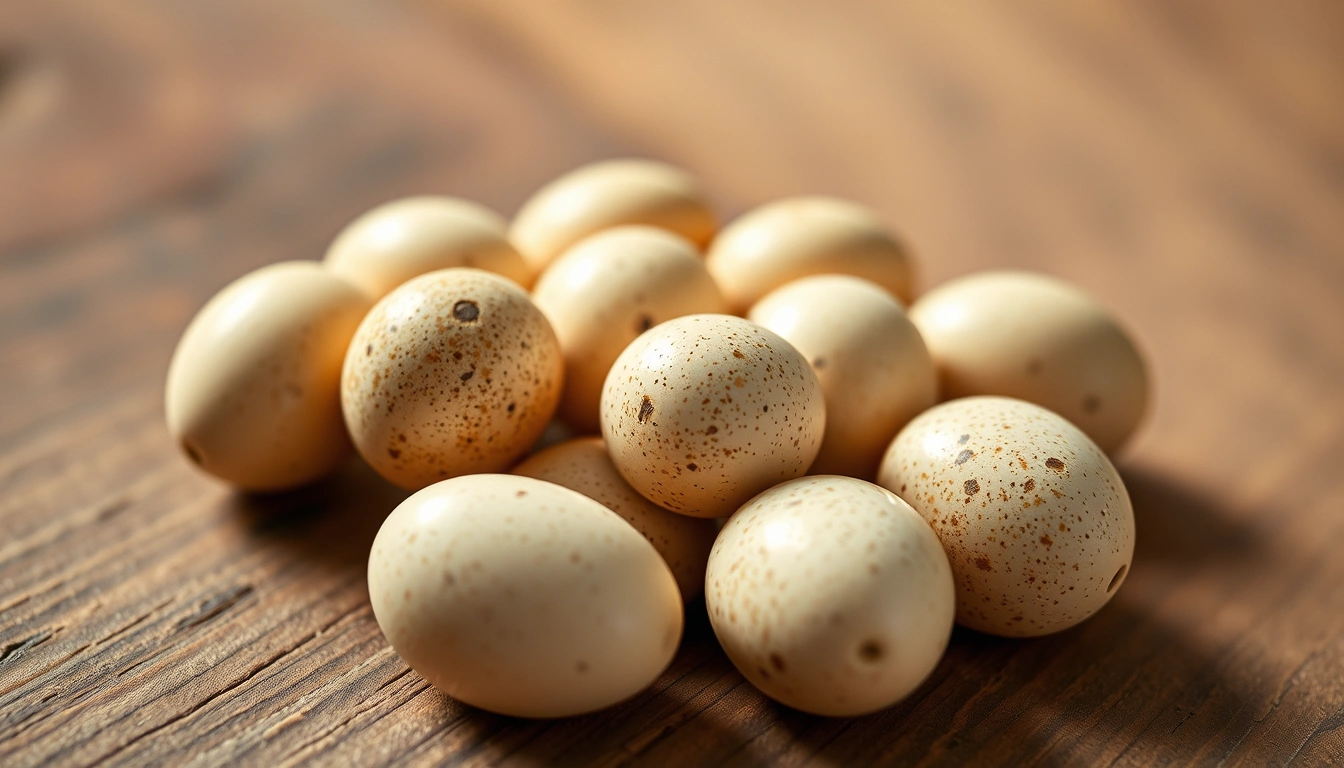
Quail eggs
158 kcal per 100 g
Category: Meat
Nutritional information (per 100 g)
| Calories | 158 kcal |
| Protein | 13g |
| Carbohydrates | 0.4g |
| Total fats | 11g |
| Saturated fats | 3.3g |
| Fiber | 0g |
| Cholesterol | 844mg |
Vitamins and minerals
Description
Quail eggs are small bird eggs that come from the quail, a type of bird highly valued in gastronomy for its delicate flavor and soft texture. Much smaller than chicken eggs, they typically measure between 2 and 4 centimeters, with a thin, speckled shell, making them visually attractive for presentation in elaborate dishes.
The origin of quail eggs is linked mainly to regions of Asia, Europe, and America, where quail farming is common both for direct consumption and for the production of fine eggs. In cooking, these eggs are used in appetizers, salads, canapés, and gourmet dishes due to their subtle and elegant flavor.
Regarding their properties, quail eggs are a rich source of high-quality protein, vitamins such as A and B12, and minerals like iron and phosphorus. Furthermore, they contain less cholesterol than chicken eggs and are ideal for those seeking nutritious options in small portions.
In the Hispanic world, quail eggs are also commonly known as "huevitos de codorniz" or simply "small eggs", although the former is the most widespread term in recipes and menus. Their use is very popular in Mexican, Colombian, and Argentine cuisines, where they are used for decoration or as main ingredients in snacks and starters.