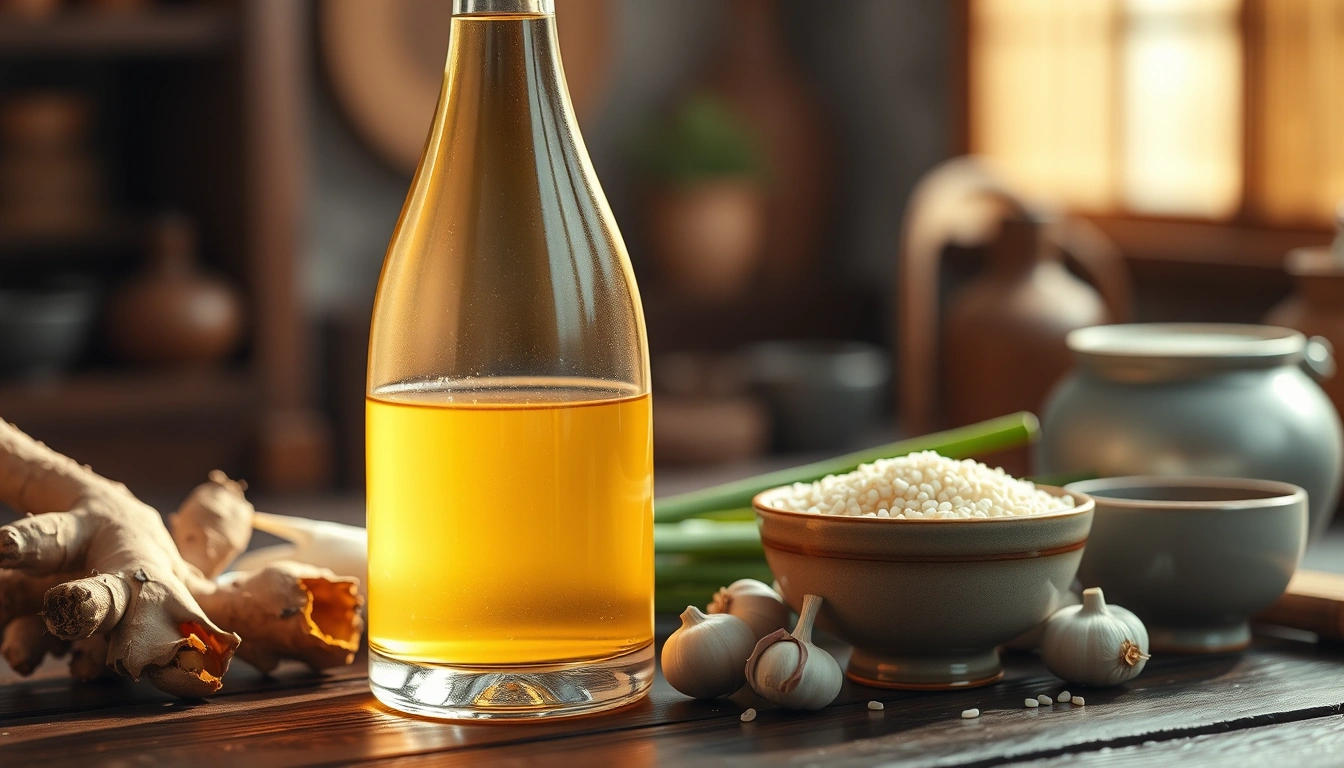
Rice wine
82 kcal per 100 g
Category: Beverages
Nutritional information (per 100 g)
| Calories | 82 kcal |
| Protein | 0.1g |
| Carbohydrates | 2.3g |
| Sugars | 1.5g |
| Total fats | 0g |
| Fiber | 0g |
| Sodium | 5mg |
Vitamins and minerals
Description
Rice wine is a traditional alcoholic beverage made from the fermentation of rice. Widely used in Asian cuisine, especially in Chinese, Japanese, and Korean gastronomy, this ingredient provides a mild, slightly sweet flavor and a delicate aroma that enhances dishes such as marinades, stir-fries, and sauces.
Its origin dates back thousands of years in Asia, where rice is not only a staple food but also the base for making fermented beverages. In China, rice wine is known as jiu, while in Japan it is called sake, although the process and flavor may vary between regions.
From a nutritional standpoint, rice wine contains a moderate amount of alcohol and some nutrients from fermented rice, such as amino acids and small amounts of B-complex vitamins. In cooking, it is used more for its aromatic qualities and its ability to improve the texture and flavor of preparations.
In different Latin American countries, rice wine may also be known as rice wine (the most common term), or simply as Asian wine. It is important not to confuse it with rice vinegar, which is a non-alcoholic, acidic condiment.