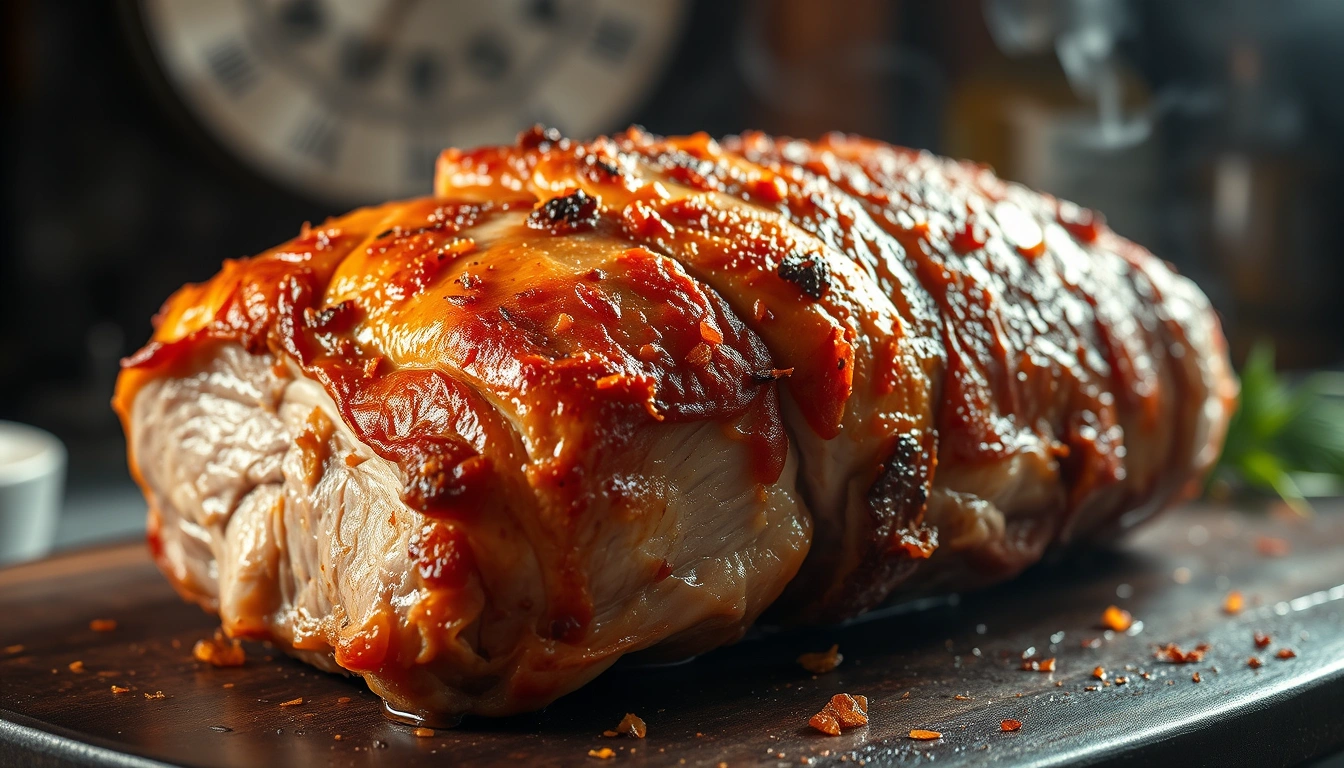
Roast pork
242 kcal per 100 g
Category: Meat
Nutritional information (per 100 g)
| Calories | 242 kcal |
| Protein | 27g |
| Carbohydrates | 0g |
| Total fats | 14g |
| Fiber | 0g |
| Sodium | 62mg |
| Cholesterol | 85mg |
Vitamins and minerals
Description
Roast pork is a dish made from pork meat that has been slowly cooked in an oven or on a grill, achieving a juicy texture and a crispy, golden-brown skin. It is a traditional preparation in many cultures, especially in Spanish and Latin American cuisines, and is commonly used as a main ingredient or side dish in a wide variety of recipes.
The origin of roast pork dates back to ancient times, when the ceremony and celebration of roasting meat over a fire was a symbol of festivity. In different regions of the Spanish-speaking world, roast pork has become an emblematic dish for family gatherings, parties, and special celebrations.
Among its properties, roast pork provides a high protein content and a good amount of B-complex vitamins, especially B1 (thiamine). Pork is also an important source of minerals such as iron and zinc. As a food prepared by roasting, it retains a good portion of its nutrients and its natural flavor, emphasizing a tender texture and an intense, aromatic taste.
Regarding synonyms in different countries of Hispanic America, roast pork may be called:
- Lechón: a term widely used in countries like Puerto Rico, Cuba, the Dominican Republic, and Colombia to refer to a whole roasted pig, especially during celebrations.
- Puerco asado: common in Mexico and some regions of Central America.
- Chancho asado: used in countries like Chile, Peru, and Bolivia.
- Cocho or cochito asado: less frequent terms that may be found in certain rural areas of South America.
Roast pork is a versatile ingredient that is used in cooking for everything from main courses to stuffings and side dishes, always offering a characteristic flavor and an irresistible texture.