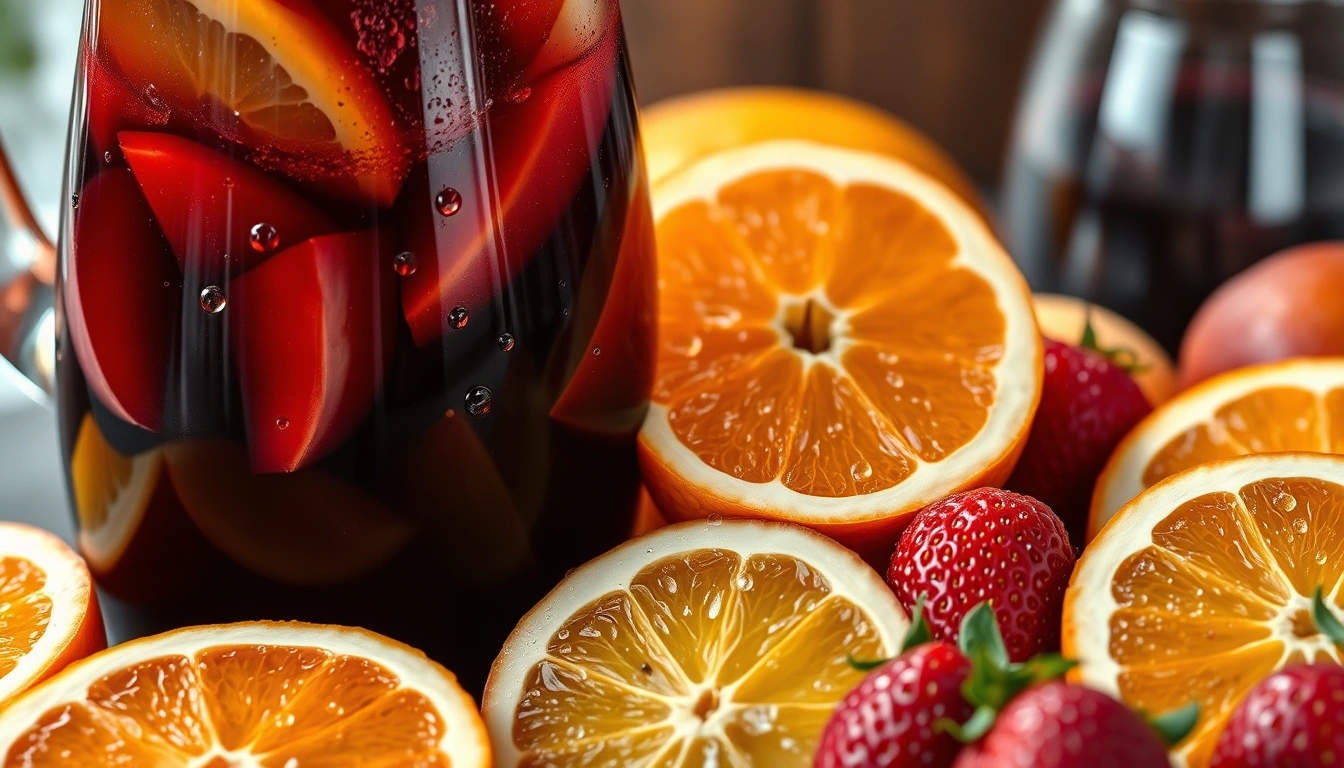
Sangria
70 kcal per 100 g
Category: Beverages
Nutritional information (per 100 g)
| Calories | 70 kcal |
| Protein | 0.1g |
| Carbohydrates | 17g |
| Sugars | 16g |
| Total fats | 0g |
| Fiber | 0.3g |
Vitamins and minerals
Description
Sangria is a traditional Spanish beverage that has gained popularity worldwide, especially in Spanish-speaking countries and international cuisine. It consists of a refreshing mixture of red wine or sometimes white wine, chopped fresh fruits (such as oranges, lemons, apples, and strawberries), sugar or some sweetener, and usually some type of liquor or brandy to give it a more intense touch. It is typically served cold and is especially appreciated during hot seasons and social gatherings.
Its origin dates back to the region of Spain, where farmers and peasants traditionally mixed wine with fruits and water to create a fresher and more palatable drink during the summer. Over time, sangria has adapted to different tastes and regions, incorporating variations with white wines, rosés, or even sparkling wine.
Properties: Although sangria is an alcoholic beverage, its fruit content enriches it with natural vitamins and antioxidants. However, it should be consumed in moderation due to its alcohol and sugar content. The combination of fresh fruits adds a nutritious touch and makes it an attractive and healthy option among prepared beverages.
Regarding synonyms in Spanish, in different Latin American countries the word sangría generally remains the same to refer to this beverage. However, in certain contexts, "vino preparado" or "vino con frutas" may also be used, although these terms are more generic. In Mexico and some Central American countries, it may also be referred to as "ponche de vino" when it is a similar beverage that includes fruits and spices, although classic sangria is specific for its base of red wine combined with fresh fruits.