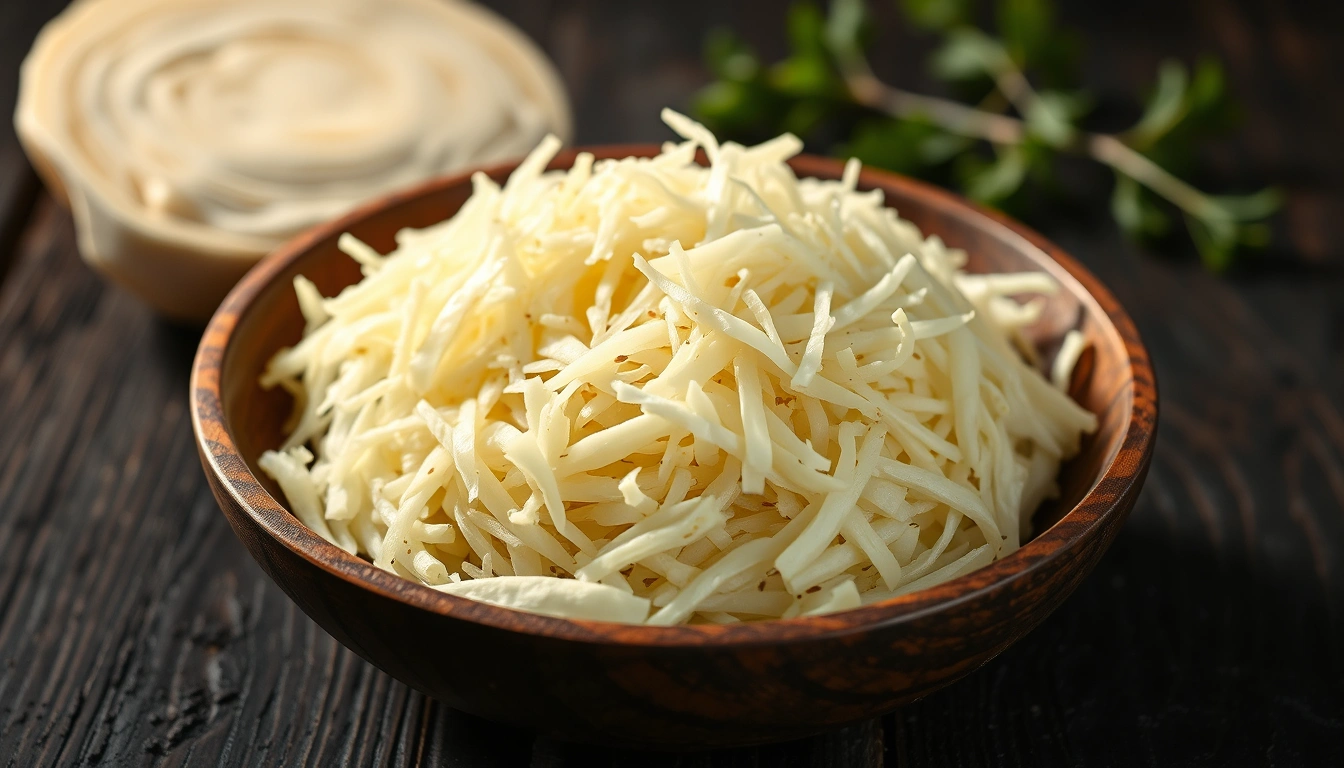
Sauerkraut
19 kcal per 100 g
Category: Vegetables
Nutritional information (per 100 g)
| Calories | 19 kcal |
| Protein | 0.9g |
| Carbohydrates | 4.3g |
| Total fats | 0.1g |
| Fiber | 2.9g |
| Sodium | 660mg |
Vitamins and minerals
Description
Sauerkraut is a fermented food made from finely shredded white cabbage and fermented with salt. It has a characteristic, slightly sour and crunchy flavor, making it an ideal accompaniment for a wide variety of dishes, especially meats and sausages.
This ingredient originated in Central Europe, specifically in Germany, where it is commonly known as "sauerkraut." The tradition of fermenting cabbage for preservation and consumption has spread across various cultures due to its culinary and nutritional benefits.
Among its main properties, sauerkraut is an excellent source of natural probiotics, which promote digestive health by supporting a balanced gut flora. Additionally, it is low in calories, rich in fiber, vitamins (especially vitamin C and K), and minerals such as iron and calcium.
In the Hispanic American context, sauerkraut may also be found under synonyms such as fermented cabbage or simply sour cabbage, although the term "sauerkraut" is widely recognized in recipes that call for this type of fermented cabbage.