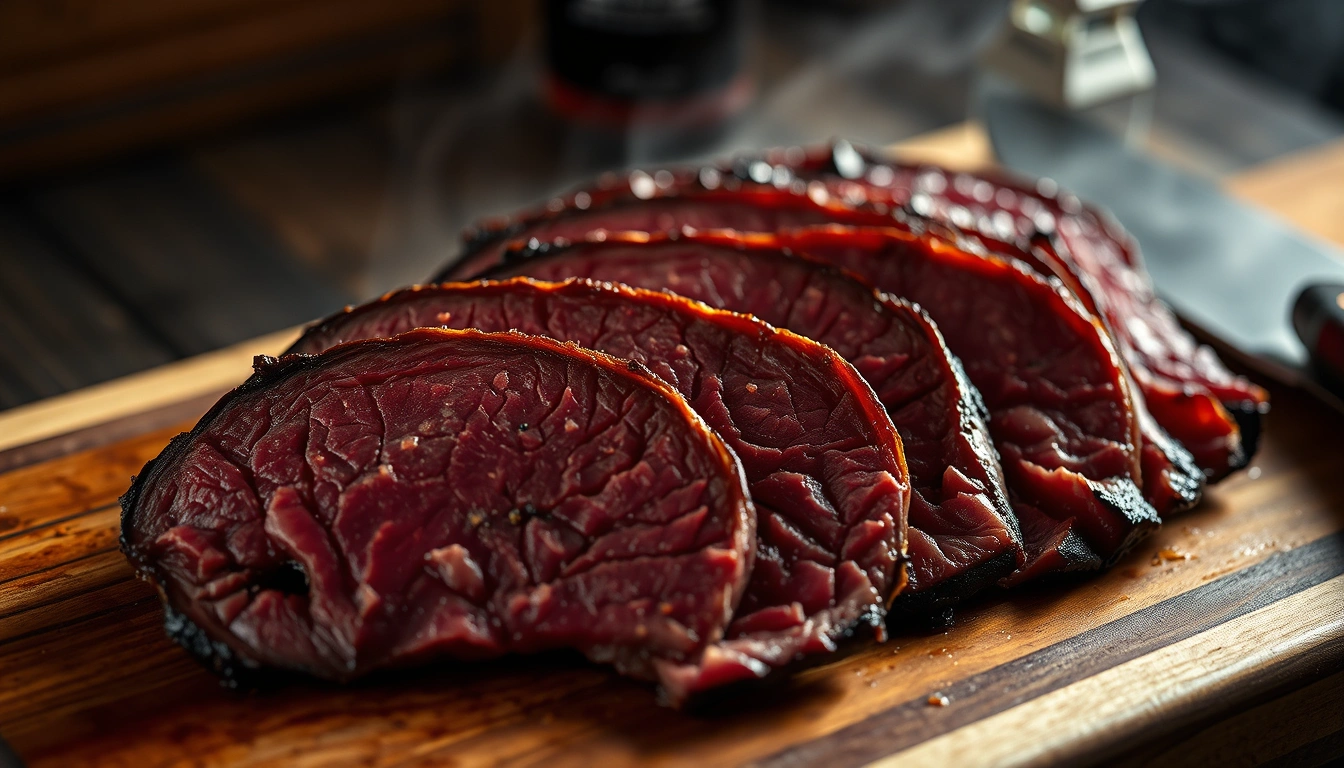
Smoked beef
250 kcal per 100 g
Category: Meat
Nutritional information (per 100 g)
| Calories | 250 kcal |
| Protein | 26g |
| Carbohydrates | 0g |
| Total fats | 15g |
| Saturated fats | 6g |
| Fiber | 0g |
| Sodium | 900mg |
| Cholesterol | 70mg |
Vitamins and minerals
Description
Smoked beef is a highly valued ingredient in various traditional cuisines, adding an intense and characteristic flavor to dishes. It is obtained from select cuts of beef that have undergone a smoking process, where the smoke generated by the combustion of selected woods permeates the meat, giving it a unique aroma and flavor.
This ancient method has origins in different cultures around the world, especially in regions where food preservation without refrigeration was essential. In Latin America, smoked beef is frequently used in stews, casseroles, soups, and salads, providing a robust and deep touch.
From a nutritional standpoint, smoked beef retains a good amount of protein, iron, and B-complex vitamins, although its sodium content can be high due to the curing process prior to smoking. It is ideal for those looking to enrich their recipes with intense flavors without losing the nutritional value of the meat.
In the context of Latin America, smoked beef may be known by different names depending on the country or region, including: smoked shredded beef, cecina, tasajo (in some areas), or simply smoked beef. Each variant may present slight differences in preparation technique or cut type, but all share the smoking process that defines its flavor.
Including smoked beef in your recipes is an excellent way to add an authentic smoky flavor and a firm texture that complements everything from traditional dishes to contemporary creations.