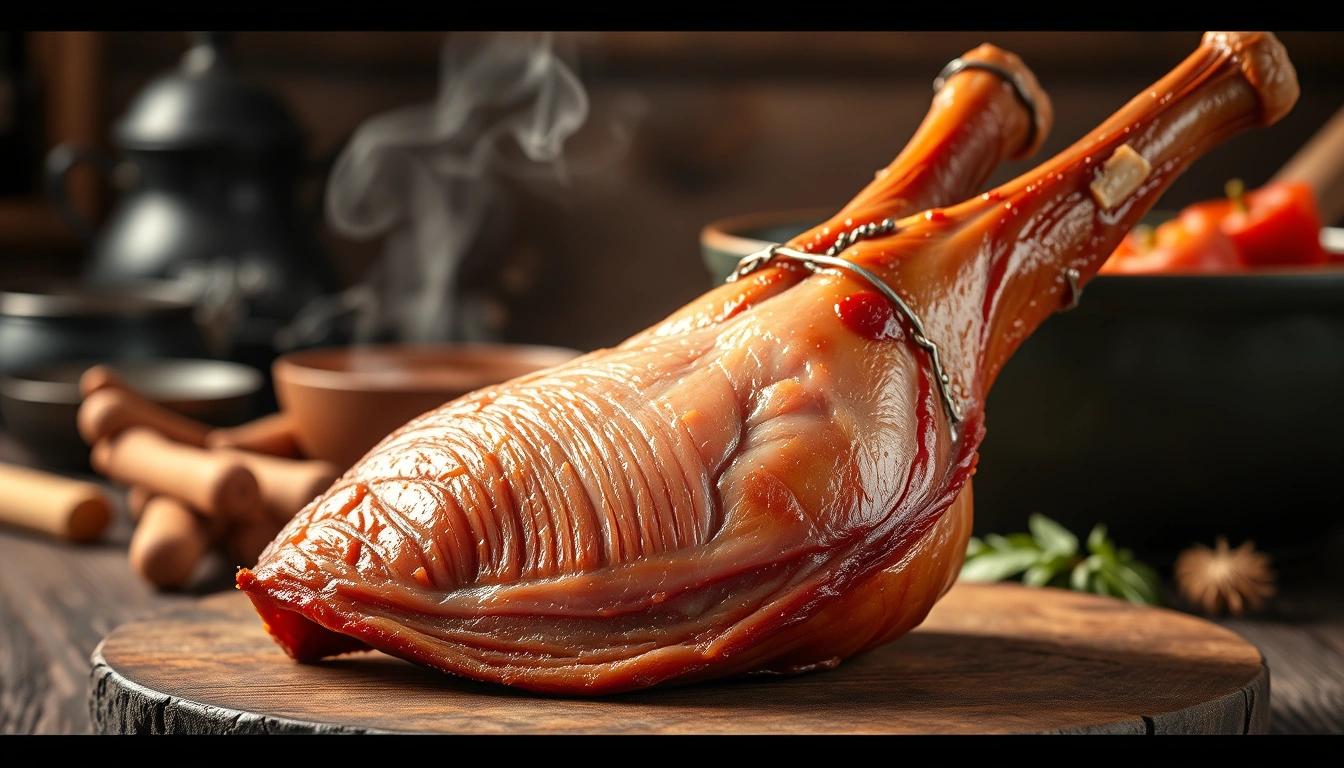
Smoked ham hock
247 kcal per 100 g
Category: Meat
Nutritional information (per 100 g)
| Calories | 247 kcal |
| Protein | 28g |
| Carbohydrates | 0g |
| Sugars | 0g |
| Total fats | 14g |
| Saturated fats | 5g |
| Fiber | 0g |
| Sodium | 1200mg |
| Cholesterol | 70mg |
Vitamins and minerals
Description
Smoked ham hock is a cut of meat that comes from the lower part of the pig's hind leg, just before the ham. It is characterized by its intense, smoky flavor, the result of a traditional curing and smoking process that imparts a deep aroma and a juicy texture after cooking. This ingredient is widely used in recipes that require long cooking times, such as stews, broths, or casseroles, where its flavor is slowly released, enriching the dish with a smoky and salty touch.
The hock has its origins in European culinary tradition, especially in countries like Germany and Spain, although its use has spread to other Spanish-speaking regions. In Latin American cuisine, this ingredient is used to give a more robust flavor to soups, hearty stews, and side dishes.
In terms of its properties, smoked ham hock is a good source of protein and provides minerals such as iron and zinc. However, due to the curing and smoking process, it also contains a considerable amount of sodium, so it should be consumed in moderation on low-salt diets.
Synonyms in the Hispanic world can vary, although the most common are "smoked hock" or simply "smoked pork hock". In some countries, it may also be known as "smoked shank", although this term is more commonly used in relation to the front leg; it is important to distinguish between them depending on the recipe.