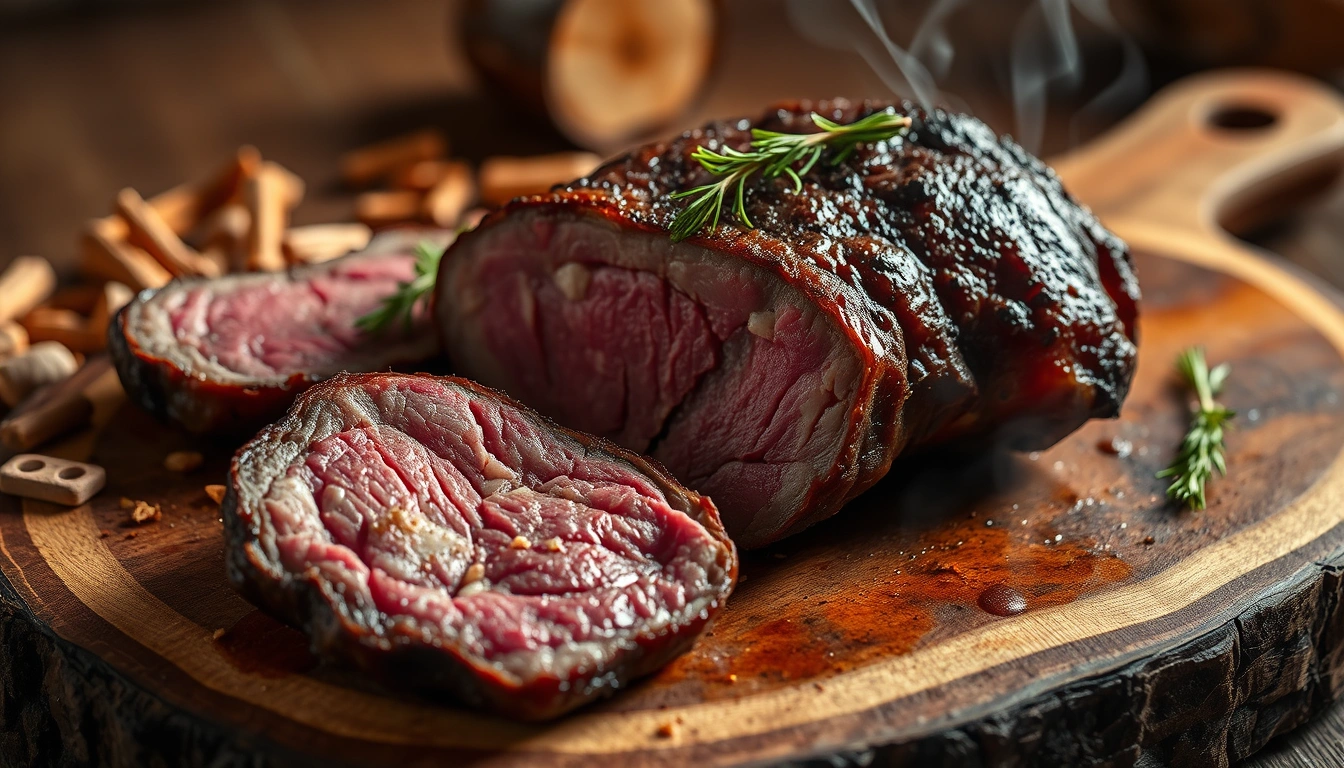
Smoked meat
148 kcal per 100 g
Category: Meat
Nutritional information (per 100 g)
| Calories | 148 kcal |
| Protein | 20g |
| Carbohydrates | 1.5g |
| Total fats | 7.5g |
| Fiber | 0g |
| Sodium | 1200mg |
| Cholesterol | 60mg |
Vitamins and minerals
Description
Smoked meat is a meat product that has been treated through a smoking process, applying natural smoke generated by the combustion of selected woods. This method not only preserves the meat, extending its shelf life, but also gives it an intense and characteristic flavor and aroma that enrich any recipe.
The origin of meat smoking dates back to ancient times, when communities used smoke to preserve their food before modern refrigeration. This traditional technique has roots in various cultures around the world, including Latin America, where smoked meats are very popular in different regions.
From a nutritional point of view, smoked meat retains much of the protein and minerals present in fresh meat. However, due to the smoking process, it may have a slightly higher sodium content, so it is advisable to moderate its consumption in salt-restricted diets.
In the Hispanic-American culinary world, smoked meat is also known by other names depending on the country or region. Some common synonyms include: tasajo (in several Central American countries), carne seca (dried meat), charque (particularly in Andean countries like Peru and Bolivia), and cecina (more common in Mexico and some areas of the Caribbean). All of these refer to cuts of meat that have been preserved and flavored through smoking or drying with smoke.
This ingredient is ideal for incorporating a smoky and deep flavor into stews, casseroles, soups, and traditional dishes, adding a special and authentic touch to the cuisine.