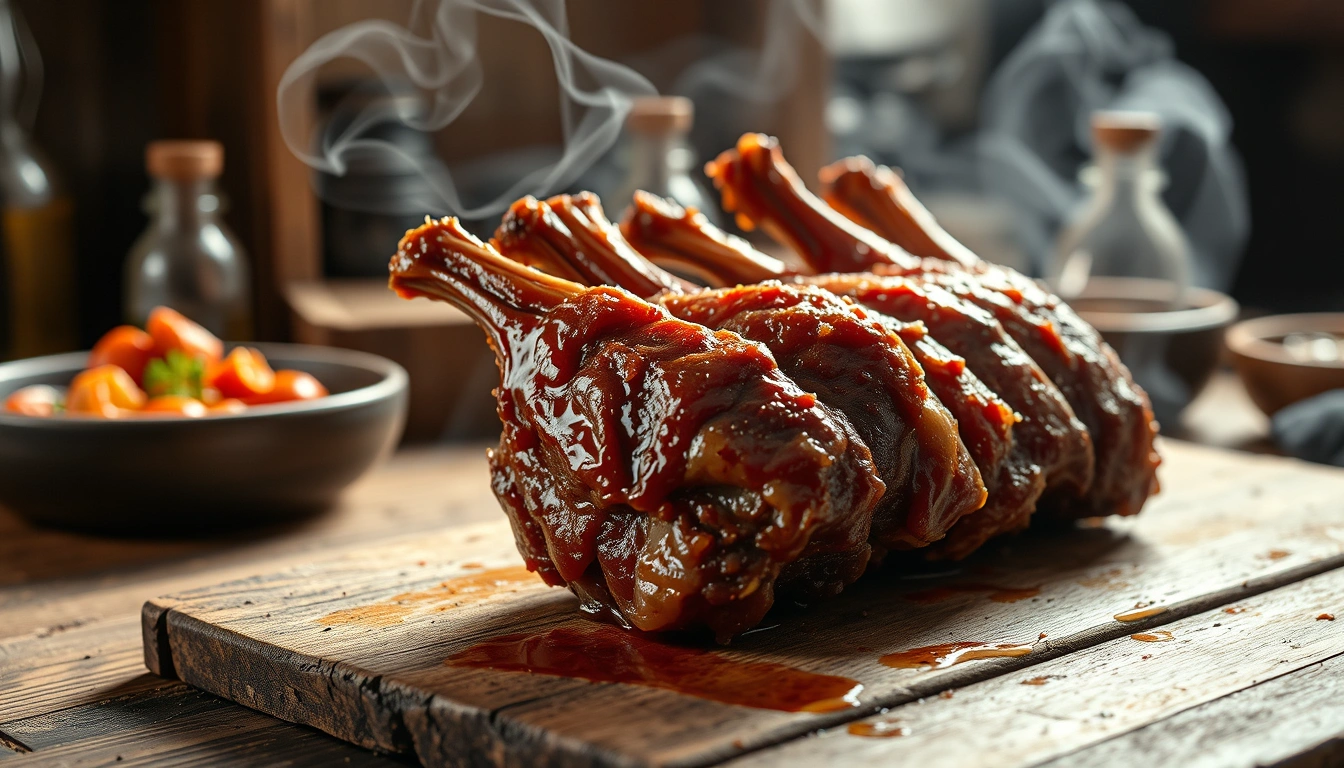
Smoked pork knuckles
250 kcal per 100 g
Category: Meat
Nutritional information (per 100 g)
| Calories | 250 kcal |
| Protein | 18g |
| Carbohydrates | 0g |
| Total fats | 20g |
| Saturated fats | 7g |
| Fiber | 0g |
| Sodium | 900mg |
| Cholesterol | 85mg |
Vitamins and minerals
Description
Smoked pork knuckles are a cut of pork that corresponds to the lower part of the leg, just above the trotter. This cut is known for its gelatinous texture and juicy, flavorful meat, making it ideal for preparing stews, braises, or traditional dishes that require long cooking times to tenderize the meat.
The smoking process imparts a characteristic, deep, and slightly intense flavor that enhances culinary preparations with a traditional smoky touch. This is achieved through the knuckle's prolonged exposure to smoke from selected woods, which also helps to preserve the product.
p>Originally, pork knuckles are very popular in Central European cuisine, especially in countries like Germany, where they are a fundamental part of typical dishes such as Eisbein or Schweinshaxe. In Latin America, thanks to the influence of European gastronomy and regional traditions, they have been adopted and adapted into various home and festive recipes.Properties: Pork knuckles are an important source of protein and contain fats that provide energy and flavor. Although their caloric content is relatively high due to the fat, they provide collagen and essential minerals like zinc and iron, which are beneficial for bone and muscle health. Due to their composition, it is advisable to consume them in moderate portions as part of a balanced diet.
Synonyms in Latin America: Depending on the country, smoked pork knuckles may be known simply as knuckles, smoked shank, or smoked shoulder. In some countries, they are also called smoked ham, although this term can refer to larger cuts or different parts of the pig.