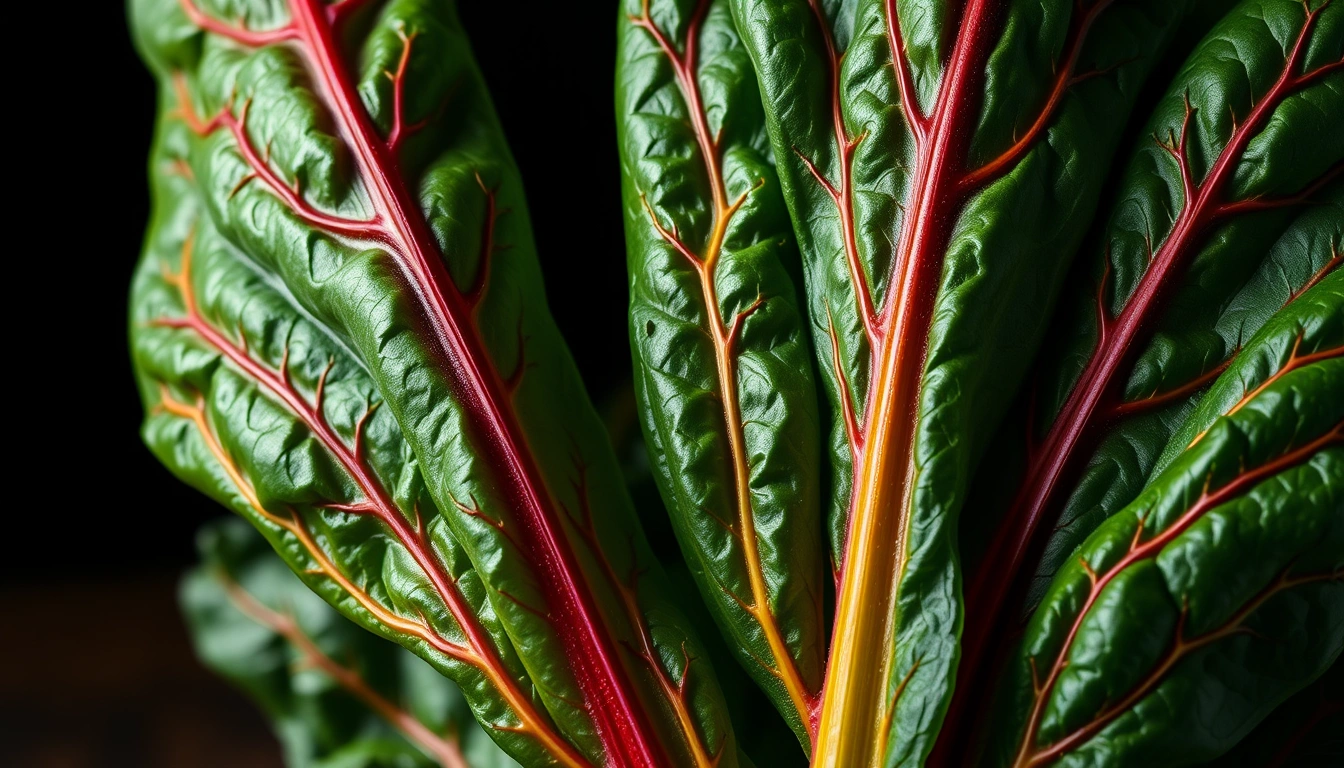
Swiss chard leaf
19 kcal per 100 g
Category: Vegetables
Nutritional information (per 100 g)
| Calories | 19 kcal |
| Protein | 1.8g |
| Carbohydrates | 3.7g |
| Total fats | 0.2g |
| Fiber | 1.6g |
Vitamins and minerals
Description
Swiss chard leaf
The Swiss chard leaf is the term used to refer to the large, tender leaves of the Beta vulgaris subspecies cicla plant, a variety of chard characterized by its thick, brightly colored stems (white, red, or yellow). It is a very popular leafy green vegetable in cooking for its mild and slightly earthy flavor, ideal for preparing stews, sautés, soups, or as a base for fillings and omelets.
Its origin dates back to regions of the Mediterranean, where it has been cultivated since antiquity for both its leaves and its edible stems. Currently, Swiss chard is grown in numerous regions of the world, especially in Latin America, Europe, and parts of Asia.
Regarding its nutritional properties, the Swiss chard leaf is an excellent source of fiber, vitamins A, C, and K, as well as minerals such as iron, magnesium, and potassium. Furthermore, it contains antioxidants that contribute to cardiovascular health and strengthening the immune system. Its low calorie content makes it ideal for healthy and balanced diets.
Synonyms in Spanish (Latin America):
- Apio de hoja
- Acelga blanca
- Acelga común
- Acelga de penca
- Blette (in some Spanish-speaking countries with French influence)
In various recipes, Swiss chard leaf can be interchanged with other chards or spinach, always providing a nutritional touch and characteristic flavor that enriches both traditional and contemporary dishes.