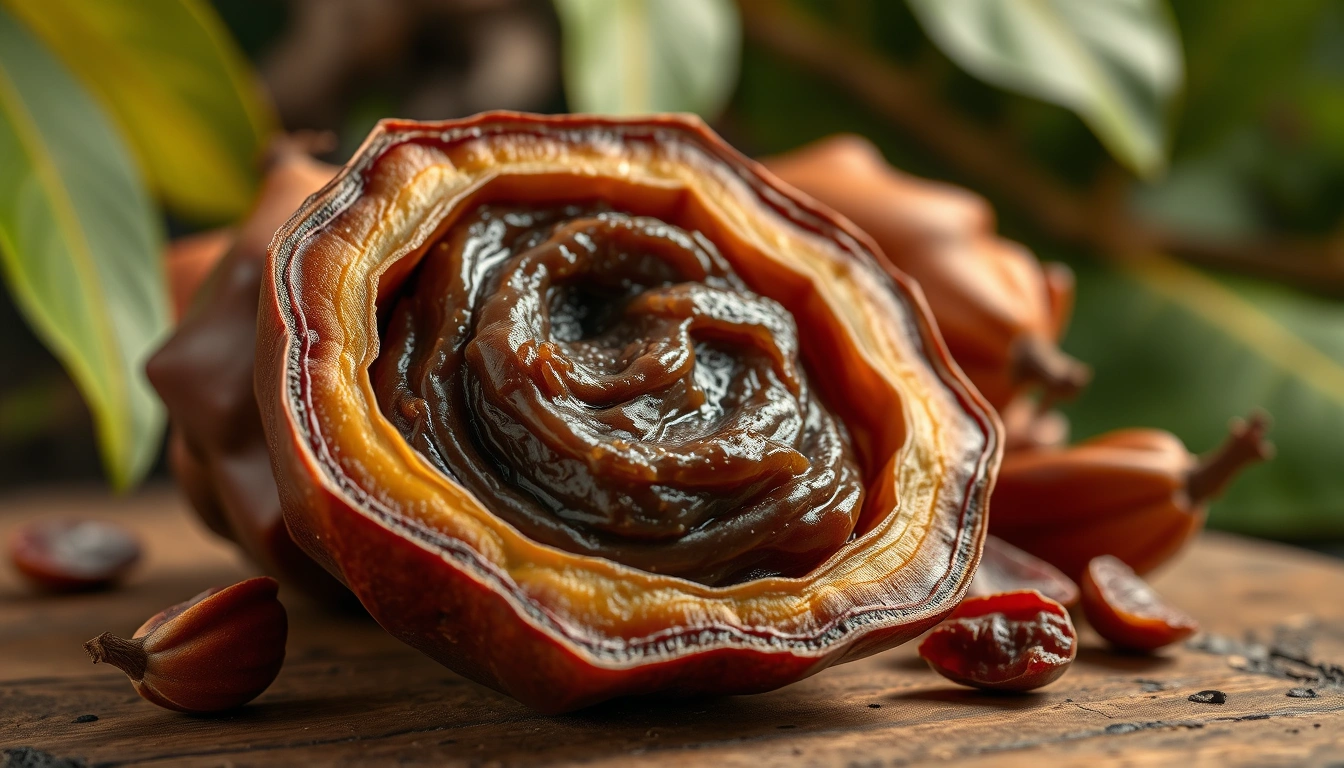
Tamarind pulp
239 kcal per 100 g
Category: Fruits
Nutritional information (per 100 g)
| Calories | 239 kcal |
| Protein | 2.8g |
| Carbohydrates | 62.5g |
| Total fats | 0.6g |
| Fiber | 5.1g |
| Sodium | 28mg |
Vitamins and minerals
Description
Tamarind pulp is a preparation obtained from the fruit of the tamarind tree, a tree native to tropical regions of Africa but widely cultivated and used in Latin America, Asia, and the Caribbean. The tamarind is characterized by its pod-shaped fruit that contains a fibrous pulp with a sweet and sour, slightly citrusy flavor, ideal for providing balance and depth to various recipes.
Tamarind pulp is extracted by opening the mature pods and separating the pulp from the seeds and fibers. It is a highly valued ingredient in gastronomy, used in both savory dishes and sweet preparations, sauces, marinades, chutneys, beverages, and desserts. Its characteristic flavor provides a refreshing and exotic touch that enhances soups, stews, marinades, and cocktails.
Regarding its properties, tamarind pulp is rich in organic acids, mainly tartaric acid, and contains dietary fiber, antioxidants, and vitamins such as C and some B complex vitamins. Furthermore, it aids digestion and has a natural laxative effect, which is why it is also used in home remedies.
In different Latin American countries, tamarind pulp may also be known as tamarind concentrate or simply tamarind. In Mexico, for example, it is widely used in the form of a paste or concentrate to make aguas frescas, candies, and sauces. In the Caribbean and Central America, it is an essential ingredient in the preparation of juices, marinades, and pickles.
Summary:
- Ingredient: Tamarind pulp
- Origin: Fruit of the tamarind tree, African in origin but widely used in Latin America and Asia
- Culinary uses: Sauces, beverages, candies, marinades, stews, and desserts
- Properties: Rich in fiber, vitamins, antioxidants, tartaric acid, and digestive benefits
- Synonyms in Latin America: Tamarind concentrate, tamarind