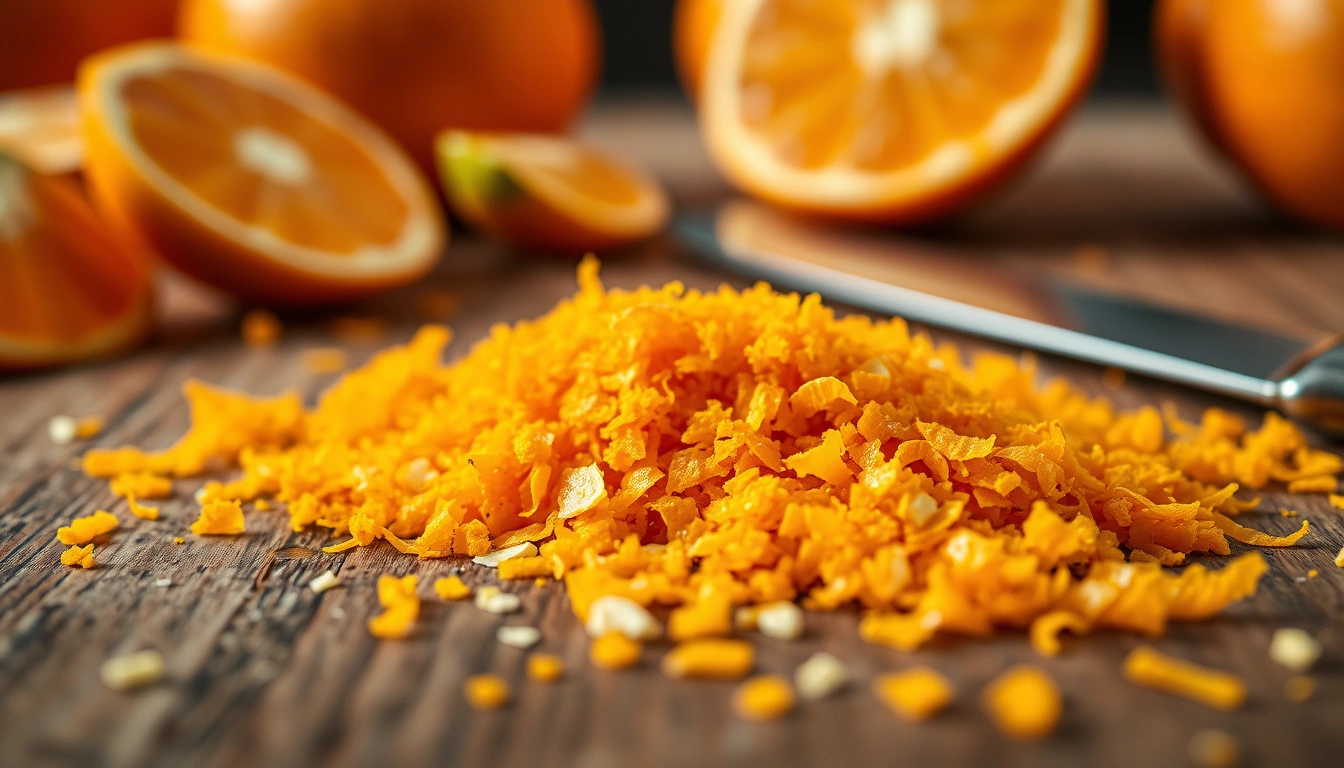
Tangerine zest
58 kcal per 100 g
Category: Fruits
Nutritional information (per 100 g)
| Calories | 58 kcal |
| Protein | 1.3g |
| Carbohydrates | 21.7g |
| Total fats | 0.3g |
| Fiber | 10.6g |
Vitamins and minerals
Description
Tangerine zest refers to the thin outer layer of the tangerine peel, a small, sweet citrus fruit similar to the mandarin. This zest is obtained by grating only the colored part of the peel, avoiding the white pith, which is bitter. It is a highly valued ingredient in cooking for its fresh, sweet, and slightly acidic aroma, which adds an intense citrus note to desserts, sauces, marinades, and beverages.
Origin: The tangerine is native to Southeast Asia, although its cultivation has spread widely to temperate and subtropical regions, especially in Mediterranean countries, Latin America, and the United States. Its name comes from the city of Tangier, in Morocco, from where the first varieties were exported to Europe and the Americas.
Properties: Tangerine zest contains essential oils rich in limonene and other aromatic compounds that enhance the flavor and aroma of dishes. In addition, it provides natural antioxidants that can contribute to the freshness and quality of culinary preparations. It is ideal for adding a citrus note without adding extra moisture or acid, as is the case with juice.
Synonyms in Latin American Spanish: In different Spanish-speaking regions, the tangerine may also be known as mandarina, mandarina china, or clementina, although these terms may refer to specific varieties within the same group of citrus fruits. In general, the zest from any of these fruits is used similarly in cooking.