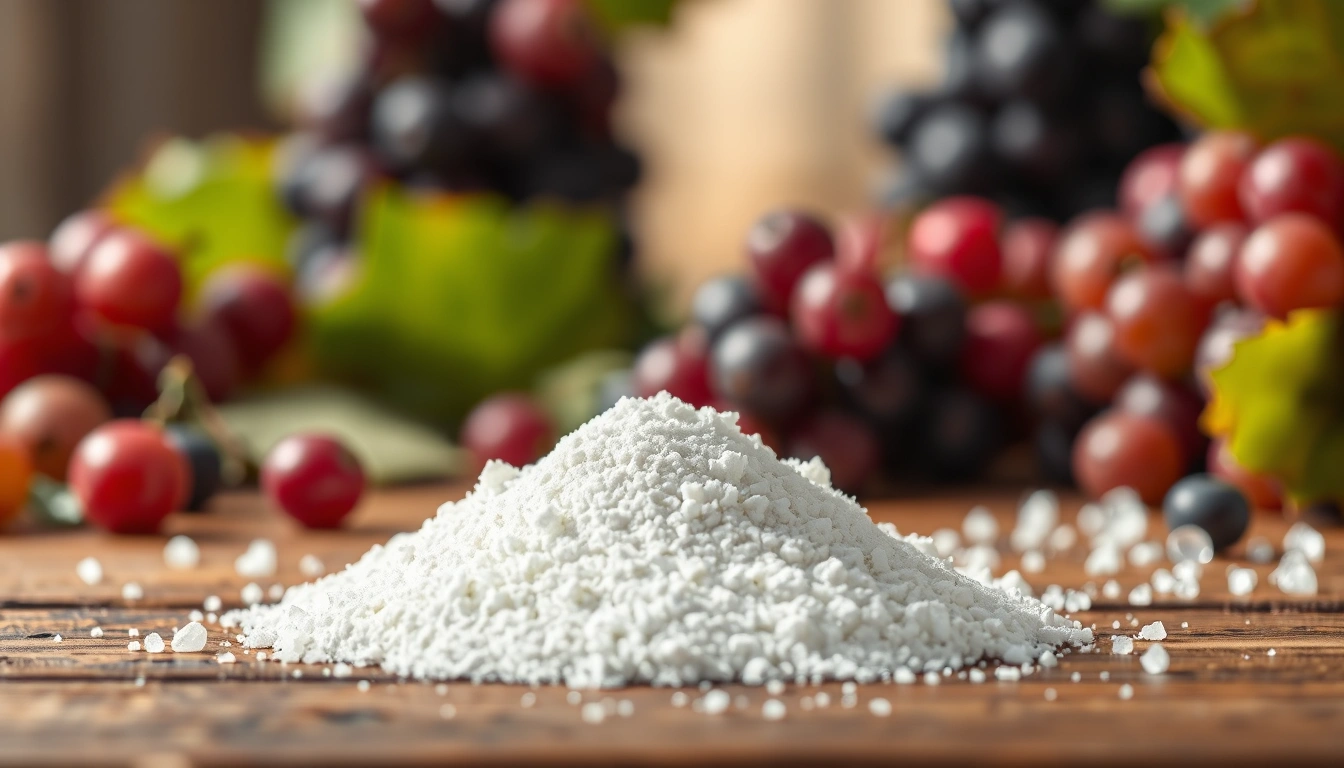
Tartaric acid
0 kcal per 100 g
Category: Sweets and Sweeteners
Nutritional information (per 100 g)
| Calories | 0 kcal |
| Protein | 0g |
| Carbohydrates | 400g |
| Sugars | 0g |
| Total fats | 0g |
| Fiber | 0g |
| Sodium | 0mg |
Vitamins and minerals
Description
Tartaric acid is a natural organic acid found primarily in grapes and other fruits, such as tamarind and some berries. It is a white crystalline solid that is widely used in cooking, especially in baking and winemaking, due to its acidifying and stabilizing properties.
Its natural origin comes from the fermentation of grape juice during wine production, where it crystallizes in the form of salts called "cream of tartar" or potassium bitartrate. This compound is essential for controlling acidity in various culinary preparations and preventing certain mixtures, such as beaten egg whites, from losing volume or becoming destabilized.
Regarding its properties, tartaric acid helps to:
- Provide balanced acidity
- Stabilize egg whites when whipped
- Act as a leavening agent when combined with baking soda
- Prevent sugar crystallization in syrups and creams
In different Hispanic American countries, tartaric acid is also known as tártaro or cremor tártaro (when referring to its most common form as a white powder). These terms are common in baking and cocktail recipes.
Due to its versatility and functionality, tartaric acid is an essential ingredient for those who enjoy sweet cuisine and wish to achieve optimal textures and flavors in their preparations.