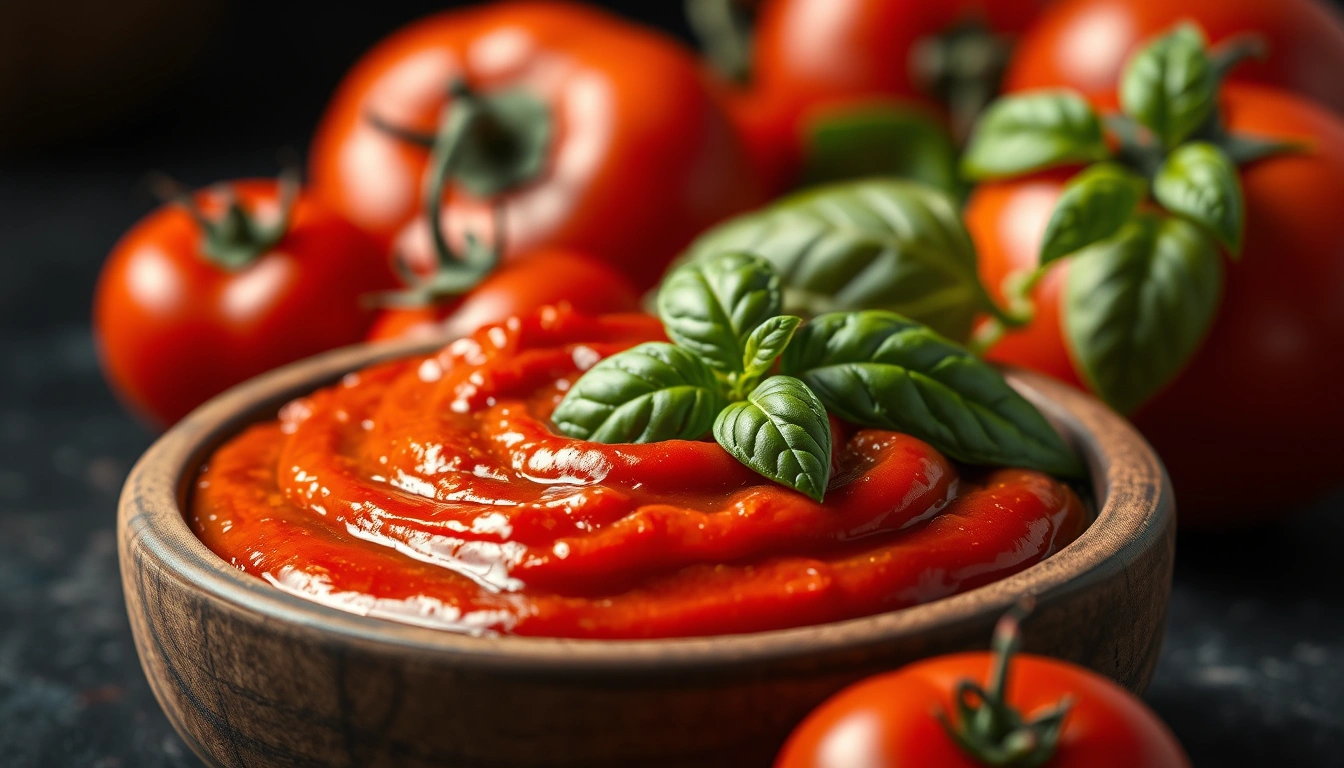
Tomato paste
18 kcal per 100 g
Category: Vegetables
Nutritional information (per 100 g)
| Calories | 18 kcal |
| Protein | 0.9g |
| Carbohydrates | 3.9g |
| Sugars | 2.6g |
| Total fats | 0.2g |
| Fiber | 1.2g |
| Sodium | 40mg |
Vitamins and minerals
Description
Tomato paste is a culinary ingredient made by reducing tomato juice, resulting in a thick paste with an intense and slightly sweet flavor. It is commonly used to add color, flavor, and texture to various dishes such as sauces, stews, soups, and braises.
Tomato paste originates from the Mediterranean tradition, especially in Italian and Spanish cuisines, where the tomato is a fundamental ingredient. Its production involves cooking ripe tomatoes and removing a large portion of their water content to obtain a concentrated paste that highlights the tomato's natural flavor.
Among its properties, it stands out for its richness in lycopene, a natural antioxidant that helps combat free radicals, as well as a moderate contribution of vitamins C and A, and minerals such as potassium. Additionally, tomato paste is very versatile, easy to preserve, and adds a characteristic flavor that enhances the depth of many recipes.
In different Latin American countries, tomato paste may also be known as pasta de tomate, puré de tomate (although the latter may be less concentrated), or simply tomate concentrado. It is important to distinguish it from tomato sauce, which usually has other added ingredients and a more liquid texture.