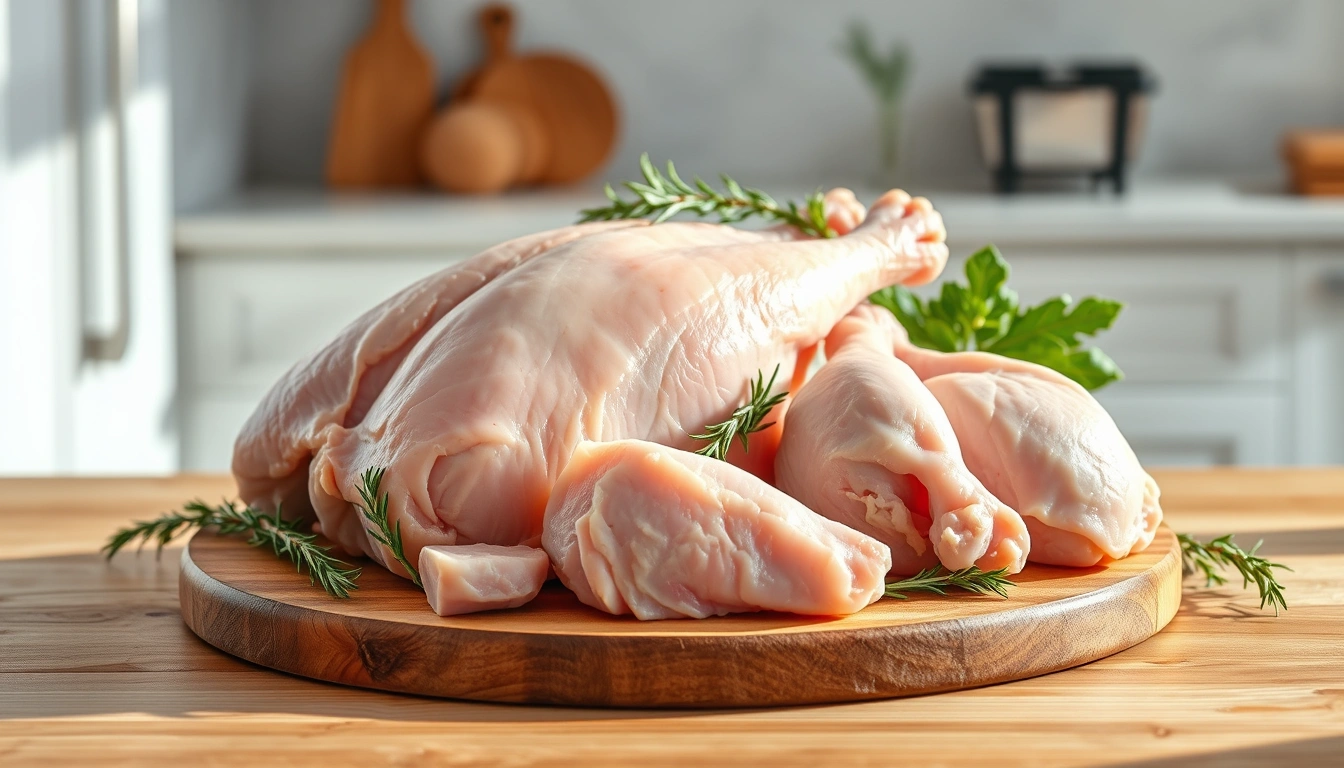
Turkey parts
135 kcal per 100 g
Category: Meat
Nutritional information (per 100 g)
| Calories | 135 kcal |
| Protein | 29g |
| Carbohydrates | 0g |
| Total fats | 1.5g |
| Fiber | 0g |
| Sodium | 55mg |
| Cholesterol | 70mg |
Vitamins and minerals
Description
Turkey parts refer to the different sections of the turkey's body that are commonly used in cooking to prepare a wide variety of dishes. Among the most commonly used parts are the breast, thighs, wings, and neck, each with specific texture and flavor characteristics that make them ideal for different culinary techniques such as roasting, stewing, frying, or baking.
Origin: The turkey is a bird native to North America, specifically Mexico and the southeastern United States, where it has been raised and consumed since pre-Columbian times. Today, turkey is popular in many cuisines around the world, especially during celebrations and holidays.
Properties: Turkey parts are an excellent source of lean protein, with low fat content, especially the breast. They also provide B-complex vitamins, minerals such as phosphorus and zinc, and are ideal for healthy and balanced diets.
Synonyms in Spanish from Latin America: depending on the region, turkey parts may have different names. For example, the breast may simply be called pechuga de pavo, the thighs are also known as pierna de pavo or contramuslo, and the wings as alitas de pavo. In some countries, the neck or less common parts may be called garganta or cuellito.