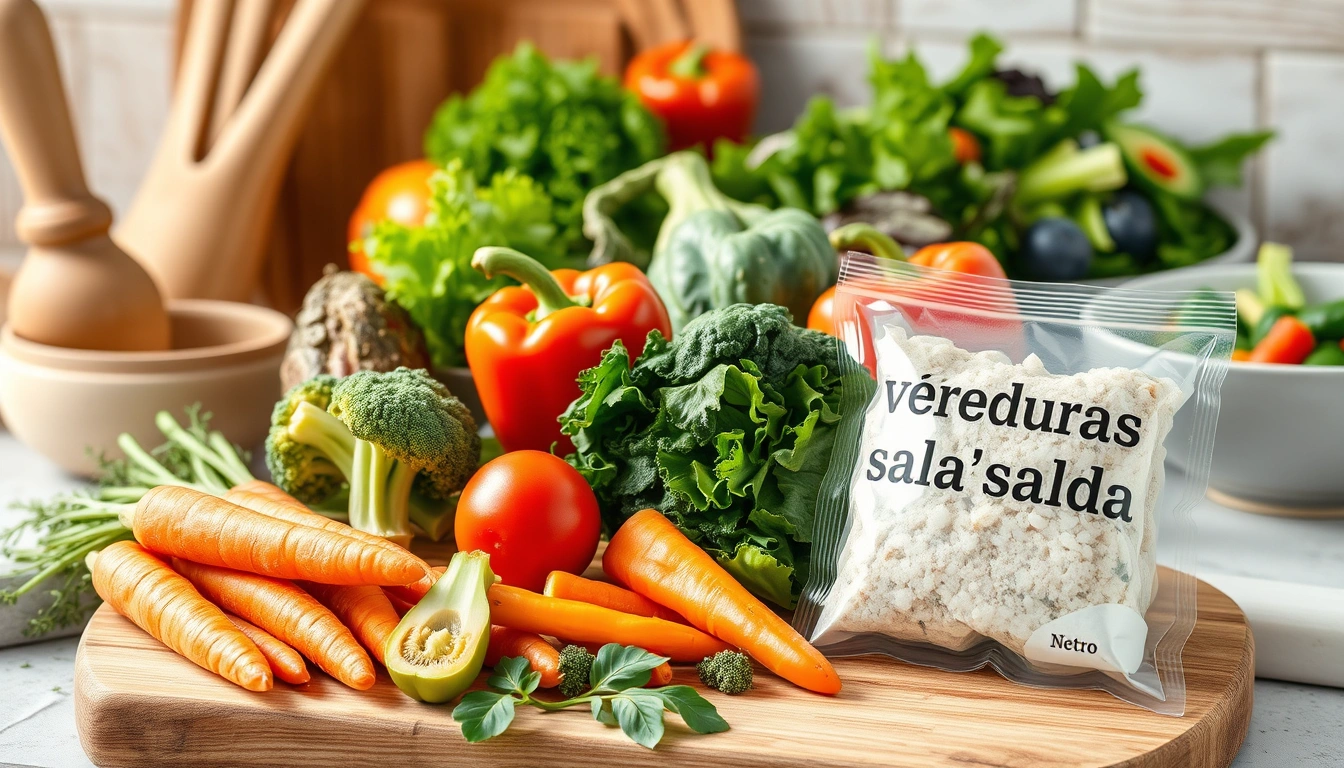
Unsalted vegetables
25 kcal per 100 g
Category: Vegetables
Nutritional information (per 100 g)
| Calories | 25 kcal |
| Protein | 1.8g |
| Carbohydrates | 5g |
| Total fats | 0.2g |
| Fiber | 2.5g |
Vitamins and minerals
Description
Vegetables with no added salt refers to a selection of vegetables that have been preserved, prepared, or packaged without the addition of extra salt during processing. This type of vegetable preserves the natural flavor and original nutrients of the food, making them ideal for those looking to control their sodium intake and maintain a healthy diet.
Vegetables, in general, are essential agricultural products in global nutrition, and their cultivation has ancient roots that vary by region and the specific type of vegetable. They are consumed fresh, frozen, dehydrated, or canned, but by choosing varieties with no added salt, a purer and more natural product is guaranteed.
Properties: Vegetables with no added salt maintain a high content of vitamins (such as A, C, and K), minerals (potassium, magnesium), and dietary fiber, contributing to proper digestion, strengthening of the immune system, and cardiovascular health. As they contain no extra salt, they are perfect for low-sodium diets, individuals with hypertension, or people who wish to avoid excess salt for medical or wellness reasons.
Synonyms in Spanish from Latin America that may be found in different regions to refer to this type of product include "vegetales sin sal," "verduras naturales," "verduras frescas sin sal," or simply "verduras básicas." Although the exact term may vary, the common idea is that these are vegetables preserved or prepared without adding salt, highlighting their healthy nature and adaptability to various recipes.