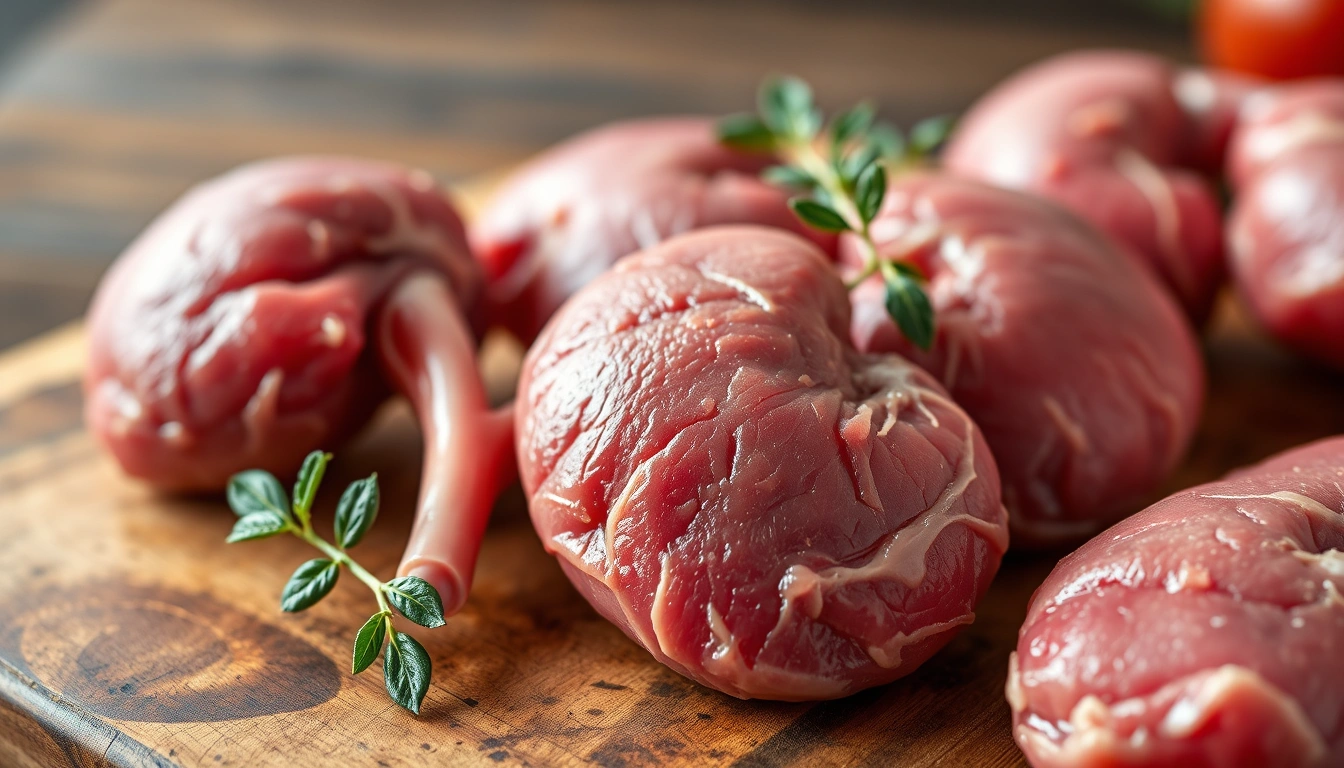
Veal kidneys
112 kcal per 100 g
Category: Meat
Nutritional information (per 100 g)
| Calories | 112 kcal |
| Protein | 16.9g |
| Carbohydrates | 0g |
| Total fats | 3.3g |
| Saturated fats | 1.1g |
| Fiber | 0g |
| Sodium | 134mg |
| Cholesterol | 337mg |
Vitamins and minerals
Description
Veal kidneys are a type of bovine offal highly valued in various home-style and gourmet cuisines. They are the excretory organs that perform key functions in the animal's renal system, and their meat has a firm texture and intense flavor, ideal for stews, casseroles, and dishes with robust sauces.
Origin: Veal kidneys come from young cattle, generally calves less than a year old, which gives them a more tender texture and a milder flavor compared to kidneys from adult animals. It is a traditional ingredient in European cuisine, especially in British, French, and Spanish recipes, although it is also used in various regions of Latin America.
Properties: Veal kidneys are an excellent source of high-quality protein, B vitamins (especially B12 and riboflavin), and minerals such as iron, zinc, and phosphorus. In addition, they contain collagen and other nutrients that provide benefits for bone and muscle health. As they are an organ, their consumption should be moderate and always well-cooked to eliminate impurities.
Synonyms in Latin America: In different Spanish-speaking countries, veal kidneys may be called by different names, such as riñones (general term), riñoncitos (common diminutive in Mexico and Central America), or simply néfrons in some regions, although the latter is less frequent. They are also known as riñones de vaca (cow kidneys) in countries where they are distinguished from pork or lamb kidneys.