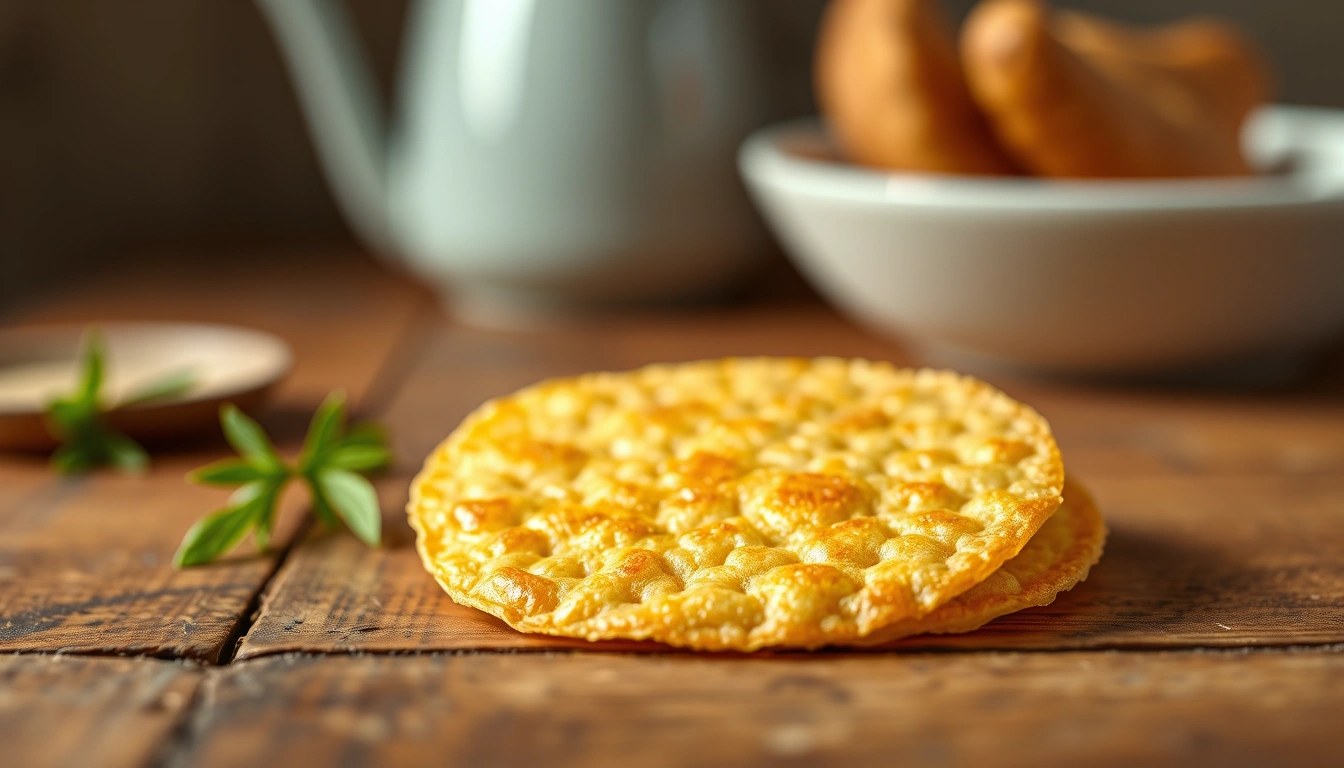
Wafer
430 kcal per 100 g
Category: Sweets and Sweeteners
Nutritional information (per 100 g)
| Calories | 430 kcal |
| Protein | 6g |
| Carbohydrates | 72g |
| Total fats | 15g |
| Fiber | 3.1g |
Vitamins and minerals
Description
Wafer is a traditional ingredient in the cuisine of several Latin American countries, primarily used as a base or wrapper for desserts and sweet preparations. It is a thin, round sheet made from wheat flour, water, and sometimes sugar, which is cooked in special molds until it achieves a crispy and light texture, similar to a very thin cookie.
The origin of the wafer dates back to European tradition, particularly in Spain and Central Europe, where similar thin sheets of baked dough were made. With colonization, these preparations arrived in the Americas, adopting different shapes and uses in countries such as Mexico, Colombia, Argentina, and Chile.
From a nutritional standpoint, the wafer is a low-fat and low-protein food, primarily composed of simple carbohydrates from the flour and sugar. Its low calorie content makes it ideal for accompanying heartier ingredients such as dulce de leche, jams, caramel spread, or fresh fruits.
In different Latin American countries, the wafer is also known by synonyms or similar terms such as "obleíta" (a diminutive in some regions), "hojaldra fina" (in some areas of Mexico), or simply "torta fina" in contexts that reference its thin texture. However, the term "oblea" is the most universally recognized and used in recipes to describe this versatile ingredient.
In cooking, the wafer is primarily used for:
- Wrapping and accompanying desserts like custards, creams, or fruits.
- Making traditional sweets like wafers filled with arequipe, dulce de leche, or cream.
- Serving as a crispy base in preparations that require a contrast in textures.