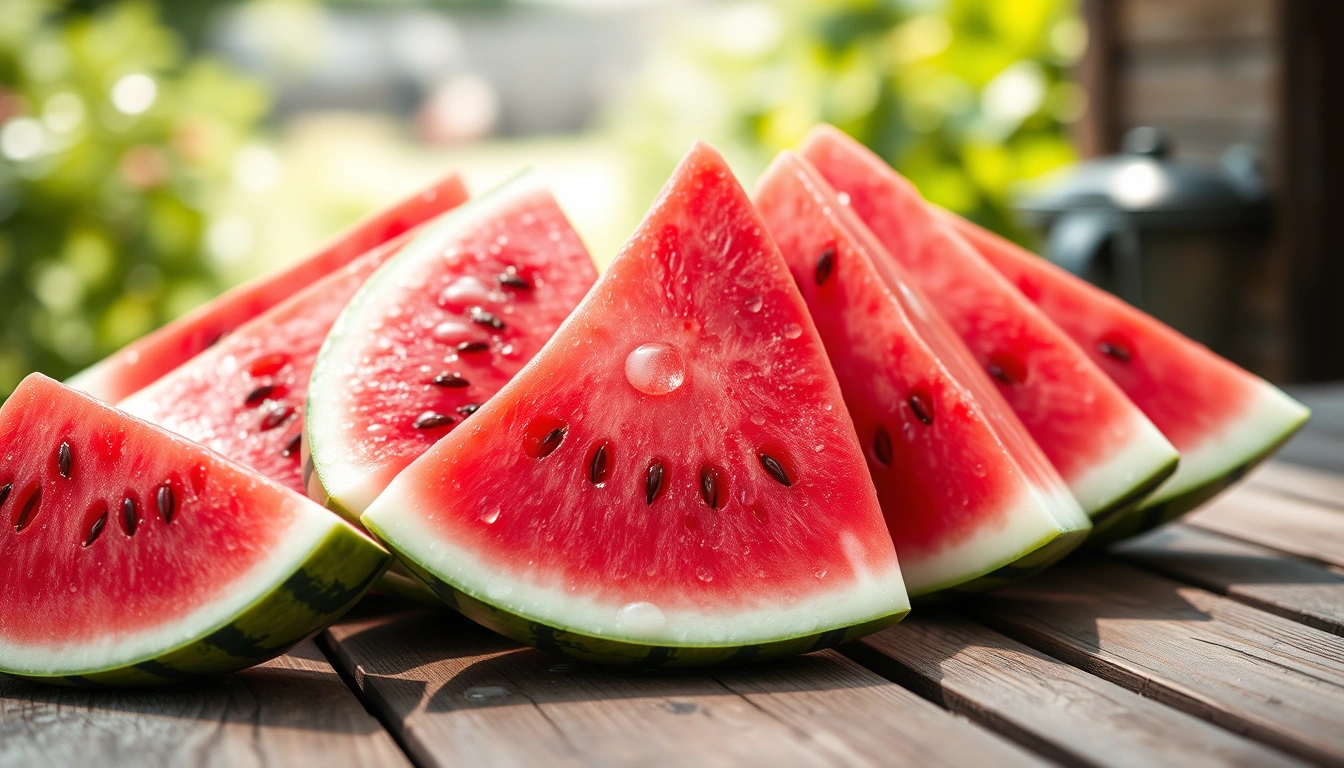
Watermelon wedges
30 kcal per 100 g
Category: Fruits
Nutritional information (per 100 g)
| Calories | 30 kcal |
| Protein | 0.6g |
| Carbohydrates | 8g |
| Total fats | 0.2g |
| Fiber | 0.4g |
Vitamins and minerals
Description
Watermelon wedges refer to the pieces or segmented portions of watermelon, a fresh and juicy fruit characterized by its sweet red pulp contained within a green striped rind. These wedges are the most common and practical way to cut watermelon for consumption and use in recipes.
Origin: Watermelon (Citrullus lanatus) is native to the African continent, specifically southern and central Africa, and has been cultivated for thousands of years. It is currently a very popular fruit worldwide, especially in warm climates and during the summer season.
Properties: Watermelon wedges are rich in water (approximately 92%), making them an excellent food for hydration. They also contain vitamins A, C, and B-complex, antioxidants like lycopene, and minerals such as potassium and magnesium. They are low in calories and their consumption helps to refresh and provide natural energy, making them ideal for snacks, salads, desserts, and beverages.
Synonyms in Spanish from Latin America: Although the term gajos de sandía is common, in some regions they may also be found under names such as porciones de sandía, trozos de sandía, or simply rebanadas de sandía, depending on the cut used. In countries like Mexico, Argentina, or Colombia, it is common to refer to these segments as trozos or rebanadas de sandía.