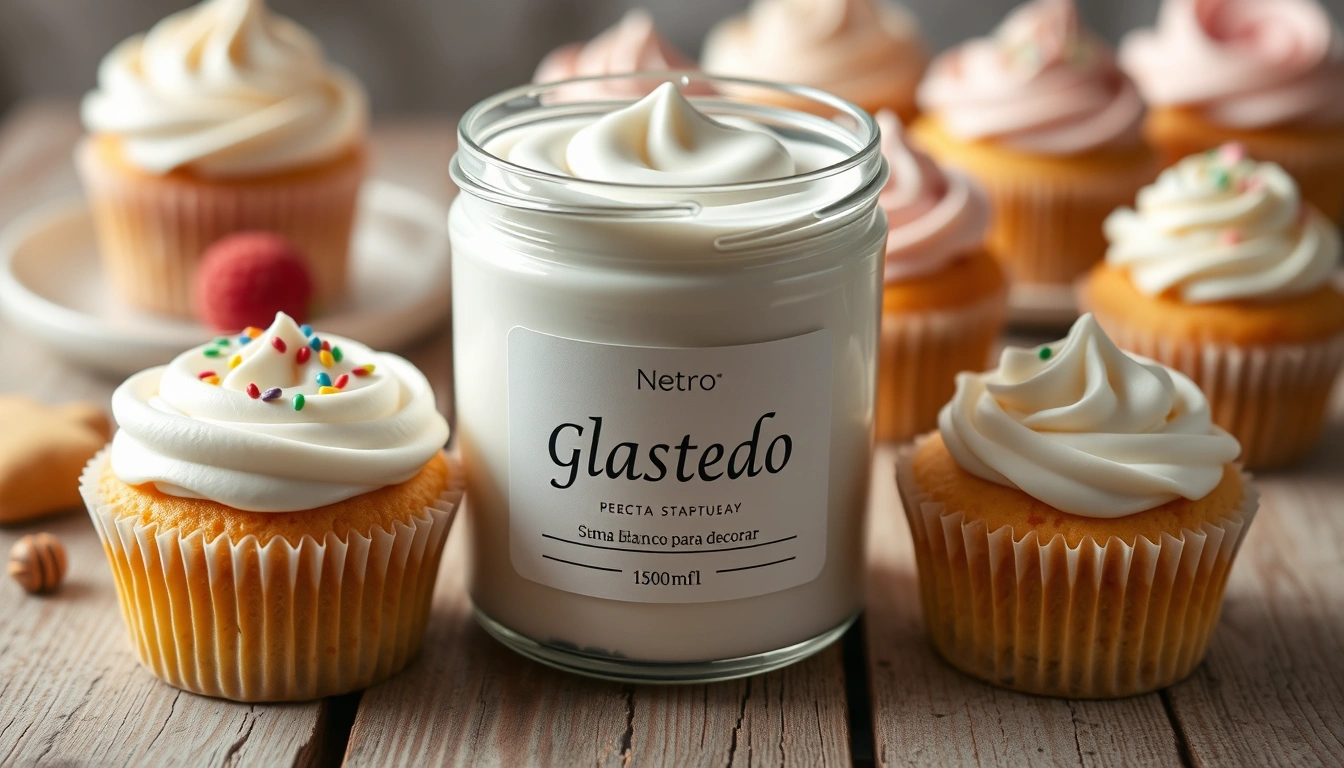
White icing for decorating
400 kcal per 100 g
Category: Sweets and Sweeteners
Nutritional information (per 100 g)
| Calories | 400 kcal |
| Protein | 0g |
| Carbohydrates | 85g |
| Sugars | 80g |
| Total fats | 8g |
| Saturated fats | 3g |
| Fiber | 0g |
| Sodium | 150mg |
Vitamins and minerals
Description
White icing for decorating is a sweet and creamy preparation primarily used for decorating and finishing baked goods, such as cakes, cookies, cupcakes, and other desserts. It is characterized by its intense white color and smooth texture, which hardens slightly when dry, allowing for the creation of smooth finishes, delicate details, or raised designs.
This icing is commonly made from powdered sugar (confectioner's sugar) mixed with egg whites, lemon juice, or water, and sometimes a touch of cream of tartar to stabilize the mixture and achieve a suitable consistency. There are variants that use butter or cream cheese to add flavor and creaminess, although for detailed decoration the most commonly used is royal icing.
The origin of white icing for decorating dates back to traditional European baking, where royal icing was essential for creating elegant finishes on cakes and cookies, especially for celebrations and formal events. Its use has spread worldwide and has been adapted into various Latin American recipes to add a sweet and decorative touch to desserts.
Properties:
- Provides a shiny and uniform finish to desserts.
- It dries to create a firm surface, ideal for detailed decoration.
- It is sweet but light, complementing without overpowering the flavor of the base preparation.
- Being sugar-based, it is easy to tint with food coloring for colorful designs.
Synonyms in Latin America: in different countries it may be known as white glacé, royal glacé, decorating glacé, royal icing, or simply white icing. In Mexico and Central America, "royal glacé" is often used, while in South America "glaseado" or "glacé" blanco are the most common terms.