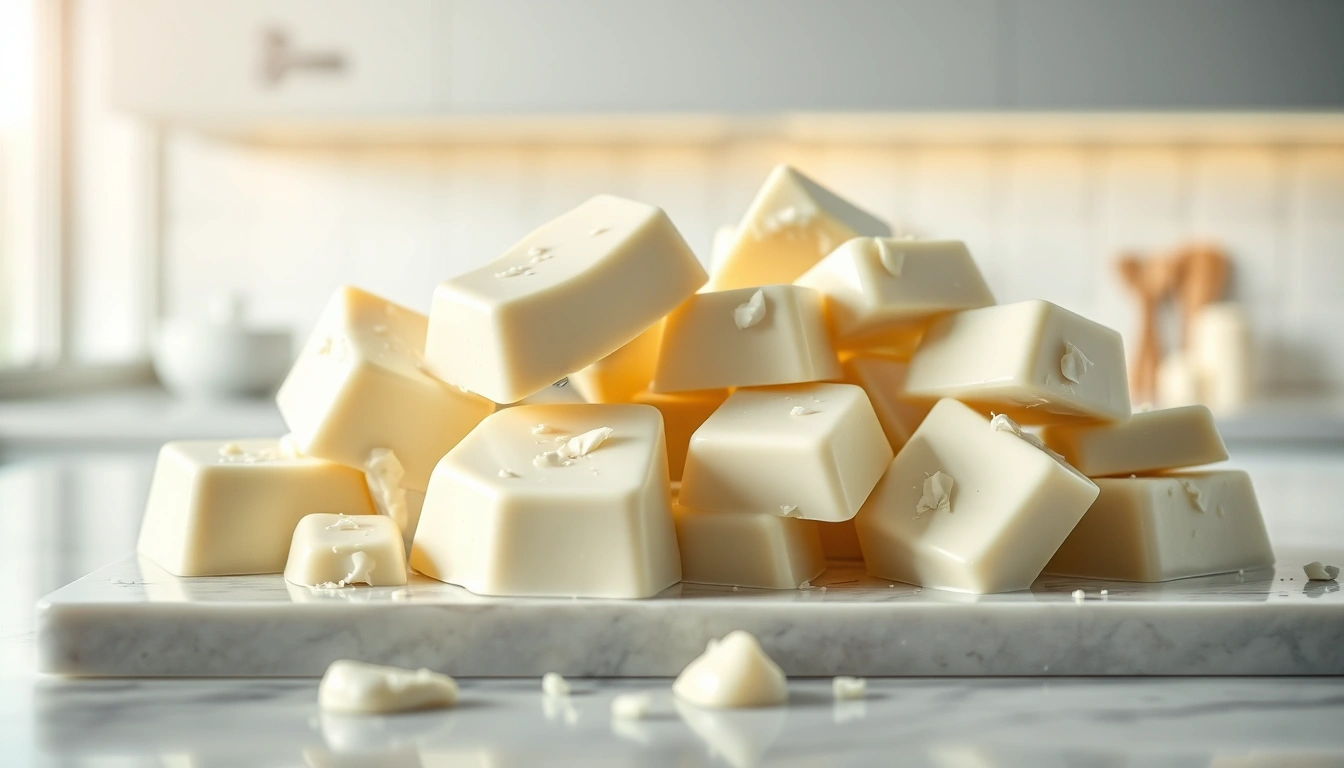
White melting chocolates
540 kcal per 100 g
Category: Sweets and Sweeteners
Nutritional information (per 100 g)
| Calories | 540 kcal |
| Protein | 5g |
| Carbohydrates | 57g |
| Sugars | 55g |
| Total fats | 32g |
| Saturated fats | 19g |
| Fiber | 0g |
| Sodium | 20mg |
Vitamins and minerals
Description
White melting chocolate is a variety of chocolate made primarily from cocoa butter, sugar, and milk powder, without containing cocoa solids like traditional chocolate. This type of chocolate is characterized by its creamy texture, pearly white color, and sweet, mild flavor, making it ideal for adding a delicate and sweet touch to various culinary preparations.
The origin of white chocolate dates back to Switzerland in the first half of the 20th century, where it was developed as an alternative to dark chocolate, utilizing the cocoa butter extracted during the traditional chocolate-making process. Since then, it has gained popularity worldwide and is widely used in pastry making, especially for melting and using in coatings, fillings, glazes, or decorations.
Regarding its properties, white melting chocolate offers a creamy texture and ideal fluidity that facilitates its application in recipes requiring melted chocolate. It is important to note that, due to its composition without cocoa solids, it does not have the bitter taste of dark chocolate and is sweeter and milder. Additionally, it contains fats from cocoa butter, so it should be consumed in moderation.
In different Hispanic American countries, this ingredient also goes by other common names, such as white baking chocolate, white pastry chocolate, or simply melting chocolate, although the term white melting chocolate is the most universally understood in the realm of cooking and pastry making.