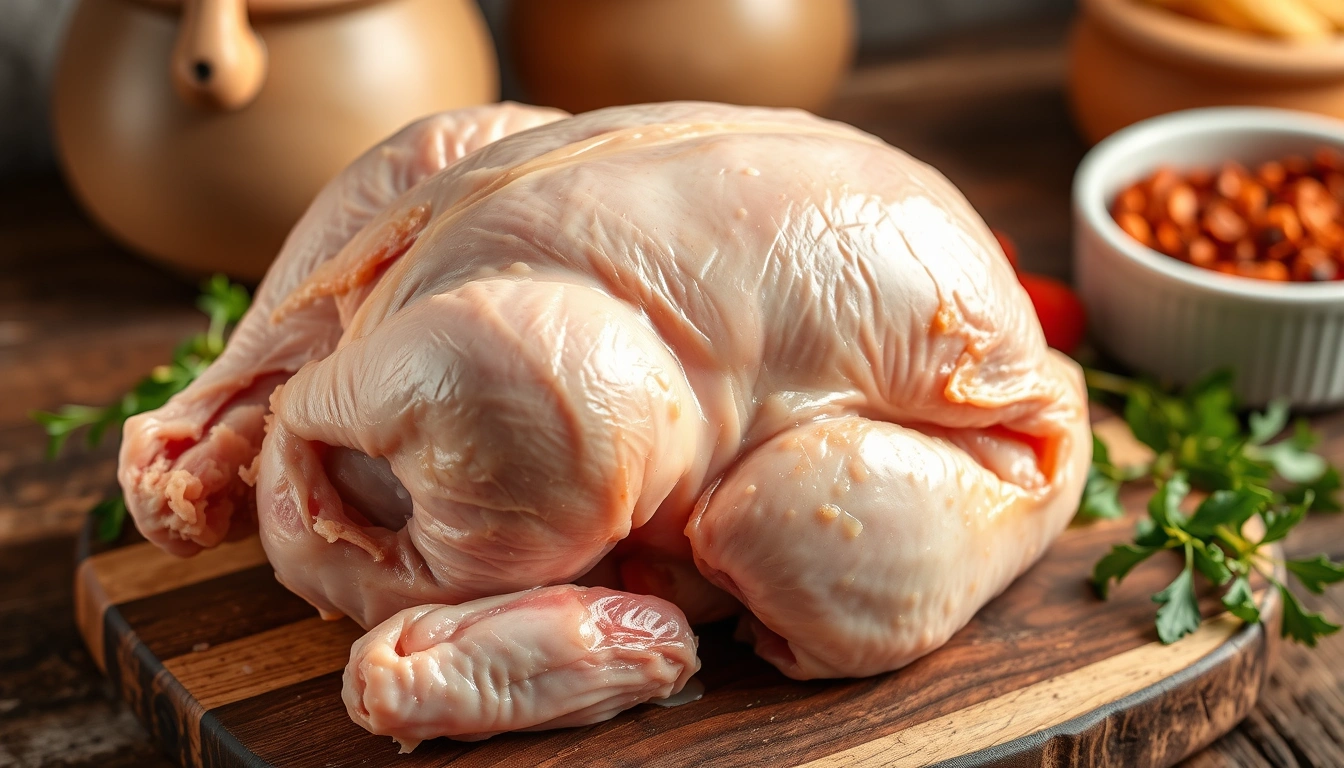
Whole chicken
239 kcal per 100 g
Category: Meat
Nutritional information (per 100 g)
| Calories | 239 kcal |
| Protein | 27g |
| Carbohydrates | 0g |
| Total fats | 14g |
| Fiber | 0g |
| Sodium | 82mg |
Vitamins and minerals
Description
Whole chicken is a staple ingredient in cuisines around the world. It refers to a complete poultry bird, presented with its skin, bones, and all its parts, ready to be prepared in a wide variety of recipes, from roasts and stews to soups and braises.
Chicken originated in Asia, where it was domesticated thousands of years ago, and has spread globally due to its versatility and flavor. Today, chicken is one of the most consumed types of meat worldwide.
Regarding its properties, whole chicken is an excellent source of high-quality protein, as well as B vitamins (especially B3 and B6), minerals such as phosphorus and selenium, and is relatively low in fat, especially if the skin is removed before consumption. Its nutritional content makes it a healthy and nutritious option for various culinary preparations.
In various Spanish-speaking countries in Latin America, a whole chicken may have different synonyms or common names, although "pollo entero" (whole chicken) is the most universal expression. Some alternative names include: fresh chicken, complete chicken, or simply chicken, when it is specified that it is not deboned or cut.
Using a whole chicken in your recipes allows you to better utilize the flavor and texture of the meat, as well as the bones for rich and nutritious homemade broths. It is ideal for oven-baked, grilled, or braised preparations where prolonged cooking ensures juicy and flavorful meat.