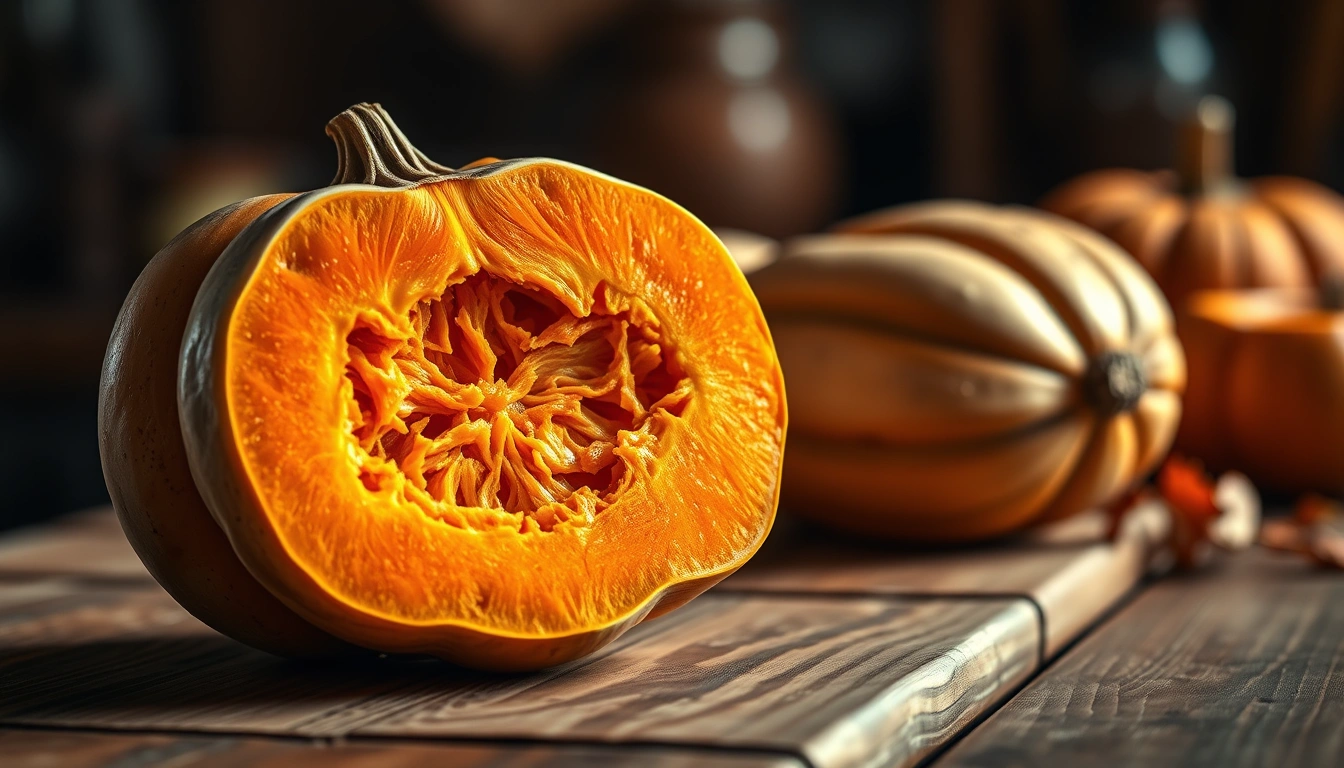
Winter squash
26 kcal per 100 g
Category: Vegetables
Nutritional information (per 100 g)
| Calories | 26 kcal |
| Protein | 1g |
| Carbohydrates | 7g |
| Total fats | 0.1g |
| Fiber | 1.5g |
Vitamins and minerals
Description
Winter squash is a term that encompasses several varieties of squash that are harvested in autumn and are characterized by their hard skin and external toughness, which allows them to be stored for months under proper conditions. Unlike summer squashes (such as zucchini), winter squash has a denser texture, a sweet flavor, and is ideal for making purées, stews, soups, and desserts.
The origin of winter squash dates back to Central and North America, where indigenous civilizations were the first to cultivate it thousands of years ago. It is currently grown in many regions of the world, especially in temperate and cold climates, due to its good preservation during the cold season.
Properties: Winter squash is rich in fiber, vitamins A and C, antioxidants, and minerals such as potassium and magnesium. Its low calorie content and high water content make it a healthy and satiating food, ideal for balanced diets. Furthermore, its richness in beta-carotenes gives it high antioxidant power, beneficial for ocular health and the immune system.
Synonyms in Spanish (Latin America): In different countries, winter squash may be known as zapallo (Argentina, Chile, Peru, Uruguay), ayote (Mexico, Guatemala), ahuyama (Colombia, Venezuela), cayote (Costa Rica), or simply calabaza. Depending on the region, these words may refer to different specific types of autumn seasonal squash.