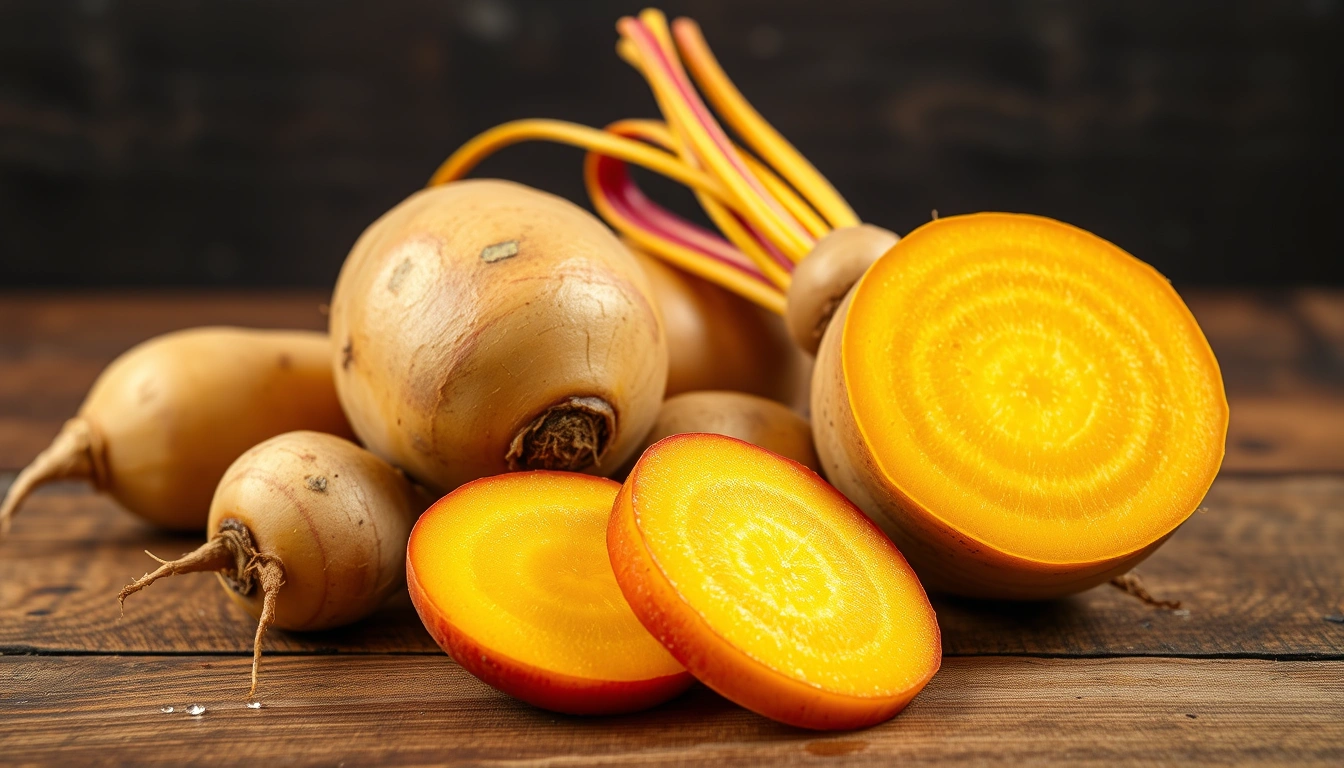
Yellow beet
43 kcal per 100 g
Category: Vegetables
Nutritional information (per 100 g)
| Calories | 43 kcal |
| Protein | 1.6g |
| Carbohydrates | 10g |
| Sugars | 6.8g |
| Total fats | 0.2g |
| Fiber | 2.8g |
Vitamins and minerals
Description
Yellow beet, also known as yellow beetroot in various regions of Latin America, is a variety of the traditional beet distinguished by its vibrant yellow color instead of the typical dark red hue. This tuber belongs to the Amaranthaceae family and is valued in gastronomy for its mild, sweet, and slightly earthy flavor, in addition to providing a bright, attractive color to dishes.
Originating in Europe, beets have been cultivated since ancient times, and the yellow variety is the result of selections and crossbreeding aimed at offering a visual and flavorful alternative within the same species. In cooking, yellow beet is used both raw in salads and cooked in soups, juices, and side dishes, providing a tender texture and a sweet nuance that is less intense than that of red beets.
Regarding its nutritional properties, yellow beet is an excellent source of fiber, antioxidants, B vitamins, vitamin C, and minerals such as potassium and iron. Additionally, its low calorie content makes it an ideal ingredient for healthy diets. Compared to red beets, the yellow variety typically has a lower content of betalains, the antioxidant pigments found in beets, but it remains a nutritious and versatile option.
Depending on the country, yellow beet may be known by different names: betabel amarillo (Mexico, Central America), remolacha amarilla (Argentina, Chile, Uruguay), or simply beetroot when the color is not specified. Its use in recipes allows for adding color and flavor without staining other ingredients, an advantage in preparations such as mixed salads or cold dishes.