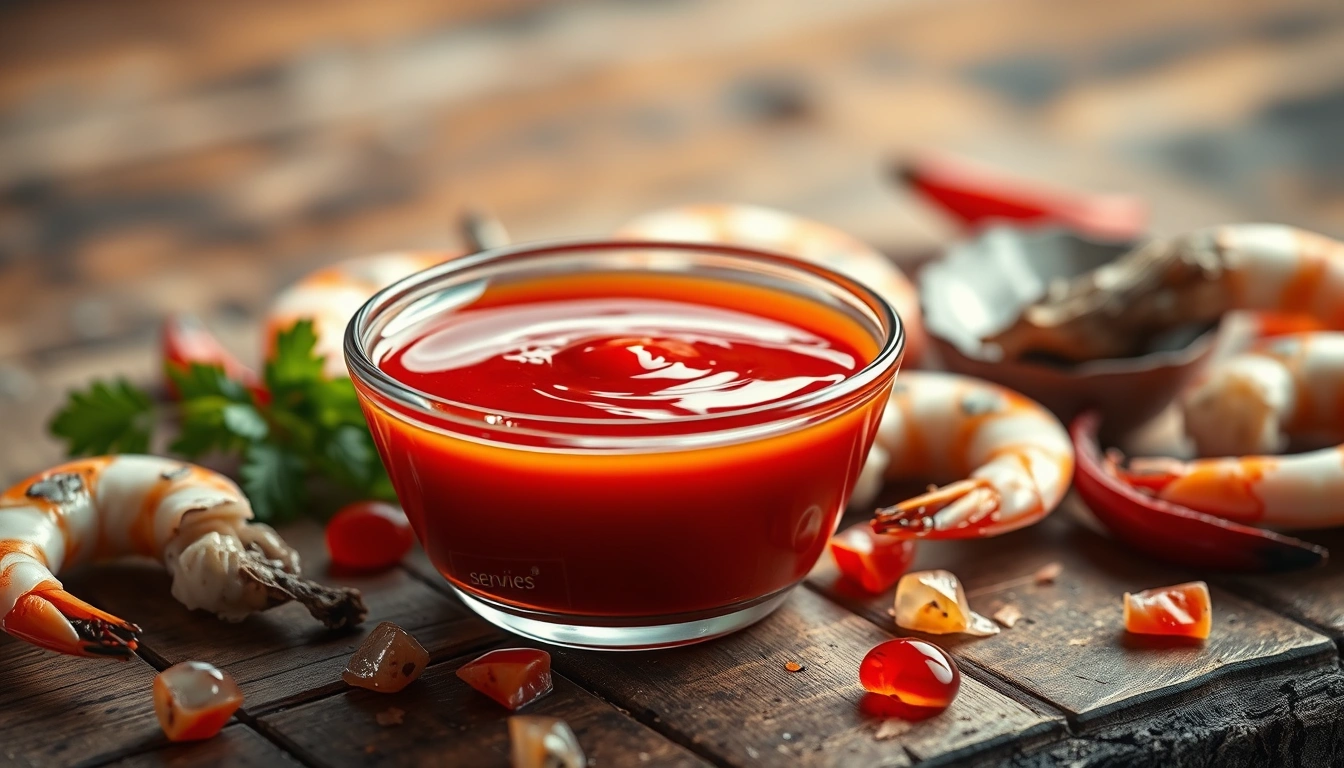
Cocktail sauce for seafood
80 kcal per 100 g
Category: Spices and Herbs
Nutritional information (per 100 g)
| Calories | 80 kcal |
| Protein | 0.5g |
| Carbohydrates | 8g |
| Sugars | 6g |
| Total fats | 5g |
| Fiber | 0.3g |
| Sodium | 700mg |
Vitamins and minerals
Description
Cocktail sauce for seafood is a typical sauce used as an accompaniment for different types of seafood, especially shrimp, prawns, oysters, and other shellfish. It is characterized by its fresh, slightly acidic, and slightly spicy flavor, which enhances the natural taste of the seafood without overpowering it.
This sauce originated in American and British cuisine, where it is common in appetizers and dishes related to cold seafood. Over time, its popularity spread to many Spanish-speaking regions, becoming a staple for accompanying seafood preparations.
Seafood cocktail sauce is generally made from ketchup, Worcestershire sauce, lemon or lime juice, and a touch of spice with hot sauce or chili. These ingredients give it properties like a balance between sweet, sour, and spicy, which stimulates the appetite and enhances the tasting experience.
In various Latin American countries, seafood cocktail sauce may have different names or variants, although the essence of the preparation is preserved. Some synonyms or related terms include:
- Salsa roja para mariscos (Mexico)
- Salsa rosada (Argentina, Chile - when mixed with mayonnaise)
- Tartar sauce (although it usually has mayonnaise and pickles, it is sometimes used similarly)
- Shrimp sauce (in some areas, it is used to refer to the sauce that accompanies these crustaceans)
In summary, seafood cocktail sauce is a key ingredient in appetizer and seafood dish recipes due to its versatility and ability to enhance the flavors of the sea.