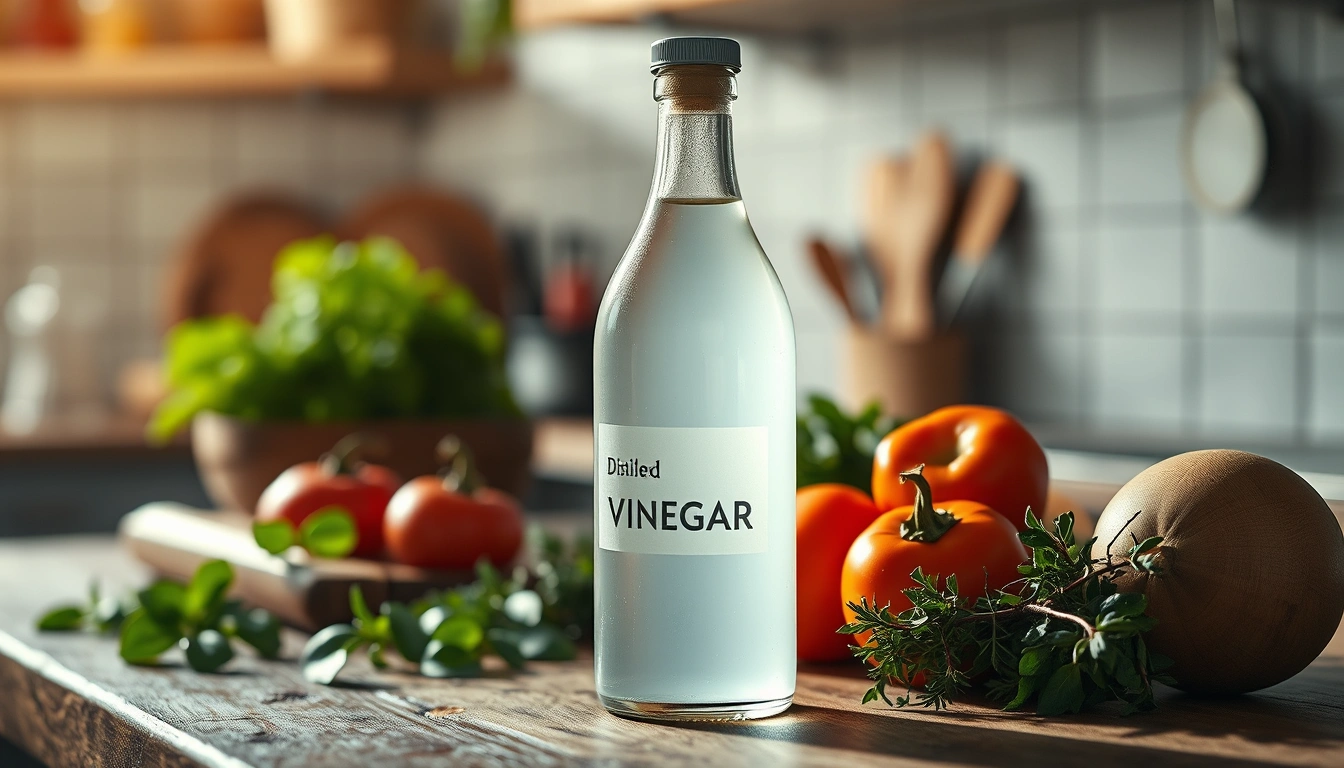
Distilled white vinegar
3 kcal per 100 g
Category: Spices and Herbs
Nutritional information (per 100 g)
| Calories | 3 kcal |
| Protein | 0g |
| Carbohydrates | 0.1g |
| Sugars | 0g |
| Total fats | 0g |
| Fiber | 0g |
| Sodium | 8mg |
Vitamins and minerals
Description
Distilled white vinegar is a clear and transparent liquid ingredient, with a sour and slightly pungent flavor, essential in cuisines around the world. It is obtained through the distillation of fermented ethyl alcohol, usually derived from grains or corn, which gives it high purity and acidity, typically around 5% to 7% acetic acid.
This type of vinegar originates from the fermentation and subsequent distillation of alcoholic substances. Its use dates back to ancient cultures, but today it is very common in Latin America, the United States, and Europe due to its versatility and effectiveness.
In cooking, distilled white vinegar is ideal for pickling vegetables, preparing dressings, marinating meats, clarifying sauces, and aiding in the cooking of rice or legumes. Furthermore, its neutral flavor and strong acidity help balance dishes without significantly altering their original color or taste.
From a nutritional standpoint, it is low in calories and contains no fats, proteins, or carbohydrates. It also possesses preservative and antimicrobial properties that make it useful for food preservation.
In different Hispanic American countries, distilled white vinegar may be known by names such as white vinegar, spirit vinegar, clear vinegar, or simply vinegar, although it is important to distinguish it from wine vinegar or apple cider vinegar, which have different characteristics and flavors.