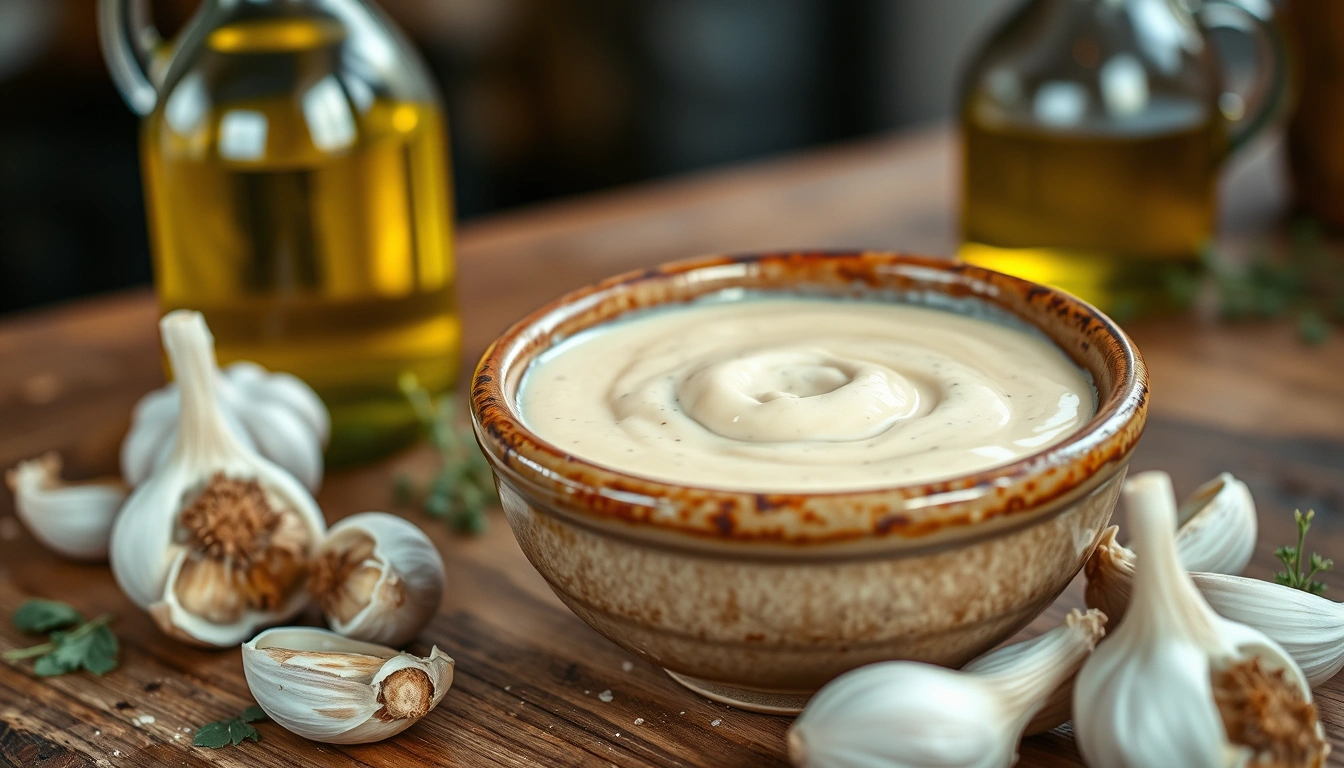
Garlic sauce
149 kcal per 100 g
Category: Spices and Herbs
Nutritional information (per 100 g)
| Calories | 149 kcal |
| Protein | 1.8g |
| Carbohydrates | 13g |
| Sugars | 2g |
| Total fats | 11g |
| Fiber | 0.5g |
| Sodium | 620mg |
Vitamins and minerals
Description
Garlic sauce is a culinary preparation based on garlic, oil, and other ingredients that vary by region, used to enhance the flavor of various dishes. This sauce typically has a creamy or liquid texture and an intense, characteristic garlic flavor, making it an ideal complement for meats, fish, vegetables, and as a dressing for salads or breads.
The origin of garlic sauce dates back to various Mediterranean and Arab cuisines, where garlic has been an essential ingredient since ancient times. In Spanish gastronomy, garlic sauce comes in multiple variants, such as alioli or ajonesa, while in Latin America it can be found with different regional adaptations.
Among its properties, garlic sauce stands out for the contribution of garlic, which contains sulfur compounds with antioxidant and antimicrobial effects beneficial to health, in addition to being a natural flavor enhancer without adding many calories. Depending on the recipe, it can be an excellent source of healthy fats if made with olive oil or similar.
Regarding synonyms and names in different regions of Latin America, garlic sauce may be known by several terms such as:
- Ajomate (in some areas of Mexico, although it may refer to sauces that combine garlic and tomato)
- Mojo de ajo (common in the Caribbean, especially in Puerto Rico and Cuba)
- Chimichurri de ajo (a variant with more herbs and garlic, popular in Argentina and Uruguay)
- Garlic mayonnaise or aioli (in different variations across several countries)
In summary, garlic sauce is a versatile and traditional ingredient, essential in numerous Latin American and Spanish cuisines, perfect for adding an intense and aromatic touch to multiple recipes.