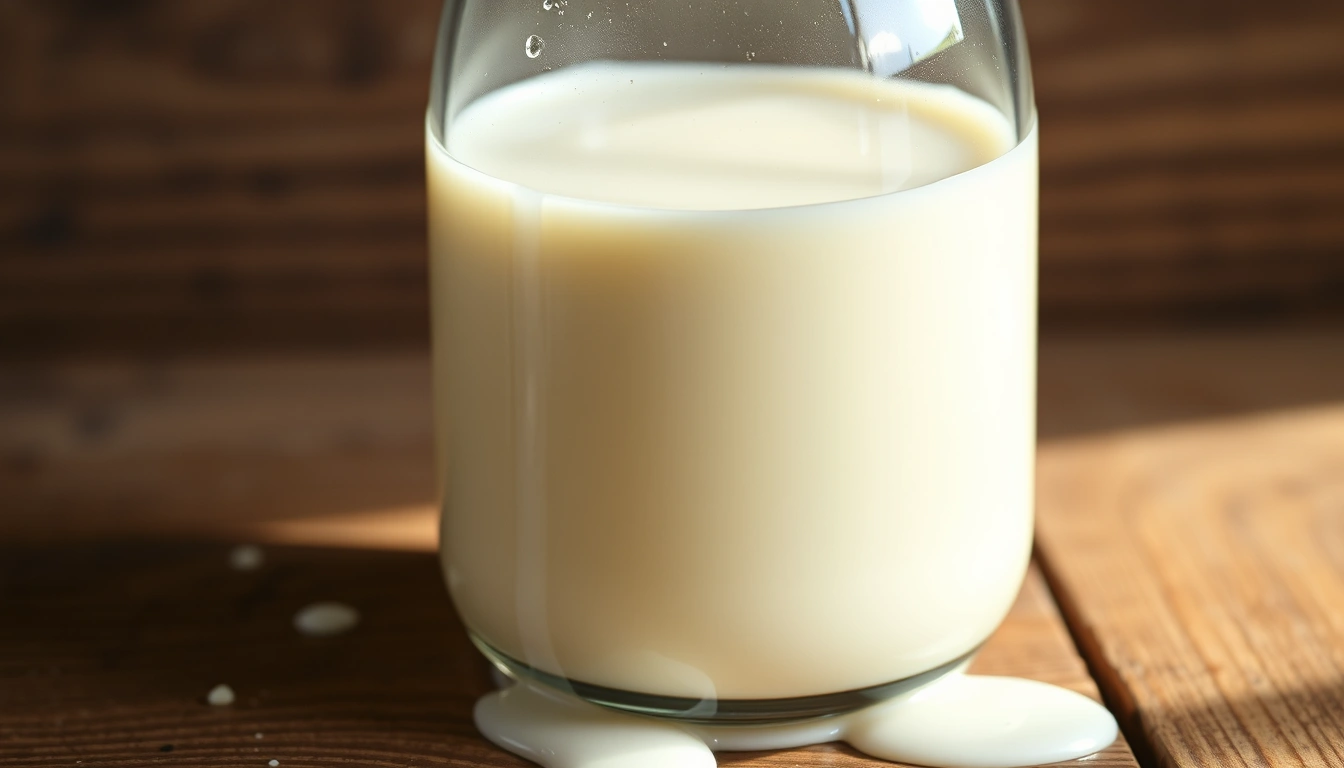
Half whole milk half cream
187 kcal per 100 g
Category: Dairy
Nutritional information (per 100 g)
| Calories | 187 kcal |
| Protein | 3.4g |
| Carbohydrates | 4g |
| Sugars | 4g |
| Total fats | 18g |
| Saturated fats | 11g |
| Sodium | 45mg |
| Cholesterol | 60mg |
Vitamins and minerals
Description
Half whole milk half cream is a common mixture in cooking that combines equal parts of whole milk and cream, resulting in an ingredient with a richer and creamier texture than milk alone, but less dense than pure cream. This combination provides a perfect balance between fluidity and richness, ideal for preparing sauces, desserts, creamy soups, and hot beverages like café au lait or hot chocolate.
The origin of this mixture is not associated with a specific region, but rather it is a practice used internationally to enrich recipes without reaching the density of full cream. In many culinary cultures, it is used to achieve a smooth and velvety texture without adding excessive fat.
Among its main properties, its ability to add flavor and body to dishes, as well as a greater creaminess, stands out. Furthermore, as it is a combination of whole milk and cream, it retains a good amount of calcium, fat-soluble vitamins (A, D, E, and K), and healthy fats, although its calorie and fat content is higher than that of milk alone.
Regarding synonyms in Spanish from Latin America, terms such as "mezcla de leche y crema" (milk and cream mixture), "leche cremosa" (creamy milk), or simply "mitad y mitad" (half and half) can be found, the latter being used in some countries to refer to this exact proportion. In Chile, for example, it might be called "leche sencilla" when mixed with cream, though with less standardization.